






Local Government Digital Transformation: Japanese Island’s Visitor and Trip Management Platforms
A small island in Shimane Prefecture partnered with SupremeTech to build two web platforms that digitized trip management and workforce coordination as part of a broader Japan local government digital transformation initiative.
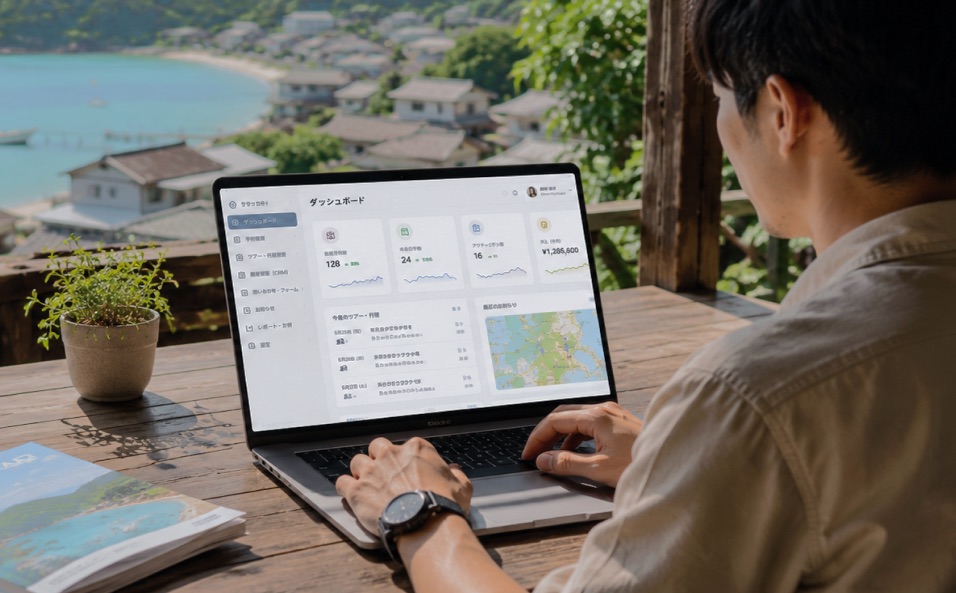
Japan’s rural communities are changing what their tourism can look like. From small towns to island communities, forward-thinking local governments are turning to digital tools to strengthen connections, attract new energy, and build sustainable futures.
Overview
A small island located in the Sea of Japan, this community faces a challenge common to many rural areas in Japan: young people leaving, businesses struggling to find help, and fewer visitors coming through each year.
Rather than waiting, the local government took a proactive approach. They launched the Island Ambassador program, an initiative rooted in the Japanese concept of “Kankei Jinkō” (relational population), which builds meaningful ties between the island and people who do not live there but want to contribute to its future. Ambassadors are invited to visit, work, and collaborate with locals.
As the Ambassador network grew, two clear needs emerged:
- A way to manage island visits more efficiently. Coordinating visitor trips, accommodation, and activities was still done manually, and it was becoming hard to keep up.
- A way to connect local businesses with skilled workers. Business owners needed help, and there were willing workers and consultants ready to contribute, but no structured way to bring them together.
To address both needs, This island partnered with SupremeTech to build two centralized websites:
A web-based visitor and trip management platform for coordinating island visits, including itinerary planning, venue reservations, and visitor management.
A web-based municipal worker marketplace connecting local business owners with workers and consultants, handling everything from project posting to payments.
The Challenge
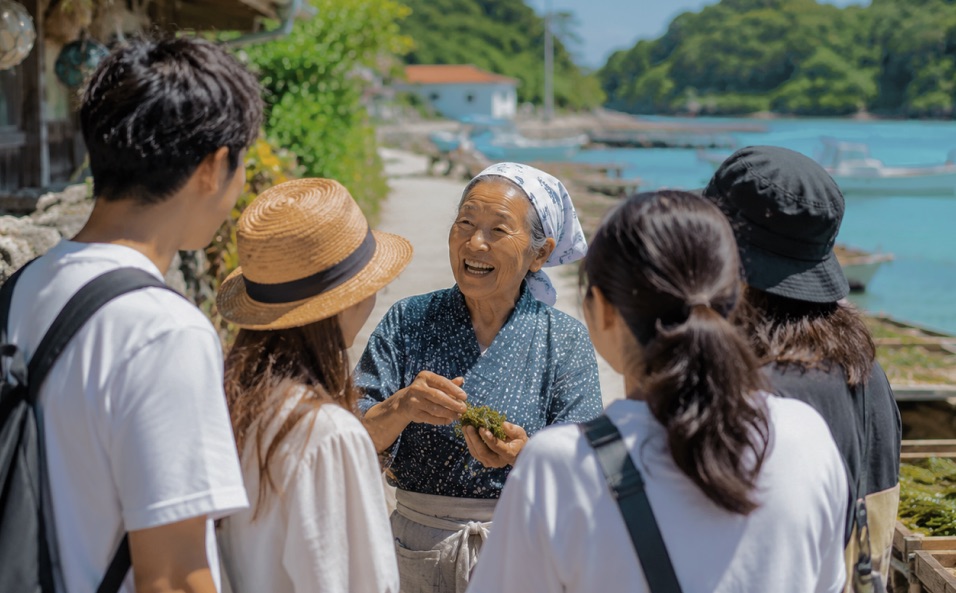
The island had already built a strong Ambassador network and earned its place as a leading example of Japan local government digital transformation. The island was even exploring bold ideas like DAO governance and metaverse community spaces. But as their programs grew, some operational gaps started to show.
Visitor & Trip Management Website:
- Trip planning, hotel bookings, and activity scheduling were all done by hand, spread across emails and spreadsheets.
- Every island visit needed a human concierge to handle everything, from transport and lodging to arranging meet-ups.
Worker Website:
- Matching local business owners with workers and consultants happened through LINE and Slack, with no clear structure.
- There was no single place to post projects, find the right people, track progress, or handle payments.
Delivery challenges:
- This project carried extra weight from the start. It was designed to be a pioneer model case for Japan local government digital transformation, meaning other local governments across Japan would be watching and learning from it.
- The team chose to use AI across the entire delivery lifecycle, from writing specs to generating code. While this opened the door to faster delivery, it also meant navigating unfamiliar territory. Prompting AI accurately, validating its output at every step, and maintaining consistency across two platforms in parallel required a new kind of discipline that the team had to develop as the project moved forward.
- Midway through the project, scope expanded beyond the original estimate due to misalignments between vendors during planning. With a fixed budget and no option to add resources, the team had to absorb the additional work without extending the timeline or compromising quality.
The goal was straightforward: build dedicated digital platforms to replace these manual processes, and create something scalable enough to inspire other local governments across Japan. To do that, they needed a partner who understood both the technology and the mission behind it. They chose SupremeTech.
The Solution
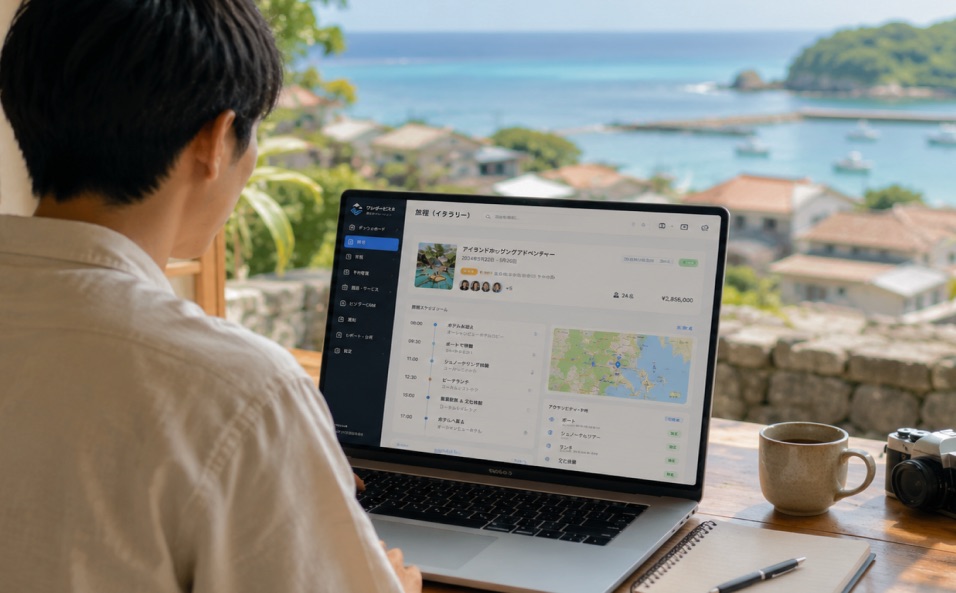
SupremeTech designed and built two web platforms from scratch, each addressing a distinct operational need while sharing the same technical foundation for easier maintenance and future growth.
Visitor & Trip Management Website:
Visitor & Trip Management Website gives tour operators and venue staff a central place to manage everything related to island visits, from the moment a visitor submits a request to the day they leave.
Key features:
- Public visitor intake form for trip requests
- Visitor CRM to manage profiles, contact details, and visit history
- Drag-and-drop trip itinerary builder with multi-day scheduling
- Activity block management with reusable activity templates for venues
- Reservation coordination with local venues and facilities, including status tracking and participant management
- Facility administration to manage all venues and locations available for visit activities
- Trip attendee management to assign visitors to trips and track participation
- Shareable itinerary links for visitors to view their trip plan
- In-app notifications for reservation updates and new requests
- Role-based access control for tour operators, venue staff, and admins
With this website, what used to take multiple back-and-forth emails and phone calls is now handled in one streamlined digital workflow, managing 439 visitors across 11 local facilities.
Worker Website:
This website brings the workforce connection side of the island’s mission online. It gives business owners a place to post projects, find the right workers or consultants, and manage the full project lifecycle in one place.
Key features:
- Worker registration for both individual and corporate profiles, including specialties and career achievements
- Business owner registration and verification
- Project posting, status tracking, and full project lifecycle management
- Worker search and matching based on skills and specialties
- Stripe Checkout for project payments with fee calculation and tracking
- Stripe Connect for automated worker onboarding and payouts
- Identity verification (eKYC) for workers and business owners
- Public worker profile pages with career achievements and shareable links
- Public project sharing for external stakeholders
- Work completion approval workflows
- Payment tracking dashboard to monitor transactions, payouts, and Stripe fees
Together, both platforms replaced fragmented communication across LINE and Slack with structured, automated digital workflows, making vision of Japan local government digital transformation tangible and repeatable.
Tech Stack
Both platforms share a unified architecture built for performance, security, and scalability:
- Frontend: Next.js with React Server Components
- Backend: Next.js API Routes + Supabase (PostgreSQL)
- Auth & Security: Supabase Auth with Row-Level Security
- Payments: Stripe Checkout + Stripe Connect
- Hosting: Vercel with preview deployments
The Result
Delivering two fully functional platforms within a two-month timeline was already a significant achievement. More importantly, the project gave this island a scalable operational foundation for future growth.
Operational efficiency:
Both platforms centralized workflows that had previously been fragmented across spreadsheets, messaging apps, and manual coordination.
With the Visitor & Trip Management Website: visitor intake, trip scheduling, reservation coordination, and itinerary management now operate through a single digital workflow.
With the Worker Website: project matching, payment processing, and worker payouts became fully digitized, eliminating the need for manual tracking and bank transfer coordination.
By the numbers:
- 439 visitors managed in a single digital CRM, previously handled across individual spreadsheets and emails.
- 11 local businesses (hotels, tourist attractions,…) managed centrally, replacing one-by-one manual booking coordination.
- 20+ major features delivered across both platforms within a 2-month development window.
- 10 to 11 detailed feature specifications per platform, each with full PRDs, architecture docs, and implementation plans.
AI-assisted delivery impact:
- AI was used across the entire delivery lifecycle, from spec definition and mockup analysis to code generation and documentation, reducing the team size needed to deliver this scope within the timeline and making it a cost-efficient model for future projects.
- Consistent, repeatable development cycles allowed the team to maintain quality even as scope expanded beyond the original estimate.
By launch, the client had not just two new platforms. They had a working blueprint for Japan local government digital transformation that other municipalities could look to, study, and adopt.
What This Case Taught Us
This project was more than a software delivery. It was a reminder that technology works best when it is built around a clear human mission.
Scope clarity is everything on fixed-budget projects. When scope expanded beyond the original estimate due to vendor misalignments, the team could not add budget or resources. What saved the project was a disciplined approach to scope definition upfront, and the flexibility to adapt without losing sight of the timeline. For any fixed-scope engagement, getting alignment early is not just good practice. It is the foundation everything else is built on.
AI-assisted development is ready for real-world delivery. This was one of SupremeTech’s most AI-forward projects to date, using AI from spec writing all the way through to code generation and documentation. The result proved that with the right structure and human oversight at key decision points, including architecture, business logic, security, and UX, AI can reduce delivery time without compromising quality.
Understanding the mission makes better products. The client was not just building software. They were building a new model for community-driven Japan local government digital transformation. SupremeTech’s ability to understand that context, and translate it into two platforms, is what made the partnership work. Being a strategic partner, not just a vendor, meant asking the right questions, not just writing the right code.
What’s Next?
This Island’s digital transformation journey is still evolving, and SupremeTech continues to support the next phase of growth.
Future planning is focused on:
- Payment service overhaul: A deeper redesign of the payment infrastructure across both platforms for greater reliability and flexibility.
- New feature development: Expanding the capabilities of both Visitor & Trip Management Website and Worker Website to support more complex visitor journeys and workforce scenarios.
- Platform-wide improvements: Refining existing features based on real usage data and feedback from the client team and their growing community.
Are you building a platform to serve your community, digitize local operations, or scale a government-backed initiative? SupremeTech helps organizations across Japan and Southeast Asia turn bold ideas into production-ready digital products.

Tech Stack
Platforms
Development Languages