








Top Data Models Behind Successful Retail Loyalty Programs: Points, Tiers, Rewards, and Segments
08/06/2026
1.04k
Most retail loyalty programs are sitting on a goldmine of data they’re barely using. Transaction histories pile up. Redemption logs grow. Behavioral signals accumulate across channels. And yet the majority of programs still run on a flat points-for-purchases mechanic that treats a first-time buyer exactly the same as someone who’s spent ten times more over three years.
That’s not a loyalty problem. It’s a data model problem.
The numbers make the stakes clear. The global loyalty management market hit USD 13.59 billion in 2025 and is on track to reach USD 31.11 billion by 2033, according to Grand View Research. And McKinsey found that top-performing retail loyalty programs boost revenue from redeeming customers by 15–25% annually but only when the program is built around behavioral data and customer segments, not a single flat points mechanic.
Think about a mid-sized fashion retailer with 200,000 loyalty members. They’re sending the same monthly email to all of them: a 10% discount, a reminder of their points balance. Their top 5,000 customers, the ones buying four or five times a year, get the same message as someone who bought once six months ago and hasn’t been back since. The data to treat these two groups differently is already there. The data model to act on it isn’t.
This article breaks down the four data models that make retail loyalty programs genuinely work, explains the commercial logic behind each one, and maps the infrastructure requirements that connect them into a system that gets smarter over time.
Why the Data Model Is the Loyalty Program
Before we get into each model, it’s worth being clear about what “data model” actually means in this context because the term gets used loosely.
A loyalty data model is the logic that determines how customer behavior is recorded, classified, valued, and acted on within the program. It’s the architecture behind what members actually see. The points card is the front end. The data model is what decides how many points a customer earns, which behaviors earn them, when they expire, which segment that customer belongs to, and what offer they receive as a result of all of the above.
This matters commercially because the data model determines whether the program generates intelligence or just activity. A flat points-for-purchases mechanic generates transaction logs useful for redemption tracking, not much else. A program built on an RFM segmentation model, a tiered value classification, and a behavior-linked earning engine generates something far more useful: actionable customer intelligence. Which customers are growing in value. Which are drifting. And what intervention is most likely to change their trajectory.
Gartner found that CMOs in North America and Western Europe plan to increase loyalty program management investment by 41%. The programs capturing that investment aren’t just refreshing their rewards catalogs; they’re rebuilding their data models. According to Deloitte‘s 2025 Consumer Loyalty Program Survey, predictive segmentation will be the primary focus of loyalty investment over the next two to four years. That shift from transactional programs to predictive, data-driven loyalty systems is what separates the programs generating 15–25% annual revenue lifts from those merely generating member counts.
| Key Concept: The Four-Layer Loyalty Data Architecture Effective retail loyalty programs are built on four data layers, each one dependent on the layer beneath it. The program is only as strong as its weakest layer. Layer 1 – Points Engine: Records and values customer behaviors: purchases, referrals, reviews, app engagement. Sets the earning rate and redemption logic. The foundation everything else is built on. Layer 2 – Tier Model: Classifies customers into value segments based on cumulative behavioral data. Determines which program experience each customer receives and how the brand invests differently across segments. Layer 3 – Rewards Catalog: Matches available rewards to margin, redemption behavior, and tier level. Determines what customers are working toward and whether the incentive structure drives incremental spend or just subsidizes purchases that were happening anyway. Layer 4 – Segmentation Model: Applies RFM or behavioral analytics to the full customer dataset to identify who is growing, who is at risk, and which interventions to trigger. This is the layer that turns the program from a reward mechanism into a retention intelligence system. |
Data Model 1 – The Points Engine: How Earning Logic Shapes Customer Behavior
The points engine is the most visible and most misunderstood part of retail loyalty programs. Most brands treat it as a simple transaction ledger: one point per dollar, redeemable at a fixed rate. That works as a baseline, but it leaves a lot of behavioral engineering on the table.
A well-designed points engine is a behavior-shaping tool. The earning logic which actions earn points, at what rate, with what multipliers and expiry conditions determines which customer behaviors the program rewards and therefore which behaviors it produces. A program that awards points only for purchases trains customers to think of loyalty as a discount mechanism. A program that awards points for purchases, referrals, reviews, app engagement, and profile completion builds something different: a customer who engages across multiple dimensions, generating data, advocacy, and frequency at the same time.
McKinsey‘s research on loyalty levers found that making redemptions more accessible by effectively lowering the price of the points currency creates a meaningful sales boost by activating dormant loyalty, with no long-term negative impact on the program. That finding challenges the instinct many brands have to protect their points currency by keeping redemption thresholds high. The data says the opposite: accessible rewards drive engagement, and engaged customers spend more.
Expiry mechanics matter just as much. Points that expire too quickly create pressure and anxiety rather than motivation. Points that never expire become a liability on the balance sheet and lose their urgency as a behavioral driver. The right expiry window depends on purchase frequency: grocery and food service support shorter windows because earning is continuous; apparel and electronics require longer ones to keep the program meaningful between purchase cycles.
The most advanced points engines today are event-driven rather than transaction-driven. According to Deloitte, 72% of consumers say loyalty programs make them more likely to spend with their preferred brand but the programs driving that behavior link earning to a broader range of actions than a simple purchase. Engagement events, behavioral milestones, seasonal bonus periods, and category-specific multipliers all give the points engine more surface area to work with and more data to feed into the tier and segmentation models above it.
In practice: A home goods retailer running a flat points mechanic might see solid redemption volume but flat frequency. Adding a 2x points multiplier for purchases in a new category where the customer hasn’t tried kitchenware for a customer who only buys bedding turns the points engine into a cross-sell tool. That behavior signal also feeds directly into the segmentation model, flagging the customer as a potential multi-category buyer and adjusting which offers they receive next.
Brand Case Study: Starbucks Rewards
Starbucks Rewards is one of the most studied points engines in retail. The program moved from a visit-based earning model to a spend-based model in 2016, directly linking points (Stars) earned to the amount spent per transaction rather than the number of visits. This shift rewarded higher-spend customers more generously while maintaining broad participation across the member base. According to McKinsey, programs that link earning to behavioral specificity spend amount, category, engagement type consistently outperform flat mechanics on retention and revenue per member. Starbucks’ active loyalty membership has grown to over 34 million members in the US, with loyalty members accounting for approximately 57% of US company-operated revenue, according to the company’s Q1 FY2025 earnings report.
Data Model 2 – The Tier Model: How Customer Classification Drives Differential Investment
The tier model is the loyalty program’s answer to a straightforward commercial reality: not all customers are equally valuable, and investing in them identically wastes money on the ones who would have stayed anyway while underinvesting in the ones who could be grown.
A well-designed tier model classifies customers into value segments based on cumulative behavioral data typically spent, frequency, and recency and adjusts the program experience accordingly. Higher-tier customers get more generous earning rates, more exclusive rewards, faster service, priority access, and more personalization. Lower-tier customers get a program experience designed to motivate progression to the next level.
The commercial impact is well-documented. McKinsey found that personalization pilots which depend on tier-level customer classification delivered 2–4 percentage point margin improvements over mass offers. And research cited by TrueLoyal found that 50% of consumers changed their buying behaviors specifically to reach a higher loyalty tier. The tier itself is a motivational tool; the aspiration to progress is what drives the incremental spend the program is designed to produce.
The tier model also solves a practical data problem. Without tier classification, a loyalty program has one undifferentiated customer population. With it, it has multiple distinct groups each requiring different communication cadence, different reward types, and different retention investment. Tier classification is what makes segment-level loyalty management actually workable at scale.
The most common tier design failures are predictable. Tiers set too far apart motivate only the customers who were already going to reach that level. Tiers that collapse too quickly when spend drops discourage the emotional investment customers make in a status they’ve earned. And tier structures that don’t deliver a visibly different experience between levels teach customers that the tier is cosmetic, not meaningful.
Data Model 3 – The Rewards Catalog: How Incentive Design Determines Program Economics

The rewards catalog is where loyalty strategy meets financial discipline. Every reward in the catalog is a cost to the brand either directly, as a product or service delivered at margin, or indirectly, as a discount against future spend. The catalog’s design determines whether the program drives genuinely incremental behavior or simply subsidizes purchases that were going to happen regardless.
This is what McKinsey describes as the central measurement challenge for retail loyalty programs: isolating incremental revenue the revenue that only exists because of the loyalty program from revenue that would have occurred anyway. A rewards catalog designed without that analysis in mind is a cost without a clear commercial return.
Three questions drive a commercially sound rewards catalog design. First: is the reward genuinely motivating? Deloitte‘s 2025 survey found that 86% of consumers rate financial rewards combined with simplicity and ease of use as important or very important. The reward has to represent real value, not just a token gesture. Second: does the reward deepen brand engagement, or does it simply offset a future purchase? Category-specific rewards a free product in a category the customer hasn’t tried, early access to a new collection drives cross-category behavior in a way that straight cash-back doesn’t. Third: is the reward achievable? A threshold the average member can’t realistically reach is not a motivator.
According to Forrester, 85% of US online adults belong to at least one retail loyalty program. In a market that is saturated, a rewards catalog that delivers genuine, tier-appropriate value at realistic thresholds is one of the clearest ways a program differentiates itself.
| Reward Type | Commercial Purpose | Best Suited For | Margin Risk |
|---|---|---|---|
| Points redeemable for discounts | Drives repeat purchase frequency | High-frequency, lower-value categories | Moderate depends on discount depth |
| Free product (own catalog) | Drives cross-category trial | Any category with margin headroom | Low cost is wholesale, not retail |
| Exclusive access or early preview | Builds emotional loyalty; costs near zero | High-tier members in fashion, beauty, electronics | Very low experience-based, not product-based |
| Partner rewards (third-party) | Extends perceived value without direct cost | Mid-tier members; program differentiation | Low funded by partner, not brand |
| Cash back or statement credit | Maximizes perceived simplicity | Price-sensitive segments | High direct margin reduction |
In practice: A consumer electronics retailer whose catalog is almost entirely cash-back and discount vouchers is essentially running a margin-erosion program. Replacing some of those cash-back rewards with early access to product launches, extended warranty upgrades, or first-look events for high-tier members costs far less per redemption and creates an emotional connection to the brand that a 5% discount never will. The catalog becomes a reason to stay enrolled, not just a mechanism for getting money back.
Data Model 4 – The Segmentation Model: How RFM and Behavioral Data Turn Programs Into Intelligence Systems
The segmentation model is the data layer that transforms a retail loyalty program from a transaction recorder into a retention intelligence system. It’s the mechanism by which the program answers the commercially critical questions: which customers are becoming more valuable, which are drifting, and what does each group need from the brand right now?
The most widely used framework is RFM: Recency, Frequency, Monetary value. Every program member gets a composite score based on how recently they purchased, how often they buy, and how much they spend in total. The intersection of those three scores places the customer in a behavioral segment from high-value active members to lapsed high-spenders to low-frequency browsers each requiring a different communication strategy and a different loyalty intervention.
RFM allows the program to concentrate retention investment where it has the most impact: the high-frequency, high-spend customers showing early signs of drift, rather than the stable regulars who were going to return anyway. Gartner found that customers who received personalized communications were 3.7 times more likely to purchase more than originally intended. That personalization only works when the segmentation model is granular enough to tell the program what each customer values and when the data infrastructure is connected enough to act on that intelligence in real time.
RFM is the foundation, but the most sophisticated programs layer additional dimensions on top. Category affinity which product areas a customer gravitates toward informs cross-sell reward design. Channel preference in-store, online, mobile informs how loyalty communications are delivered. Engagement breadth whether a customer participates in the program beyond purchases is an early indicator of emotional loyalty that RFM scores alone won’t capture.
In practice: A sporting goods retailer using RFM segmentation identifies a group of 3,000 customers who were in the top purchase-frequency quartile 12 months ago but have dropped to near-zero activity in the last 90 days. Without segmentation, they’re invisible in the data; their historic loyalty looks healthy on aggregate. With RFM, they’re flagged as high-priority reactivation targets and receive a personalized offer tied to the product category they bought most frequently. Recovery rate from that segment is far higher than from a general re-engagement campaign sent to the full inactive list.
Case Study: A Global Lifestyle Brand’s Mobile Retail Transformation
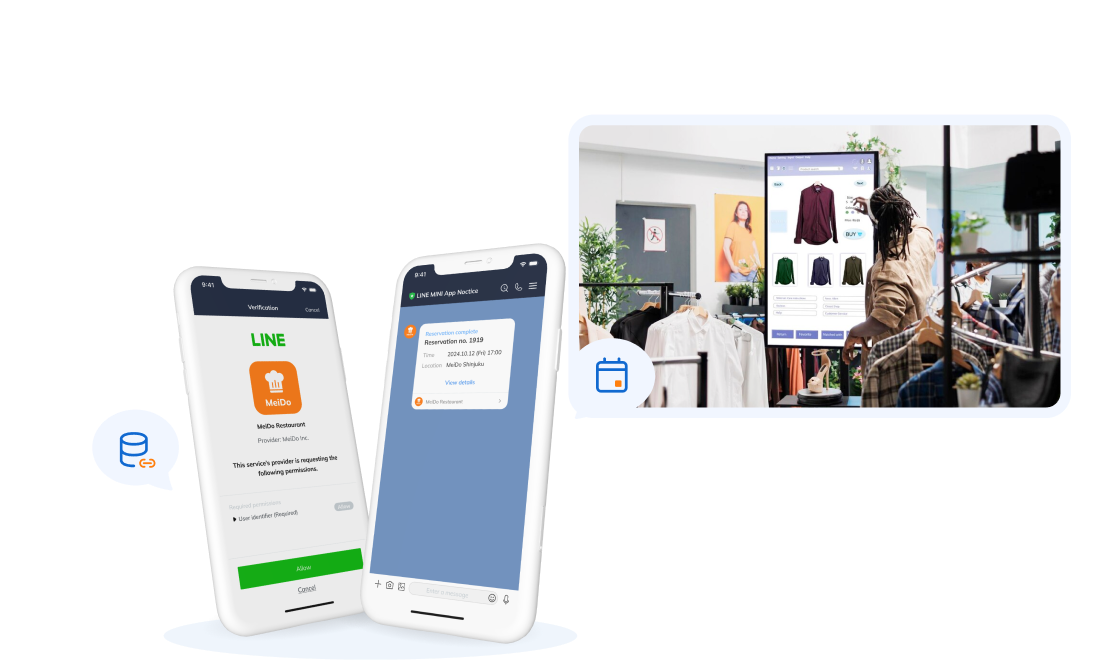
A globally recognized lifestyle brand headquartered in Japan operated an outdated mobile app that no longer matched its premium positioning. The app was built on a low-code platform relying on webviews, resulting in slow performance, inconsistent branding, and no user segmentation making personalized loyalty communications practically impossible. SupremeTech rebuilt the mobile experience from the ground up: a fully native Flutter app, a unified CMS, and a backend integration layer connecting the brand’s Shopify ecosystem. Within two months of launch, the brand recorded nearly 80% growth in total users and more than 60% growth in returning users, while average engagement time per active user increased by over 60%. The new architecture also includes a clear roadmap for loyalty program integration and deeper personalization of the data foundation for which now exists. Read the full case study →
How the Four Models Work Together: The Loyalty Data Architecture in Practice
The four data models are most valuable when they work as a connected system rather than independent mechanics. Each layer feeds the next, and the intelligence generated at Layer 4 flows back to improve the logic at Layers 1, 2, and 3.
Here’s what that looks like in a retail loyalty program operating at full maturity. The points engine captures behavioral signals across all purchase and engagement touchpoints. Those signals feed the tier model, which classifies each customer into a value segment that determines their program experience. The tier classification informs the rewards catalog which rewards are available, at what thresholds, with what personalization. The segmentation model continuously analyzes the full behavioral dataset to identify which customers are progressing, which are drifting, and which interventions to trigger then feeds those insights back to the points engine and tier model to adjust earning incentives, tier thresholds, and communication cadence.
The infrastructure this requires is specific: a unified customer data platform that brings together behavioral signals from every channel in-store, e-commerce, mobile, customer service into a single customer record that all four models can read from and write to simultaneously. Without that unified layer, the four models operate in silos, and the program’s intelligence degrades into the sum of its parts rather than the product of their interaction.
How SupremeTech Can Help
The retail brands that come to SupremeTech with loyalty challenges rarely have a strategy problem. They have a data architecture problem. The goals are clear: retain high-value customers, grow the middle tier, re-engage lapsing members but the data needed to act on those goals is sitting in three or four disconnected systems, and there’s no unified layer that lets the four models above work together.
For brands whose loyalty programs are running on a flat points mechanic with no tier model or segmentation layer, the starting point is data unification. SupremeTech’s omnichannel retail solutions practice designs the unified customer identity architecture that connects POS, e-commerce, mobile, and CRM data into a single customer record, the foundation without which no advanced data model can function. Once that layer is in place, the points engine can be expanded, the tier model can be built, and the segmentation model has the data it needs to operate.
For brands that have a data foundation but haven’t yet built the RFM segmentation or behavioral analytics layer that turns their program into a retention intelligence system, SupremeTech’s AI-driven development team builds the models that close that gap. Predictive churn scoring, behavioral segment classification, dynamic reward personalization, and automated intervention triggers, these are machine learning problems, and SupremeTech designs and deploys them as operational tools within the loyalty infrastructure, not standalone analytics projects.
For brands building new e-commerce or mobile commerce channels and wanting to capture loyalty data from day one, SupremeTech’s e-commerce development services ensure that every behavioral signal browse depth, category affinity, basket composition, engagement frequency is captured and structured in a format the loyalty data models can actually use.
And where standard platforms can’t support the specific data model combinations a brand needs a custom earning logic, a non-standard tier architecture, or a segmentation model integrated with a proprietary CRM, SupremeTech’s custom software development team builds the loyalty data layer that fits the brand’s actual system environment. For brands scaling loyalty infrastructure to handle real-time data processing across multiple channels, SupremeTech’s cloud infrastructure and DevOps practice ensures the systems loyalty depends on performing reliably under load.
The starting conversation is always a diagnostic one: which of the four data model layers is the weakest link in your current loyalty infrastructure, and what’s the most direct path to closing that gap?
Ready to build retail loyalty programs on the right data foundation? SupremeTech works with retail brands to design and implement the loyalty data architectures that connect points engines, tier models, rewards catalogs, and segmentation systems into a unified retention intelligence platform. Start a conversation with SupremeTech →
FAQs Section
A loyalty data model is the underlying logic that determines how customer behavior is recorded, classified, and acted on within the program. It matters more than the rewards structure because rewards are what customers see. The data model is what determines whether those rewards reach the right customers at the right moment with the right incentive. A generous rewards structure built on a flat data model produces broad costs and modest incremental revenue.
RFM stands for Recency, Frequency, and Monetary value. In retail loyalty programs, it’s a customer scoring model that classifies every member based on how recently they purchased, how often they buy, and how much they spend in total. The score places each customer in a behavioral segment from high-value active members to lapsed high-spenders to low-frequency browsers and each segment needs a different communication strategy and a different loyalty investment. The commercial advantage is specificity: instead of sending the same offer to everyone, the program sends the right offer to the segment where it’s most likely to produce incremental behavior.
The cost is primarily misdirected investment. Without segmentation, a loyalty program can’t distinguish between a customer who is about to lapse and needs an incentive to return, and a customer who comes back every week regardless of any offer. Both get the same message. Over a large program, the aggregate cost of that indiscriminate investment is significant and it means the data the program collects never turns into decisions that actually improve retention outcomes.
The most reliable approach is incremental revenue measurement: comparing the spending behavior of loyalty program members against a matched control group of non-members over the same period. The difference is the revenue attributable to the program and the gross return. Against that, net out the program’s operating costs: technology, reward fulfillment, and communication spend. For brands with segmentation models in place, a more granular measure is the revenue delta between customers whose tier or RFM segment improved over the period versus those whose segment degraded a direct read on whether the program’s behavioral interventions are producing the intended outcomes.