









Cloud Data Platform: Why Retail Brands Need One Before Scaling Customer Data
11/06/2026
583
Here is a problem that almost every scaling retail brand runs into at the same point in their growth. The loyalty program is live. The e-commerce platform is live. The in-store POS is generating transaction data. The mobile app is tracking behavior. The customer service team is logging interactions. And yet nobody in the organization can tell you, with confidence, what a single customer’s full relationship with the brand looks like right now.
Each system holds a piece of the picture. None of them holds the whole thing.
According to DATAVERSITY’s 2024 Trends in Data Management Survey, 68% of organizations cite data silos as their top concern, up 7% from the previous year. Gartner estimates that bad data costs companies an average of $12.9 million per year in operational inefficiencies alone. For retail brands, the commercial cost is more specific: without a unified data foundation, personalization breaks down, loyalty analytics become guesswork, and the customer experience that builds genuine brand commitment cannot be delivered consistently.
A cloud data platform is the infrastructure that solves this. This article explains what a cloud data platform is, why retail brands need one before they try to scale customer data programs, and what the difference looks like in practice for brands that have made the investment.
What a Cloud Data Platform Actually Is (and What It Is Not)

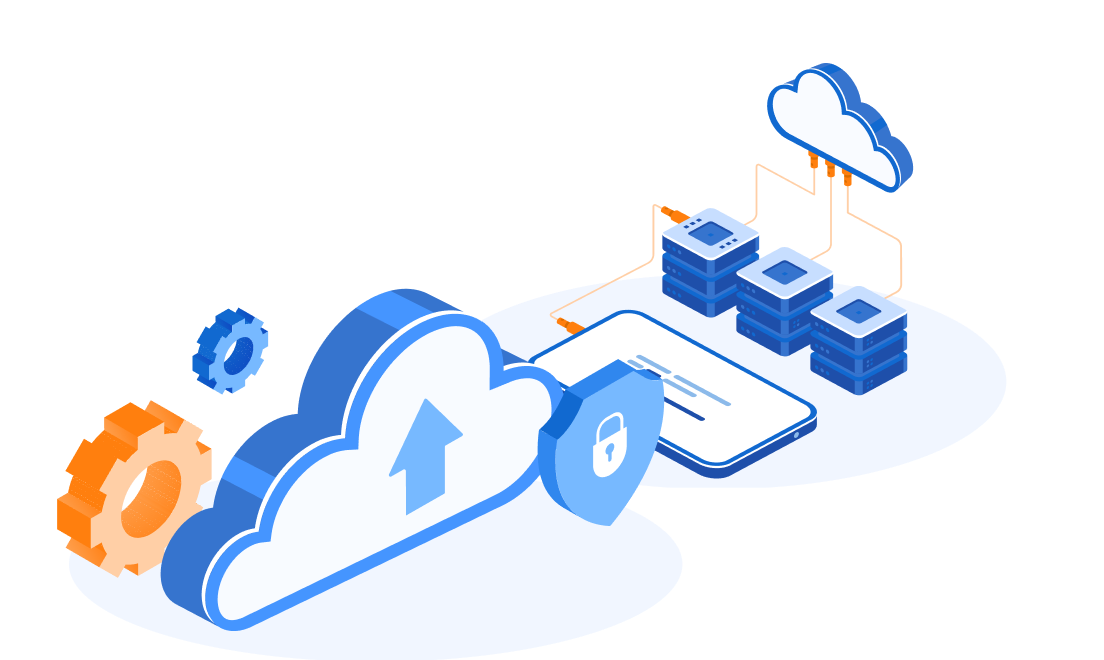
A cloud data platform is a centralized, scalable infrastructure that collects, stores, processes, and activates data from every source a business operates, hosted in the cloud rather than on physical servers. It gives every team in the organization access to the same, real-time, unified view of customer and operational data.
It is worth being clear about what this is not. A cloud data platform is not a single product from a single vendor. It is an architecture: the combination of cloud storage, data pipelines, a data warehouse or lakehouse, and the analytics and activation layer that sits on top. Different retail brands build this architecture in different ways depending on their existing systems, their team’s capabilities, and their commercial objectives.
It is also not the same as a Customer Data Platform (CDP), though the two are related. A CDP is typically an application layer that aggregates customer identity and behavioral data for marketing activation. A cloud data platform is the broader infrastructure underneath it: the foundation on which a CDP, a loyalty engine, a personalization system, and an analytics stack can all operate from the same data source.
The retail and e-commerce sector accounts for 35.67% of the customer data platform market in 2025, according to Mordor Intelligence, making it the largest single vertical. That concentration reflects a straightforward commercial reality: retail generates more customer interaction data across more channels than almost any other industry, and the brands that can unify and act on that data faster than their competitors hold a structural advantage.
Key Concept: The Retail Data Architecture Stack
A cloud data platform for retail is built in four layers. The commercial value of the platform depends on all four functioning together.
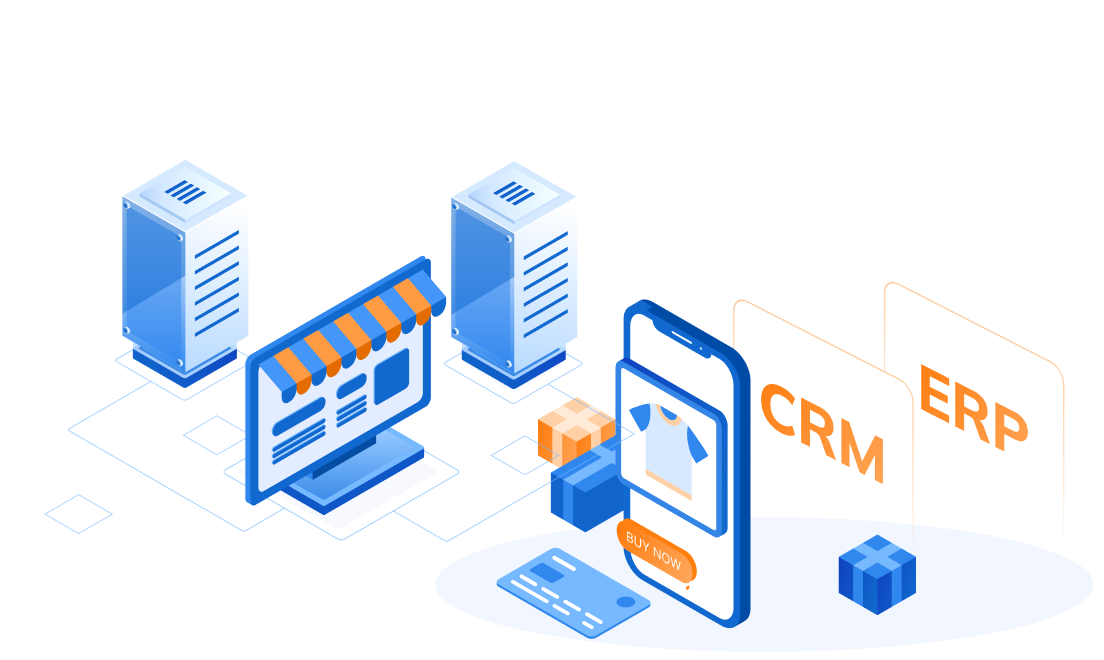
Layer 1: Data Ingestion. All customer and operational data streams from POS, e-commerce, mobile app, loyalty engine, CRM, and customer service flow into a single pipeline. No system is left disconnected.
Layer 2: Unified Storage. A cloud data warehouse or lakehouse stores all ingested data in a structured, queryable format. This is the single source of truth every team works from.
Layer 3: Processing and Analytics. Machine learning models, segmentation logic, churn prediction, CLV trajectory modeling, and loyalty scoring run against the unified data store. This is where raw data becomes actionable intelligence.
Layer 4: Activation. The processed intelligence is pushed back out to the tools that act on it: the loyalty platform, the email marketing system, the personalization engine, the customer service interface. Every activation is informed by the same unified customer record.
Most retail brands already have parts of Layers 1 and 2 in place. The commercial gap is almost always in Layers 3 and 4, and in the connections between all four.
The Real Cost of Scaling Customer Data Without a Unified Foundation
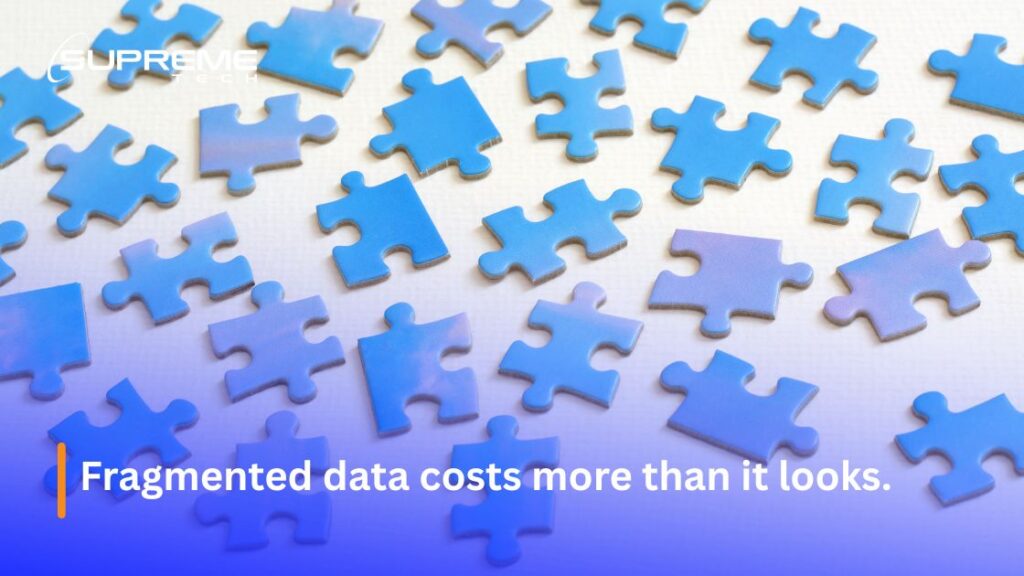
Scaling customer data programs on fragmented infrastructure is not just inefficient. It is actively counterproductive. Every new data source added to a disconnected architecture makes the fragmentation problem worse, not better.
Here is what that looks like at the operational level. A retail brand adds a mobile app to its existing in-store and e-commerce channels. The app generates behavioral data: which products customers browse, how long they spend in each category, which promotional banners they interact with. That data sits in a mobile analytics platform that does not connect to the e-commerce data warehouse or the loyalty engine. The brand has more data than it had before, but it has less ability to use it coherently, because now there are three partial customer records in three disconnected systems instead of two.
Forrester Research found that knowledge workers spend an average of 12 hours per week chasing data across disconnected systems. That figure represents 30% of a full working week spent on information-seeking rather than value creation. At the customer-facing level, the cost is expressed differently: service agents lack unified customer views, increasing resolution times. Loyalty teams cannot compute accurate BERA signals. Personalization engines are working from incomplete profiles, so recommendations miss. The retail cloud market is expected to grow from USD 48.7 billion in 2023 to USD 171.6 billion by 2030, at a 19.8% CAGR, according to PS Market Research. The brands driving that investment are not moving to cloud infrastructure because it is fashionable. They are moving because the alternative, scaling customer data programs on fragmented on-premise or siloed systems, produces compounding commercial problems.
McKinsey found that companies using personalized marketing strategies see up to a 40% increase in revenue. A Deloitte study from 2024 found that retailers using big data analytics achieved up to 25% cost savings by streamlining processes. Both outcomes depend on a unified data foundation. Neither is achievable when customer data is distributed across systems that do not communicate.
Five Things a Cloud Data Platform Makes Possible That Fragmented Systems Cannot
The commercial case for a cloud data platform in retail is not abstract. It is expressed in five specific capabilities that fragmented architectures structurally cannot support.
Capability 1: Real-time personalization at scale. A cloud data platform processes incoming behavioral signals and updates customer profiles in real time. When a customer browses a category on the mobile app on Monday morning and visits the store on Monday afternoon, the store associate (or the store’s digital signage and loyalty recognition system) can respond to Monday morning’s signal, not to last quarter’s purchase history. This is not possible when mobile app data and in-store systems run on separate databases with separate update cycles.
Capability 2: Cross-channel loyalty recognition. A loyalty member’s status, points balance, and reward eligibility should be visible and consistent regardless of which channel they are using at any given moment. Delivering this requires a single customer identity that all channels resolve to. Without a unified data layer, omnichannel loyalty recognition is a promise the technology cannot keep.
Capability 3: Predictive churn detection. Churn Probability Scoring, one of the five core customer loyalty analytics metrics, requires combining signals from multiple data sources: purchase recency, engagement depth across email and app, NPS movement, and channel contraction. None of these signals lives in the same system by default. A cloud data platform is what makes it possible to compute a composite churn signal per customer in real time, rather than discovering defection after it has already occurred.
Capability 4: Accurate CLV trajectory modeling. Customer Lifetime Value trajectory requires historical transaction data, service cost data, and behavioral engagement data combined into a single model. Each of these data types typically lives in a different system. A cloud data platform is the architecture that makes the combination possible and keeps it current.
Capability 5: Scalable AI and machine learning. Recommendation engines, demand forecasting models, dynamic pricing logic, and next-best-action systems all require large, clean, unified data sets to train on and real-time data feeds to operate against. Forrester’s 2025 B2C Marketing predictions note that brand loyalty is under increasing pressure from price sensitivity, making AI-powered personalization at the individual customer level a more important retention tool than ever. That personalization requires data infrastructure capable of supporting it.
What “Before Scaling” Actually Means in Practice
The phrase “before scaling” in the context of a cloud data platform carries a specific meaning that is easy to misread. It does not mean a brand needs a perfect, fully-built data architecture before it can grow its customer base or launch new channels. It means the data foundation needs to be in place before the scale of customer data being generated exceeds the organization’s ability to act on it coherently.
For most retail brands, this threshold arrives earlier than expected. A brand with 50,000 active loyalty members across two channels can manage customer data reasonably well with disconnected systems and manual reconciliation. The same brand with 500,000 members across five channels cannot. The complexity of customer identity resolution, cross-channel behavioral tracking, and real-time intervention triggering grows non-linearly with scale. At a certain point, adding more customers to a fragmented architecture does not produce more commercial intelligence. It produces more noise.
Two Retail Brands That Built the Foundation Before It Became a Crisis
Understanding why a cloud data platform matters is clarified by looking at what happens when retail brands invest in the unified data foundation at the right moment.
Brand Case Study: Ocado Retail
Ocado Retail is one of the UK’s largest dedicated online grocery retailers, serving over 645,000 customers with more than 260,000 weekly orders. As Ocado scaled, its personalization ambitions ran ahead of its data infrastructure. Customer data was siloed across disparate systems, and the marketing team was limited to a small number of monthly campaigns that could not be targeted at meaningful customer segments. In 2023, Ocado Retail partnered with Google Cloud and Cognizant to build a new cloud data platform using BigQuery, Vertex AI, and Cloud Run as the central architecture. The unified platform consolidated all customer, merchandising, and behavioral data into a single queryable warehouse. The results were immediate and specific: Ocado increased the number of campaigns it runs by 10 times, improved customer satisfaction by 5%, and reduced churn by 2%. “We now run 10 times the number of campaigns we used to with the help of the data platform,” said Kieren Johnson, Head of IT at Ocado Retail, as reported by Google Cloud. In FY2024, Ocado Retail revenue grew 13.9% to £2,685.8 million, with active customers increasing 12.1% to 1,119,000, according to Food Management Today. The data platform did not cause all of that growth, but it was the infrastructure that made personalization at scale possible.
Brand Case Study: Target
Target’s investment in cloud-based data infrastructure illustrates what happens when loyalty data, behavioral data, and operational data are unified at scale. Target built a personalization engine on Google Cloud’s AlloyDB AI platform that combines in-store purchase history, online browsing behavior, loyalty program signals, and real-time inventory data into a single customer profile. In August 2025, Target rolled out a major search overhaul built on this infrastructure, combining traditional keyword search with semantic AI understanding, resulting in a 20% improvement in product discovery relevance, as reported by ETail West. The loyalty data layer underlying these capabilities produced 13 million new loyalty members added in 2024, with Target setting an ambitious target to triple its Circle 360 paid membership over three years. The combination of unified customer data, AI-powered personalization, and omnichannel recognition is a cloud data platform outcome. None of it is achievable when loyalty, e-commerce, and in-store data are managed separately.
How to Evaluate Whether Your Current Data Architecture Is Holding You Back
Most retail brands do not realize their data architecture is a commercial constraint until a specific initiative fails. The signs that a cloud data platform investment is overdue tend to cluster around the same set of observable symptoms.
The first is an inability to answer basic cross-channel customer questions without manual data wrangling. If knowing how many customers have purchased both in-store and online in the last 90 days requires an analyst to pull data from two systems, join it manually, and produce a spreadsheet, the architecture is not serving the business at the speed the business needs.
The second is personalization that relies on demographic segments rather than individual behavioral signals. When a brand sends the same product recommendation to everyone who purchased in a given category in the last six months, it is working from population-level approximations because it lacks the individual-level signal data that behavioral personalization requires.
The third is loyalty analytics that operate with a one-to-two-week lag. Real-time churn detection and CLV trajectory monitoring require data that is current, not last week’s batch export from the POS system.
The fourth is a customer service team that cannot see a customer’s full purchase and loyalty history during an interaction. When a service agent needs to put a customer on hold to look up their loyalty status in a separate system, the architecture is producing the exact experience that erodes the emotional loyalty the brand’s program is trying to build.
| Architecture Type | Personalization Capability | Churn Detection | Loyalty Recognition | Scalability |
|---|---|---|---|---|
| Fully siloed systems | Segment-level only | Retrospective | Channel-specific | Limited; worsens with scale |
| Partially integrated | Cohort-level | Delayed (1-2 weeks) | Inconsistent across channels | Moderate; requires manual reconciliation |
| Unified cloud data platform | Individual-level, real-time | Predictive, real-time | Consistent across all channels | High; improves with scale |
Ready to build the data foundation your loyalty and personalization programs actually need? SupremeTech helps retail brands design and implement cloud data architectures that unify customer data, enable real-time analytics, and scale with the business. Start a conversation with SupremeTech →
FAQs Section
A cloud data platform is the broader infrastructure layer: the cloud storage, data pipelines, data warehouse, and processing environment that all data systems in a retail business connect to. A Customer Data Platform is typically an application layer that sits on top of this infrastructure, aggregating customer identity and behavioral data specifically for marketing activation. Most retail brands need both, but in the right order. Building a CDP on a fragmented data architecture produces a customer profile that is only as good as the data it can access. Building the cloud data platform foundation first means the CDP, the loyalty engine, and the personalization system all operate from the same unified, real-time data source.
The honest answer is earlier than most brands expect. The threshold is not about customer count in isolation. It is about the combination of customer count, channel count, and the commercial ambitions the brand is trying to execute. A brand with 100,000 loyalty members across three channels, attempting to run real-time personalization, predictive churn detection, and omnichannel loyalty recognition simultaneously, needs a unified data foundation to execute those programs accurately. The fragmentation problem becomes a commercial ceiling at the point where the intelligence the business needs to make good retention decisions is distributed across systems that cannot produce it together. For most scaling retail brands, that ceiling arrives well before the loyalty program reaches enterprise scale.
The ROI case rests on three mechanisms: revenue generated by personalization programs that were impossible without unified data; customer revenue retained through churn detection and intervention that was not possible without real-time behavioral signals; and operational efficiency gained by eliminating manual data reconciliation work
The timeline depends heavily on the number of data sources being integrated, the quality and consistency of existing data, and the commercial use cases being prioritized. A minimum viable unified data layer, connecting the core transactional data sources and enabling basic cross-channel reporting, can typically be delivered in three to six months. A full production environment with real-time processing, ML model deployment, and activation connections to loyalty, email, and personalization systems typically takes nine to eighteen months. The right approach is to phase the build around commercial priorities: start with the integrations that unlock the highest-value use cases first, and expand the architecture as new use cases are validated.
Data privacy regulations, including GDPR in Europe and PDPA in Southeast Asia, directly affect how customer data is collected, stored, and processed. A cloud data platform designed for retail needs to incorporate privacy requirements at the architecture level rather than as an afterthought: consent management, data residency requirements, retention policies, and the ability to honor data deletion requests across all integrated systems. The shift toward first-party data strategies, accelerated by third-party cookie deprecation, makes a well-designed cloud data platform more commercially valuable, not less, because brands that have invested in unified first-party data architectures are better positioned to deliver personalization without reliance on third-party data sources that are increasingly restricted.