










Discover Effective Data Integration Solutions for Customer Data Platforms
21/04/2026
563
Effective data integration solutions for customer data platforms are no longer a nice-to-have for businesses that operate across websites, mobile apps, stores, CRM systems, loyalty programs, and marketing tools. When customer data stays fragmented across channels, teams struggle to build a clear customer view, personalize experiences consistently, or make confident decisions based on reliable data. That is why the real question is not whether to connect customer data, but how to do it in a way that is scalable, accurate, and practical for long-term growth.
Why Customer Data Platforms Need Strong Integration Across Channels
A customer data platform is only as useful as the data it can bring together. If data from ecommerce, mobile apps, in-store systems, CRM tools, customer support platforms, and marketing channels remains disconnected, the platform may collect information without creating a truly usable customer view. In that situation, the business invests in a CDP but still struggles with the same old problems: inconsistent reporting, weak personalization, duplicate customer profiles, and delayed decision-making.
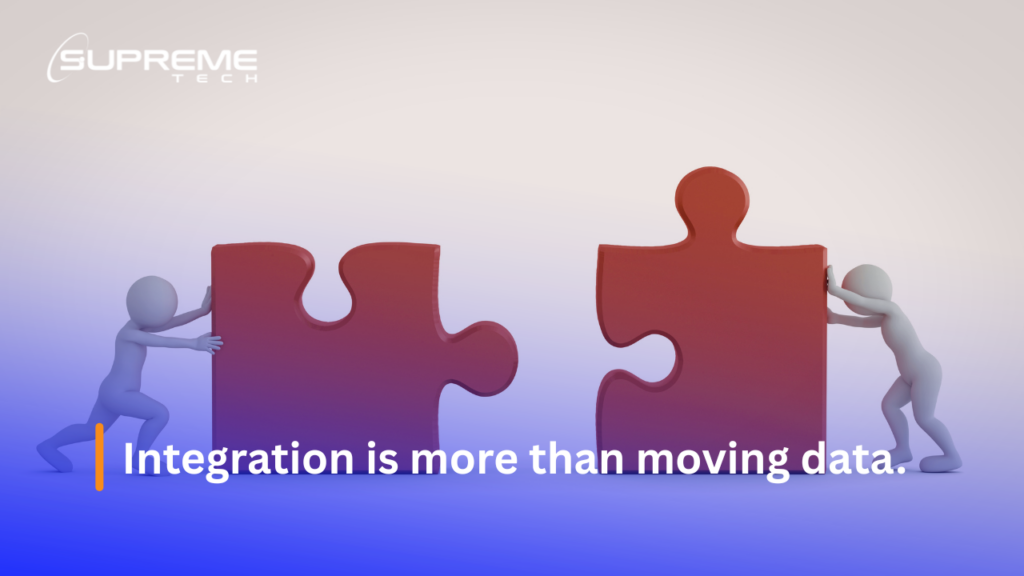
This is why effective data integration solutions for customer data platforms matter so much. The goal is not simply to move data from one system to another. It is to create a consistent, trusted flow of customer information across channels so the business can understand behavior more clearly and act on it more confidently. When integration is weak, even a well-chosen CDP can become limited. When integration is strong, the CDP becomes much more valuable because it can support segmentation, campaign orchestration, customer journey analysis, and business planning in a more reliable way.
The challenge is that most businesses do not operate in a clean, centralized environment. Customer data often sits across legacy systems, cloud applications, internal databases, third-party tools, and channel-specific platforms that were adopted at different stages of growth. Each system may use different formats, identifiers, update cycles, and ownership structures. As the business expands, this complexity grows. That makes integration less of a technical connector task and more of a strategic architecture decision.
For growing companies, this has real business implications. Without strong integration, teams spend more time reconciling data than using it. Marketing may target the wrong audiences, sales may work with incomplete histories, support teams may lack context, and leadership may see conflicting reports from different departments. Strong cross-channel integration helps reduce that fragmentation and turns the CDP into something practical: a foundation for better customer understanding, better coordination, and better long-term scalability.
Key Data Integration Solutions for Customer Data Platforms Across All Channels

To keep this section practical and easier to scan, it helps to think in terms of solution types, not just tools. The best option depends on how many channels a business operates, how fast customer data needs to move, and how much legacy complexity already exists.
API-first integration for real-time customer events
This approach is useful when the business needs customer data to move quickly across web, mobile, app, CRM, service, and marketing channels. API-first integration is often the right fit for use cases such as real-time personalization, triggered messaging, live audience updates, and in-session recommendations.
Why it matters
- Supports faster updates between touchpoints
- Helps reduce delays between customer action and business response
- Works well for modern digital products with frequent interactions
What to watch
- API integration alone does not solve identity resolution or data quality
- It needs strong governance, field mapping, and monitoring
ETL or ELT pipelines for structured cross-channel consolidation
When businesses need to bring together ecommerce, CRM, loyalty, support, offline transactions, and internal databases, ETL or ELT pipelines are often the backbone of the integration model. These pipelines are especially useful when data comes from systems with different formats, update cycles, and ownership structures.
Why it matters
- Creates a more stable foundation for customer profile building
- Helps standardize data from disconnected systems
- Makes reporting and segmentation more consistent
What to watch
- Slow or poorly designed pipelines can create stale customer views
- Without common business rules, the CDP may still produce inconsistent outputs
Interesting point for readers
This is often the hidden difference between a CDP that looks connected and one that is actually trusted by the business. If the pipeline only transfers data but does not standardize or reconcile it properly, teams still end up arguing over which numbers are right.
Identity resolution and profile unification layers
A customer data platform becomes much more valuable when it can recognize that the same person may appear across multiple systems with different identifiers. One profile may come from email activity, another from app behavior, another from store purchases, and another from customer service records. Without identity resolution, the platform may stay technically connected but operationally fragmented.
Why it matters
- Reduces duplicate profiles
- Improves segmentation and personalization accuracy
- Helps sales, marketing, and support teams work from a more complete customer view
What to watch
- Matching rules need to be accurate and privacy-aware
- Poor identity logic can create both false matches and missed matches
Research signal
Google Cloud describes CDPs as a way to build unified customer profiles, while Adobe’s Real-Time CDP specifically highlights harmonizing and connecting online, offline, and pseudonymous data into a unified profile. That reinforces an important business point: integration is not complete when systems are merely connected. It becomes effective when the data is standardized and connected at the profile level.
Streaming plus batch integration for mixed-channel environments.
Many businesses do not need everything in real time, but they also cannot rely on delayed updates for every channel. In practice, the strongest architecture is often a mix: streaming for high-value, time-sensitive interactions and batch integration for heavier or less urgent data flows.
A smart rule of thumb
- Use streaming for behaviors that affect immediate engagement
- Use batch for large-scale reconciliation, reporting, and historical enrichment
Why this works
- Balances responsiveness and system efficiency
- Avoids overengineering every pipeline for real-time use
- Helps the business prioritize data freshness where it creates the most value
Real-world example
Telefónica Germany says Adobe Real-Time CDP and Journey Optimizer help collect, manage, and distribute customer data across interaction points so teams can work from the same core data across channels. That case shows why mixed integration models matter in real businesses: not all customer data has the same urgency, but all of it needs to contribute to a more consistent operating view.
Read articles related to Customer Data Platform:
- What is the Customer Data Pipeline? Best Practices for Non-Tech Marketers
- The Future of Customer Data Platform in Retail
Data governance and quality controls built into the integration layer
This is the part many teams underestimate. Even strong connectors and pipelines will create weak outcomes if the business has no clear rules around data definitions, consent handling, ownership, and update logic. Effective data integration solutions for customer data platforms need governance built into the architecture, not added later as a cleanup task.
Why it matters
- Improves trust in the CDP output
- Reduces reporting conflicts across departments
- Helps support privacy, compliance, and long-term maintainability
What to include
- common data definitions
- validation rules
- ownership by domain or team
- consent and privacy controls
- monitoring for broken flows or unusual changes
Research-backed context
McKinsey has written that consumers increasingly expect personalization, which raises the business value of accurate, connected customer data. But that expectation also makes weak data quality more damaging, because poor data can lead to irrelevant outreach, inconsistent experiences, and wasted marketing effort.
Instead of asking, “Which integration tool is best?”, a more useful question is:
What kind of customer data problem are we actually trying to solve?
A practical decision framework looks like this:
- If the priority is real-time engagement, start with API-first and event-driven integration.
- If the priority is cross-system consolidation, invest in strong ETL or ELT pipelines.
- If the priority is single customer view accuracy, strengthen identity resolution first.
- If the priority is scalable omnichannel operations, combine streaming and batch intelligently.
- If the priority is long-term trust and maintainability, make governance part of the integration layer from the start.
That is usually where better CDP decisions begin. Not with the widest connector library, but with the clearest understanding of what the business needs the integrated data to support.
Common Mistakes Businesses Make When Integrating Customer Data Platforms

Customer data platform integration usually becomes difficult for the same reason it becomes important: the business is trying to connect more channels, more teams, and more decision-making around the same customer. The mistakes below are common not because teams are careless, but because CDP projects often start with urgency and ambition before the data foundation is fully ready.
Treating integration as a connector project instead of a data architecture decision
One of the most common mistakes is assuming the job is done once systems are technically connected. In reality, CDP integration is not only about moving data from ecommerce, CRM, support, web, app, and offline channels into one place. It is about deciding how that data should be structured, standardized, governed, and activated across the business.
AWS’s customer data platform guidance makes this clear by framing CDP architecture around ingestion, identity resolution, segmentation, analysis, and activation, not just connectivity.
Ignoring identity resolution until later
Many businesses connect multiple channels first and assume profile unification can be improved afterward. That often creates duplicate records, fragmented customer histories, and weak segmentation from the start.
AWS has explicitly highlighted customer identity fragmentation as a major enterprise challenge because scattered records make it harder to support analytics, compliance, and customer engagement with a trusted unified view.
Underestimating data quality and governance
Poor data quality is one of the fastest ways to weaken a CDP after launch. If fields are inconsistent, consent rules are unclear, source systems use different definitions, or update logic is not monitored, the platform may produce customer views that look complete but are not dependable enough for real use.
This matters because personalization and customer experience are very sensitive to bad data. McKinsey has reported that personalization can drive meaningful revenue lift, but the same logic also means poor data quality creates business risk when experiences become irrelevant or inconsistent.
Conclusion
Effective data integration solutions for customer data platforms are not only about connecting more systems. They are about helping the business create a customer data foundation that is accurate, usable, and sustainable as channels, tools, and customer expectations continue to grow.
That is why strong CDP integration should be treated as a business capability, not just a technical task. When integration is designed well, it helps unify customer profiles, improve personalization, support clearer decision-making, and reduce the operational friction that comes from fragmented data across teams. When it is designed poorly, even a capable platform can struggle to deliver meaningful business value.
For companies investing in a customer data platform, the real opportunity is not simply to centralize customer information. It is to make that information more actionable across the business. And that only happens when the integration model is strong enough to support both present needs and future growth.
FAQs
effective data integration solutions for customer data platforms are methods and architectures that help businesses connect customer data from multiple channels into one reliable system. These solutions often include APIs, ETL or ELT pipelines, identity resolution, streaming and batch processing, and governance controls to keep customer profiles accurate and usable.
Data integration is important because a customer data platform is only valuable when it can unify data across channels in a consistent and trusted way. Without strong integration, businesses often face duplicate profiles, fragmented reporting, poor personalization, and limited visibility into customer behavior.
A customer data platform typically needs data from websites, mobile apps, CRM systems, ecommerce platforms, loyalty tools, customer support systems, email platforms, offline transactions, and marketing channels. The right mix depends on the business model, but the goal is always to create a more complete customer view across touchpoints.
One of the biggest challenges is not connectivity itself, but consistency. Businesses often struggle with identity resolution, data quality, governance, and aligning different systems that were adopted at different stages of growth. That is why CDP integration is often more of a data architecture challenge than a simple connector task.
Effective data integration solutions improve personalization by making customer profiles more accurate and complete. When data from different channels is unified properly, businesses can better understand customer behavior, build more relevant segments, and deliver more consistent experiences across marketing, sales, and support.