






Real-Time Customer Data Integration: 7 Best Practices for Retailers
04/08/2026
188
Real-time customer data integration means moving customer information between your point-of-sale, e-commerce platform, and loyalty system within seconds, so every channel sees the same customer at the same moment. It’s different from “fast” batch syncing, which still runs on a schedule, even a frequent one. For most retailers, true real-time matters for a short list of high-friction moments — not the entire data estate — and knowing which moments those are is the actual decision to get right.
If you’re reading this, there’s a good chance someone above you has already said the word “real-time” in a meeting, and now your team is trying to figure out what that actually requires. This is the practical version of that conversation.
What “real-time” actually means in customer data integration

There are three tiers worth distinguishing, because the word “real-time” gets used loosely enough to cover all of them.
Batch sync moves data on a schedule — hourly, nightly, sometimes just once a day. It’s cheap, simple, and it’s the reason a customer who redeemed a loyalty reward in-store this morning still shows a full balance on the app tonight.
Near-real-time moves data every few minutes, often through scheduled micro-batches or lightweight polling. It closes most of the embarrassing gaps — a cart abandoned an hour ago can trigger a message before the customer forgets they were shopping — without the cost of a full streaming architecture.
True real-time moves data in seconds, usually through event streaming or change data capture (CDC), which listens for a change the instant it happens rather than asking “anything new?” on a timer. This is what a POS needs when a staff member is standing at the counter waiting to confirm a loyalty redemption.
Retailers conflate “real-time” with “fast enough” because most use cases don’t actually need the fastest tier — they need the tier that matches how a human is experiencing the delay. A customer waiting at a register experiences a 30-second lag as broken. A customer opening a weekly email doesn’t notice whether the segment behind it was built four hours ago or four minutes ago.
Why retailers need real-time customer data — not just accurate data
Accuracy and speed are two different problems, and it’s worth separating them before going further. A retailer can have perfectly accurate customer data that’s simply too old to be useful at the moment it’s needed. That’s the gap real-time integration closes.
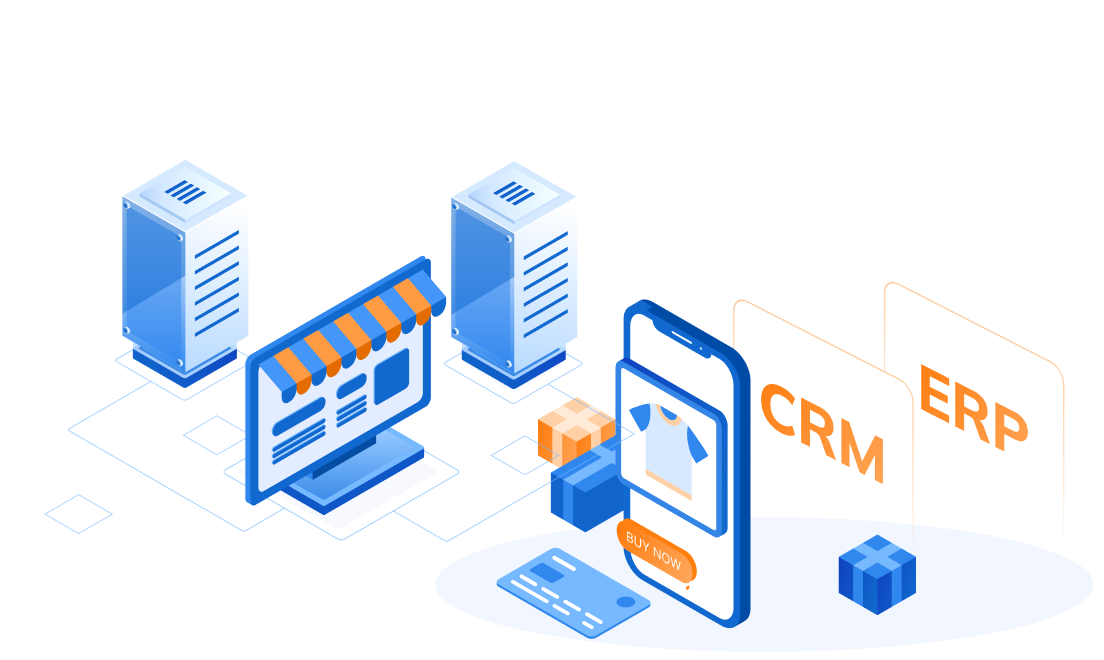
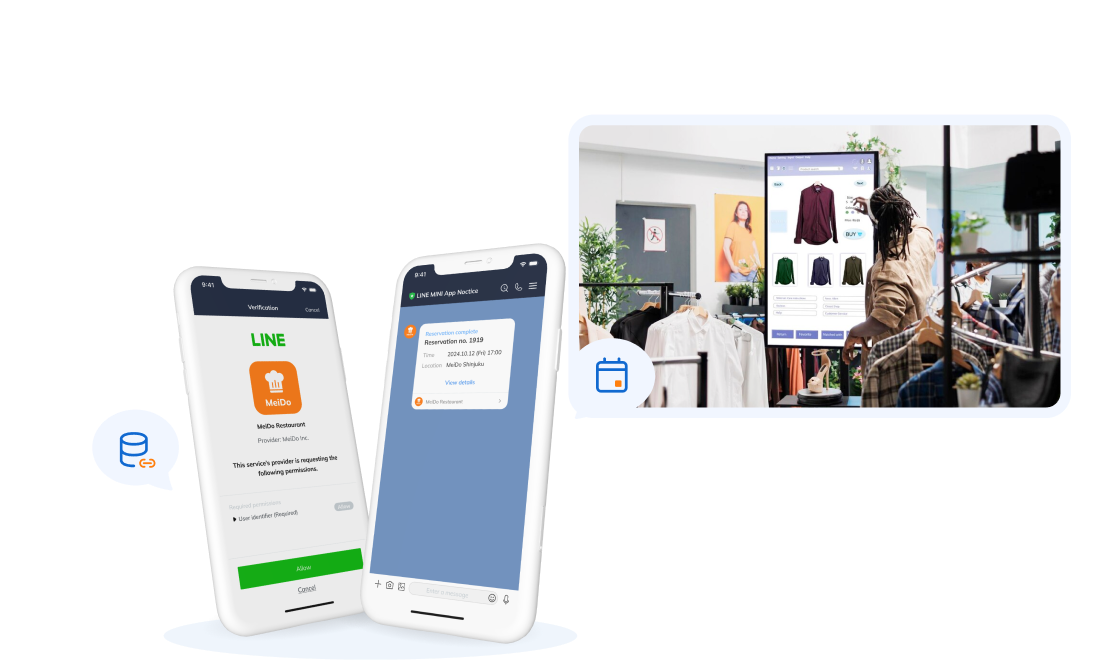
The clearest examples show up at the counter and in the cart. A loyalty member redeems points online, then walks into a store twenty minutes later — if the POS hasn’t caught up, staff either honor a stale balance or turn the customer away, and both outcomes cost trust. This is the exact gap SupremeTech closed for a multi-location coffee chain in Japan, digitalizing customer data management across POS and loyalty systems so staff and the app finally agreed on the same balance. A shopper adds three items to a cart and leaves; if the abandonment trigger fires two days later instead of two hours later, the moment of intent has already passed. For a deeper look at how these pipelines are structured end to end, see what a customer data pipeline actually does.
The cost of stale data rarely shows up as a single dramatic failure. It shows up as duplicate offers sent to a customer who already redeemed one, personalization that recommends something out of stock, and a slow accumulation of moments where the brand looks like it doesn’t actually know the customer — which, functionally, it doesn’t, for the ten or twenty minutes that matter most.
7 best practices for real-time integration

1. Start with a single source of truth before adding speed. Real-time infrastructure moving bad or duplicated data just breaks things faster. Before investing in streaming, resolve which system is authoritative for each customer attribute — loyalty balance, contact info, purchase history — so speed amplifies a clean signal instead of a messy one.
2. Use change data capture (CDC) or event streaming, not polling. Polling asks a system “anything new?” on a fixed interval, which wastes resources and still introduces lag. CDC listens for the change itself and pushes it the moment it happens, which is both faster and cheaper at scale once you’re past a certain data volume.
3. Standardize identity resolution across channels first. Real-time speed is wasted if the system can’t confidently tell that the customer in the app, the customer at the register, and the customer on the email list are the same person. Identity resolution — matching records by email, phone, loyalty ID, or a probabilistic model — has to be solved before real-time sync delivers a unified view rather than three fast-moving fragments.
4. Build for graceful degradation. Every real-time pipeline eventually lags or drops a connection, usually during the exact traffic spike you can least afford it — a holiday sale, a flash promotion. Design a fallback: cached last-known-good data, a visible “processing” state at the register, or a short grace period on redemptions, so a pipeline hiccup doesn’t become a customer-facing failure.
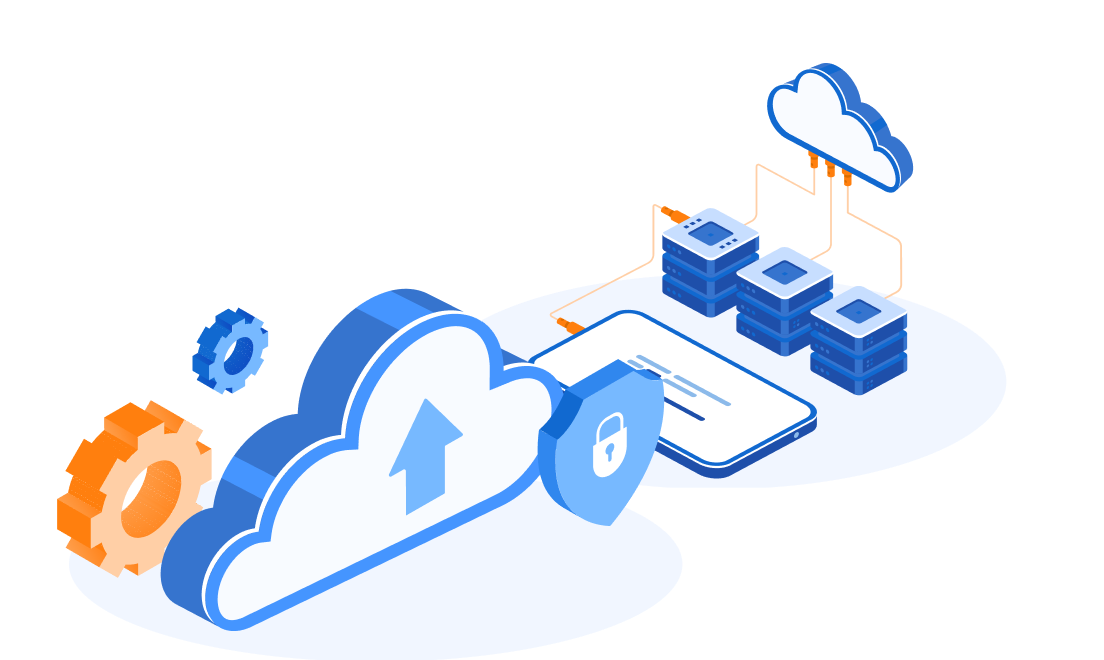
5. Encrypt and govern data in motion, not just at rest. Data moving between systems in real time is a live attack surface, and it’s also subject to the same privacy obligations — GDPR, CCPA — as data sitting in a database. Encryption in transit and clear data-handling rules for streaming pipelines aren’t optional extras; they’re part of the pipeline design from day one.
6. Monitor pipeline health with alerting, not just dashboards. A dashboard someone has to remember to check is not monitoring — it’s a hope. Real-time pipelines need active alerting: if the pipeline lags past a defined threshold or drops events, someone gets paged before customers notice, not after a support queue fills up.
7. Test under peak load before go-live. A pipeline that performs well on a Tuesday afternoon can fall over during a flash sale or the first weekend of a holiday campaign, when event volume spikes ten or twenty times normal. Load-test against your actual peak numbers — not average numbers — before trusting the system with customers watching.
Build vs. buy: streaming infrastructure options for retail
The right infrastructure choice depends more on transaction volume and existing systems than on ambition. A lightweight approach — webhooks feeding an iPaaS (integration platform as a service) like Zapier, Workato, or a similar connector layer — suits retailers with moderate transaction volume and a handful of systems to connect; it’s faster to stand up and far cheaper to maintain, though it can strain under very high event volume.
A heavier approach — a dedicated streaming platform like Kafka, or a CDP with native streaming ingestion — fits retailers running dozens of locations, high transaction volume, or multiple data sources that all need to reconcile in near-real-time. SupremeTech took this heavier path for a luxury jewelry brand, building a structured customer data pipeline to keep loyalty data consistent across online and offline touchpoints — the kind of project where the upfront engineering cost is justified by transaction complexity, not just volume. Before making that investment, most retailers benefit from first confirming they have a cloud data platform capable of scaling with a real-time layer on top.
| Tier | Typical latency | Relative cost | Best-fit use case |
|---|---|---|---|
| Batch | Hours to 1 day | Low | Reporting, email segmentation, non-urgent personalization |
| Near-real-time | Minutes | Moderate | Cart abandonment triggers, inventory-aware recommendations |
| True real-time (streaming/CDC) | Seconds | High | In-store loyalty redemption, POS lookups, flash-sale inventory sync |
Most retailers don’t need to pick one tier for their entire business — the practical answer is usually a mix, with true real-time reserved for the moments in the table above where a customer is actively waiting.
Common pitfalls when moving from batch to real-time
Teams underestimate identity resolution complexity most often. It’s tempting to treat real-time sync as a plumbing problem — move the data faster — when the harder problem is making sure the data being moved actually refers to the same customer across systems that were never designed to talk to each other.
A close second is skipping the fallback plan. Every pipeline breaks eventually, and a team that hasn’t decided what happens during that gap ends up making the decision live, under pressure, at a register with a customer waiting.
The third and most persistent pitfall is treating real-time integration as a project with an end date rather than an operational discipline. A pipeline needs monitoring, retesting under new load patterns, and a maintenance owner — the same way a store manager owns daily operations. Retailers that treat go-live as the finish line tend to see the pipeline quietly degrade over the following year.
FAQs Section
Real-time moves data in seconds, typically through event streaming or CDC. Near-real-time moves it every few minutes through scheduled micro-batches. Near-real-time is “good enough” for anything a customer doesn’t experience as an immediate wait, like cart-abandonment emails.
Costs fall into three rough tiers: webhook/iPaaS connectors are the cheapest and fastest to deploy; dedicated streaming platforms or CDPs with native streaming cost significantly more in both licensing and engineering time; enterprise-grade CDP implementations with full streaming and identity resolution sit at the top of the range. The right tier depends on transaction volume and how many systems need to reconcile.
Most small, single-location retailers can run on batch or near-real-time sync without a noticeable customer-experience gap. Real-time becomes worth the investment once a business runs flash sales, multiple locations, or high-volume loyalty redemption where customers are actively waiting on the data.
Three broad categories: CDC tools that capture database changes as they happen, event-streaming platforms like Kafka for high-volume pipelines, and CDPs with native real-time connectors that combine ingestion and identity resolution in one system.
Load-test against your actual peak traffic numbers — holiday volume or flash-sale volume, not an average day — and confirm the fallback behavior works before go-live, so a lagging pipeline degrades gracefully instead of failing visibly at the register.
No. Most retailers only need true real-time for a handful of high-friction moments — in-store redemption, POS lookups, flash-sale inventory — while reporting and email segmentation run fine on batch or near-real-time schedules.