









Best Customer Data Platforms for Retail in 2026: A Buyer’s Comparison
10/08/2026
319
The best customer data platform for retail depends on use case: DTC brands need fast e-commerce integration, omnichannel retailers need in-store identity resolution, and enterprise chains need scale across hundreds of locations. There is no single best CDP for every retailer, only the best fit for a specific channel mix and data maturity.
What a CDP Does for a Retail Business Specifically

A retail CDP unifies point of sale, e-commerce, loyalty, email or SMS, and app data into one customer profile so a retailer can personalize offers and messaging based on a customer’s full purchase history, not just their activity on one channel.
Without this unification, a customer who buys in-store on Tuesday and browses the website on Thursday looks like two different people to a retailer’s marketing systems. That gap is what drives the specific personalization failures retail shoppers notice most: a discount email for an item already purchased in-store, a loyalty reminder that ignores an online order, or a birthday offer that never accounts for a customer’s actual spend tier. A CDP exists to close that gap by resolving identity across channels in something close to real time.
What to Look for in a Retail CDP
Five capabilities separate a CDP that genuinely fits a retail business from one built primarily for a different industry: identity resolution across channels, real time segmentation, native retail integrations, privacy compliance handling, and activation channel coverage.
Omnichannel Identity Resolution
Identity resolution is the CDP’s ability to recognize that an in-store purchase, an online account, and a loyalty signup all belong to the same person, even when each system captured slightly different contact details.
Retail identity resolution is harder than typical B2C identity resolution because in-store transactions often lack a reliable identifier unless a loyalty card or phone number is captured at checkout. A CDP evaluated for retail specifically should be tested against the retailer’s actual POS data capture rate, meaning the percentage of transactions that include any identifying detail at all, since a platform that performs well on e-commerce data alone can still struggle to match anonymous in-store purchases.
Real Time Segmentation for Personalization and Loyalty
Real time segmentation determines how quickly a customer moves into a new segment after a qualifying action, such as a purchase that pushes them into a higher loyalty tier or a cart abandonment that should trigger a follow-up message within the hour rather than the next day.
Some CDPs update segments on a nightly batch cycle, which is adequate for broad campaign targeting but too slow for time sensitive triggers like flash sale eligibility or same day cart recovery. Retailers running frequent promotional campaigns or tiered loyalty programs should confirm a platform’s actual segment refresh latency, not just whether it supports real time updates as a marketing term.
Native Integrations With the Retail Tech Stack
Native integrations are prebuilt connectors to the specific platforms a retailer already runs, commonly Shopify or a similar e-commerce platform, a POS system, and a loyalty platform, rather than generic API access that requires custom development for each connection.
A CDP with a native Shopify connector and prebuilt POS integrations for common retail point of sale systems will typically reach production faster than one requiring a development team to build every integration from scratch. This is one of the clearest signals of whether a platform was actually designed with retail in mind or adapted from a broader B2C use case.
Privacy and Compliance Handling
Privacy compliance covers how a CDP manages consent, data retention, and deletion requests under regulations like GDPR and CCPA, which matters more for retail CDPs than it might first appear given how much first party data retailers now depend on as third party cookies phase out.
A platform should offer built-in consent management tied to each customer profile, configurable data retention rules by region, and a straightforward process for handling deletion requests without manual engineering work each time. Retailers operating across multiple regions with different privacy regimes should confirm a platform handles this natively rather than requiring custom workarounds per region.
Activation Channels
Activation channel coverage is the range of destinations a CDP can push a segment to directly: email, SMS, paid ad platforms, and in-store systems like a POS or clienteling app.
A CDP that unifies data beautifully but can only activate it through email leaves a retailer building custom integrations to reach every other channel, which defeats much of the platform’s value. Confirm native activation support for the specific channels a retailer’s marketing team actually uses today, not a long list of theoretical integrations the retailer will never touch.
Best Customer Data Platforms for Retail, by Use Case
The right CDP depends heavily on channel mix and scale, which is why a single ranked list serves retail buyers poorly. The categories below reflect how retail CDP needs typically break down.
Best for DTC and E-commerce Brands
DTC and e-commerce focused brands, meaning retailers without physical stores or with a small store footprint relative to online sales, generally need a CDP with the deepest possible e-commerce platform integration and strong web and app behavioral tracking, since nearly all customer signal originates online. Lighter weight, e-commerce native CDPs tend to implement faster and cost less for this segment than platforms built primarily for complex omnichannel identity resolution the brand doesn’t yet need.
Best for Omnichannel Retailers With Physical Stores
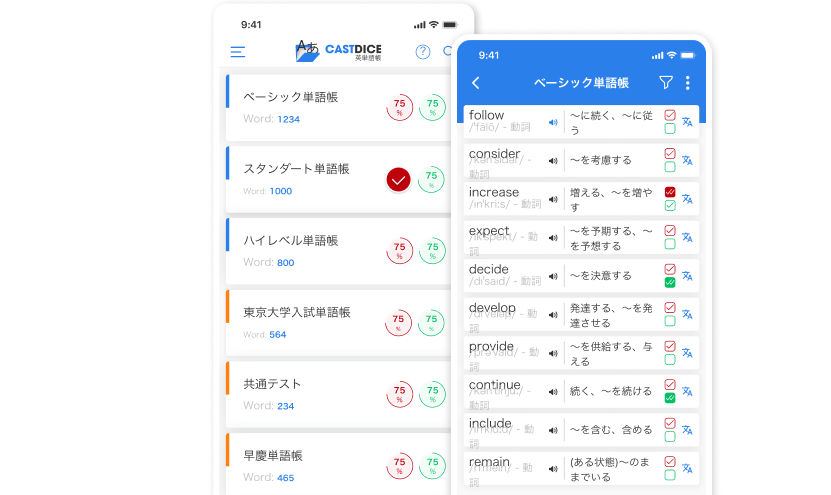
Omnichannel retailers running both physical stores and online channels need a CDP with proven POS integration and strong identity resolution across in-store and digital touchpoints, since this is precisely the use case where generic CDPs built for pure e-commerce brands tend to underperform. SupremeTech saw this pattern directly while digitalizing customer service for a leading coffee chain in Japan: connecting POS-level purchase data to the chain’s online and loyalty activity was the hard part, not the marketing logic layered on top of it. The evaluation priority here should weigh POS connector maturity and match rate on in-store transactions above nearly every other feature.
Best for Enterprise and Large-Scale Retail
Enterprise retailers running hundreds of locations, multiple brands, or high transaction volume need a CDP proven at that scale, with governance features, including role based access and audit trails, that smaller platforms often lack entirely. This is close to the challenge SupremeTech addressed while enhancing the customer buying journey for a retail app used by 5 million users, where throughput under peak load, meaning holiday season and flash sale traffic, was a hard requirement rather than a nice to have.
Best for Budget-Conscious and Growing Retailers
Retailers earlier in their growth curve, without the budget or data volume to justify an enterprise platform, are generally better served by a lighter weight CDP or a CDP-adjacent tool with a lower entry price and simpler implementation, even if it means fewer advanced features. Overbuying platform sophistication before the data volume or team capacity exists to use it is one of the more common and avoidable mistakes in this category.
| Retailer Type | Priority Capability | What to Deprioritize |
| DTC or e-commerce | E-commerce platform depth, web and app tracking | Complex in-store identity resolution |
| Omnichannel with stores | POS integration and in-store match rate | Features built primarily for pure online brands |
| Enterprise, large scale | Governance, scale, peak load throughput | Simplicity or lowest sticker price |
| Budget-conscious, growing | Fast time to value, lower total cost | Advanced features the team lacks capacity to use yet |
How to Evaluate and Shortlist a CDP
A short, structured pilot beats a long procurement process built entirely on vendor demos, since a demo environment rarely surfaces how a platform performs against a retailer’s actual messy data.
Run a trial or paid pilot using a real, representative sample of the retailer’s own POS and e-commerce data, not a vendor’s clean demo dataset, and measure the actual identity resolution match rate against that sample. Ask each vendor to walk through a specific retail scenario the team cares about, such as recognizing a customer across an in-store purchase and an online return, rather than a generic product tour. Watch for a few common red flags during this process: vague answers about POS integration specifics, reluctance to provide retail specific reference customers, and pricing that stays opaque well into the evaluation.
Implementation Cost and Timeline Expectations
Most retail CDP implementations take two to six months from contract to a live, activated customer profile, with cost driven primarily by the number of source systems being integrated rather than by company size alone.
A DTC brand integrating one e-commerce platform and an email tool can often reach production in six to ten weeks. An omnichannel retailer integrating POS, e-commerce, loyalty, and CRM simultaneously should expect four to six months, and enterprise deployments spanning multiple brands or regions can extend past six months. License costs for retail CDPs commonly scale with either customer record volume or event volume, so a retailer should model pricing against realistic growth, not just current data volume, to avoid a cost surprise at renewal.
CDP Versus Other Tools You Might Already Have
A CDP is not a replacement for a CRM, an email service provider, or a loyalty platform. It sits alongside them, unifying the data those tools each hold in isolation so they can all work from the same customer view.
A CRM manages known customer relationships, typically starting from a sales or service interaction. An email service provider sends and tracks campaigns but generally has no visibility into POS or loyalty data unless a CDP feeds it that context. A loyalty platform manages points, tiers, and rewards but rarely has a complete picture of a customer’s full purchase and browsing history across every channel. A CDP’s role is connecting all of these systems to the same underlying customer data, which is why implementing a CDP without also cleaning up how these existing tools already handle customer data tends to disappoint, since a CDP built on fragmented, low quality source data cannot fully compensate for master data problems upstream.
FAQs Section
A retail CDP unifies customer data from POS, e-commerce, loyalty, and other channels into one profile so a retailer can personalize marketing, avoid duplicate or conflicting outreach, and understand a customer’s full behavior across every touchpoint rather than one channel at a time.
It depends on channel complexity more than revenue alone. A small retailer running a single e-commerce store with no physical locations may not need full CDP sophistication yet, while a small retailer running stores plus online plus a loyalty program can benefit from even a lightweight CDP sooner than expected.
Through POS integration and identity resolution that matches an in-store transaction, which often has limited identifying information, to the same customer profile built from online and loyalty activity. Match quality on this specific capability varies significantly between platforms, so it is worth testing directly rather than assuming.
A loyalty platform manages points, tiers, and reward redemption for a specific program. A CDP unifies all customer data, including but not limited to loyalty activity, across every channel a retailer operates, giving a broader view than a loyalty platform alone provides.
Pricing varies by vendor and typically scales with customer record volume or event volume rather than a flat fee. Smaller, single channel deployments can start in the low tens of thousands of dollars annually, while enterprise, multi-brand deployments can run well into six figures once implementation is included.