










Why Is LINE Popular in Japan? Inside Its Rise From Disaster Relief App to National Ecosystem
08/09/2026
430
LINE became popular in Japan because it launched at the exact moment of the 2011 earthquake and tsunami, when phone networks failed but the internet did not, and it kept earning that trust by adding the services people actually needed, from stickers to payments to government notices. That single decision, building for a real crisis instead of a hypothetical market, is why the LINE app Japan uses today looks less like a messenger and more like national infrastructure.
With over 100 million monthly active users covering more than 80% of the population, LINE is not simply the most used chat app in the country. It is the layer that businesses, schools, and even local governments build their communication on top of.
This article traces how LINE went from an emergency built messaging tool to a full digital ecosystem, and what its trajectory reveals about building products that actually fit local culture instead of importing one that merely works elsewhere.
Born From a National Crisis
LINE was not the product of a long roadmap. It was built in a hurry, in 2011, after the Great East Japan Earthquake and the tsunami that followed. Phone networks collapsed under the volume of people trying to reach loved ones, while internet based connections largely held up. NHN Japan (the local arm of the Korean internet company Naver, now operating as LY Corporation) noticed the gap and built a lightweight app for messaging and calling over data instead of the traditional telecom network.
It launched publicly in June 2011, just months after the disaster, and reached 100 million downloads within 18 months. That origin story shaped everything that followed. LINE earned trust at the exact moment people needed a reliable way to check on family, and that trust became the foundation for everything the app has added since.
The Sticker Economy
Most messaging apps treat emoji as a small visual add on. LINE treated stickers as a core part of the product and a business line in their own right. Within about a year of launch, it introduced its now iconic cast of characters, including Brown the bear and Cony the rabbit, as large expressive illustrations that could carry an entire emotion in a single tap.
This fit Japanese communication habits closely. Conversation in Japan often favors indirectness and softness over blunt statements, and a sticker can express “sorry” or “I appreciate it” with more warmth than a typed sentence. Stickers became a real revenue stream too, with users purchasing sticker sets and brands paying to create branded ones for marketing campaigns, a pattern that predates and quietly parallels the point collecting habits many Japanese retail brands later built their loyalty programs around.
From Chat App to National Infrastructure, Year by Year

What makes LINE’s story worth studying is not the launch. It is the pace at which the company kept layering new services onto the same account, each one raising the cost of ever switching away.
2013 to 2014, entertainment enters the chat. LINE added games, a manga reading service, and a news feed, turning a messaging app into something people opened to be entertained, not just to talk.
2014, money starts moving. LINE Pay launched, letting users send money to friends and pay at stores directly from the app, marking the company’s first real step into financial services.
2016, LINE goes public. A dual listing on the Tokyo and New York stock exchanges signaled that LINE was now a serious technology company with regional ambitions, not a scrappy post disaster project.
2018 to 2020, the super app push. LINE expanded aggressively into financial services with LINE Securities for stock trading, LINE Bank in partnership with Mizuho, and insurance products, following a model closer to WeChat in China than to any Western messenger.
2021, a major merger. LINE combined with Yahoo Japan under a joint holding company, Z Holdings, backed by SoftBank. This pooled two of the country’s largest user bases and advertising businesses into one group, now operating as LY Corporation.
2023 onward, public services and AI. Local governments increasingly use LINE as an official channel for notices, permit applications, and disaster alerts, while the platform keeps adding AI powered search and customer service features to stay current.
The Scale Today
By the numbers, LINE’s position in Japan is hard to overstate. LY Corporation reports over 100 million monthly active users in a country of roughly 123 million people, with a near even gender split of 53.3% women to 46.7% men and strong usage across every age group from teens through people 65 and older. On the business side, the platform now hosts more than 13 million official accounts used by companies to send updates, coupons, and customer support messages directly into a channel people already check throughout the day.
That combination, near universal personal reach plus a business messaging layer built into the same app, is what separates LINE from a typical messenger and puts it closer to a piece of national infrastructure.
Is LINE a Super App?
By most definitions, yes. A super app bundles messaging, payments, commerce, and content into a single account so users rarely need to leave it, and the LINE super app model checks every one of those boxes. Chat sits alongside LINE Pay, LINE News, LINE Manga, and Official Accounts for customer service, which is why analysts routinely compare it to WeChat rather than to WhatsApp or Messenger.
Why It Stuck When Global Giants Did Not
WhatsApp is the default messenger almost everywhere else in the world, yet it never gained real traction in Japan. Facebook Messenger struggled too, partly because Facebook itself never became as central to Japanese social life as it did in the West. LINE had a timing advantage at launch, but the reason it kept winning for over a decade is structural, not accidental.
It matched cultural habits instead of importing foreign ones. Stickers over blunt text, closed group chats over public feeds, and a general preference for privacy in personal conversations lined up with how people already wanted to communicate.
It became load bearing infrastructure. Businesses list LINE as a contact channel, schools send announcements through it, and some government offices process applications through it. Leaving LINE does not just mean losing touch with friends. It means losing a working connection to daily administrative life.
It never stopped adding utility. Every few years, LINE absorbed a new category, entertainment, payments, banking, and now AI tools, which kept raising the practical cost of switching to a competitor. A simple chat app is easy to replace. An account tied to payments, loyalty offers, and official notifications is not.
What Businesses Can Learn From the LINE Ecosystem

The first lesson is to design for the channel people already have open. Japanese consumers do not need to be convinced to download LINE. They need a reason to add a business as a contact within an app they are already using dozens of times a day. This is exactly why a LINE Official Account has become a core CRM channel in Japan, sitting closer to a private, permission based marketing and support tool than a traditional social media page.
The second lesson is to build ecosystems, not stand alone tools. LINE succeeded by connecting chat, payments, entertainment, and government services into one account, so that using any one service reinforces the habit of using the rest. This is the same pattern Japan’s major loyalty point networks apply, where every additional integrated service makes the whole ecosystem harder to leave.
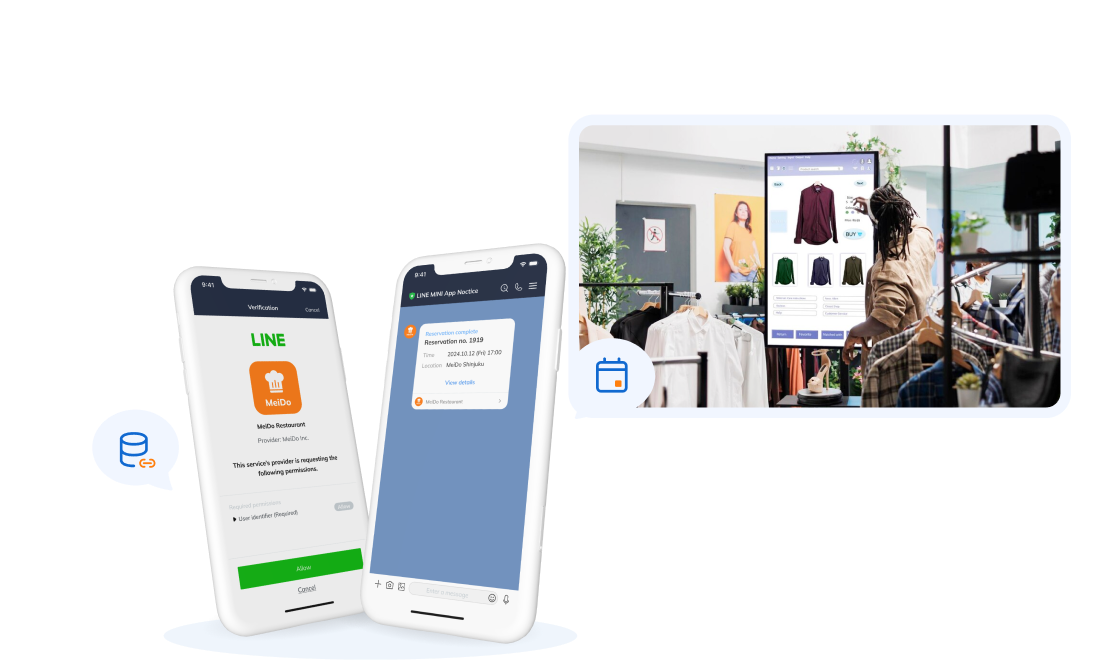
For businesses expanding into Japan, the takeaway is direct: a presence on LINE is rarely optional. Whether through an Official Account for customer engagement or a custom LINE MINI App for a more tailored product experience, meeting customers inside the platform they already trust tends to outperform trying to pull them into a new one.
Conclusion: More Than a Messaging App
LINE’s dominance in Japan is not really a story about a messaging app winning a market. It is a story about what happens when a product earns trust at a moment of real need, then keeps expanding its usefulness faster than the cost of leaving it. Global platforms often assume a feature that works well in one country will translate everywhere. LINE’s history suggests the opposite lesson: understand the emotional and cultural texture of how people actually want to communicate first, then build the infrastructure around it.
At SupremeTech, we build custom LINE MINI Apps for businesses looking to reach their audience directly inside Japan’s most trusted digital channel, connecting messaging, commerce, and customer engagement into one seamless experience.
Why is LINE popular in Japan? A quick recap

LINE is popular in Japan because it launched right after the 2011 earthquake as a working alternative to a collapsed phone network, then kept expanding into stickers, LINE Pay, entertainment, and government services faster than any competitor could catch up. That combination of early trust and constant added utility, not marketing alone, is what turned a disaster relief app into the LINE ecosystem over 100 million people in Japan now use every month.
📩 Read more articles on our blog: SupremeTech Blog
☎️ Contact us to see how we can support your LINE strategy in Japan.
FAQs Section
LINE is popular in Japan because it launched shortly after the 2011 earthquake and tsunami, when many people needed a reliable way to contact family and friends through internet-based messaging. It then continued to grow by adding features Japanese users found useful in daily life, including stickers, payments, news, business accounts, and public service notifications.
Yes. LINE is widely considered Japan’s dominant messaging app, with over 100 million monthly active users and usage across many age groups. It is used not only for personal chats, but also for business communication, school notices, coupons, customer support, and government updates.
LINE succeeded because it fit local communication habits and became useful beyond messaging. Its stickers made conversations softer and more expressive, while its Official Accounts, payments, content services, and public notices made the app part of daily life. WhatsApp remained mainly a messaging tool, while LINE became a broader digital ecosystem.
Businesses can learn that entering the Japanese market is not only about launching another app or website. It is often more effective to meet customers inside the channels they already trust. For many brands, that means using LINE Official Accounts or LINE MINI Apps to support messaging, commerce, loyalty, customer service, and ongoing engagement inside the LINE ecosystem.