










Customer Loyalty Campaigns: Strategy, Examples, and How to Improve Retention
28/09/2026
2
Many times a customer buys once, joins the loyalty program, and then disappears. The action you think of is the marketing team sending a discount to win the customer back, but that only helps if price was the reason they did not return. Customer loyalty campaigns work better when they respond to a specific moment in the relationship: a first purchase, an unclaimed reward, a change in buying rhythm, or a customer who has stopped engaging.
This guide shows how to choose the right campaign for that moment, make it work across channels, and measure whether it actually increased repeat behavior. The aim is a better customer experience and a credible retention result, not simply more messages sent.
What are customer loyalty campaigns?
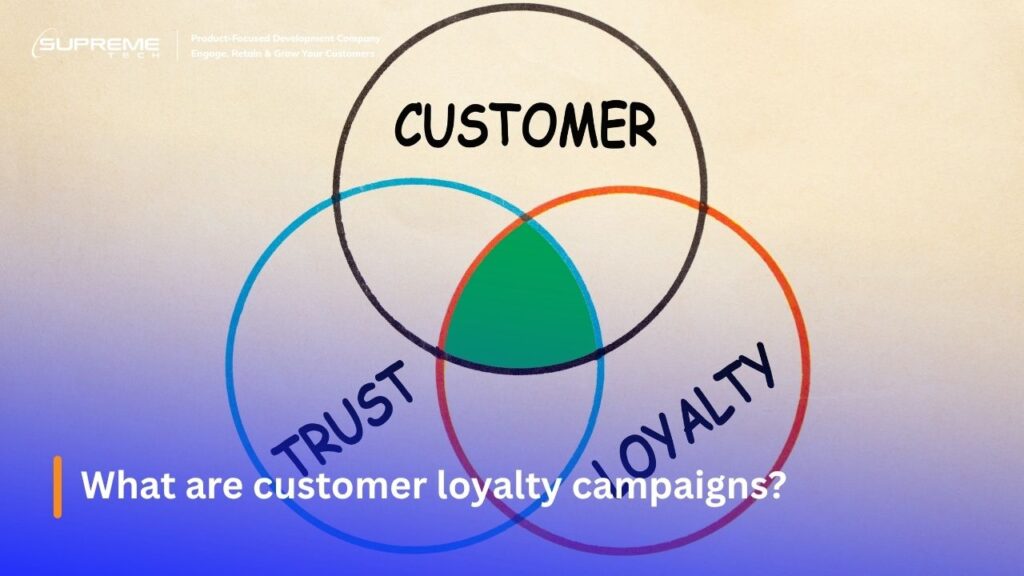
A loyalty campaign is a targeted effort designed to encourage existing customers or members to take a specific action. Such a campaign comprises several elements: a target audience, a trigger or timeframe, a message or benefit, and a measurable outcome. A welcome offer designed to drive a second purchase from a new customer constitutes a campaign. Similarly, a notification reminding a member that a relevant reward is ready for use is also considered a campaign.
A loyalty program is an ongoing system of rules and benefits for members. A campaign leverages that framework to address specific customer needs or achieve business objectives. For instance, retailers can run loyalty campaigns without relying on a points-based system such as by offering members early access to products, providing convenient services, or sending timely purchase reminders. Conversely, even a well-structured points program will fail to effectively drive customer retention if every member receives the exact same generic promotions.
To gain a deeper understanding of the relationship between repeat purchase behavior and genuine preferences, please see:
Read more:
Customize customer loyalty campaigns for every moment
A cosmetics retailer is planning its next campaign, and the execution team often opts for a familiar approach: sending a 15% discount offer to every customer. However, the reality is that one customer might have just purchased a facial cleanser last week and is still deciding if it suits them. Another customer might be on the verge of earning a reward without realizing it. Meanwhile, a formerly frequent shopper has been absent for months. Although they all receive the same discount code, this information does little to help the team understand what would actually entice each individual to return and shop again.
Before deciding on the content to send, the team needs to consider the specific situation of each customer. Is the facial cleanser buyer ready for another purchase, or would skincare advice be more helpful? Is the second customer aware that they are close to a reward? Has the previously loyal customer truly stopped shopping, or have they simply switched to a different channel? The answers to these questions will help the team identify the specific behaviors they aim to influence through the campaign. From there, they can make informed decisions regarding offers, messaging, and communication channels.
| Customer moment | Possible campaign | Behavior to observe | Main caution |
| After a first purchase | Care advice, a relevant follow-up, or a modest second-purchase benefit | Second purchase within a category-appropriate window | Do not offer a discount when useful onboarding would do more. |
| Approaching a reachable reward | Progress update with a clear route to redemption | Reward use and subsequent purchase | An unreachable target can disappoint loyal members. |
| Habit begins to slip | Reminder tied to replenishment or a useful new arrival | Return to the customer’s usual buying rhythm | A fixed 30-day trigger may be wrong for the product. |
| Member has been inactive | A reason to revisit, such as a relevant benefit or service update | Reactivation followed by another purchase | A single discounted order is not proof of retention. |
| Member is highly engaged | Early access, recognition, or an experience | Continued engagement and healthy margin | Avoid giving away margin to people who would have bought anyway. |
These are starting hypotheses, not universal timing rules. A coffee purchase, a skincare refill, and a sofa purchase have very different natural cycles. A hotel loyalty field experiment found that the effects of achieving or missing a promotional goal differed by member status, which supports setting reachable goals and being especially careful with the expectations of highly invested members (Wang et al., Marketing Science, 2016).
Turn a loyalty idea into a campaign brief
A campaign becomes easier to build and evaluate when marketing, commerce, store operations, and engineering agree on a short brief. It should answer the questions: who qualifies, why now, what the customer gets, where it can be used, and what happens after a return or opt-out.
Here is a hypothetical brief for a beauty retailer. The figures and rules are illustrative, not a reported SupremeTech client campaign.
| Field | Example decision |
| Problem | Many first-time cleanser buyers do not make a second purchase within their expected replenishment window. |
| Eligible audience | Customers with one completed cleanser order and no later cleanser purchase; exclude returns and existing open service issues. |
| Trigger | A category-informed interval after fulfillment, adjusted using observed repurchase patterns rather than a fixed sitewide delay. |
| Message and benefit | Helpful usage and replenishment guidance first; test a small next-order benefit for one eligible group. |
| Channels | Email for permitted contacts, plus a consistent in-app account offer for signed-in members. |
| Redemption | Valid once, online or in store, with clear expiry and an explicit rule for stacked promotions. |
| Primary outcome | Incremental second-purchase rate over a preselected observation window. |
| Guardrails | Contribution margin, unsubscribes, complaints, returns, and discount cost. |
| Test | Randomly hold out eligible customers from the incentive while retaining the same eligibility definition and measurement window. |
The example starts with a real point of friction, then tests whether an incentive adds value beyond useful communication. If the educational message performs similarly to the discount, the retailer may not need to pay for every second order. If both fail, the problem might be product fit, service, availability, or timing rather than campaign creative.
For the upstream work of deciding which signals to capture, see:
Read more:
- Customer Data Collection for Retail: What to Collect and How to Use It
- Top Data Models Behind Successful Retail Loyalty Programs: Points, Tiers, Rewards, and Segments
Align messages across systems
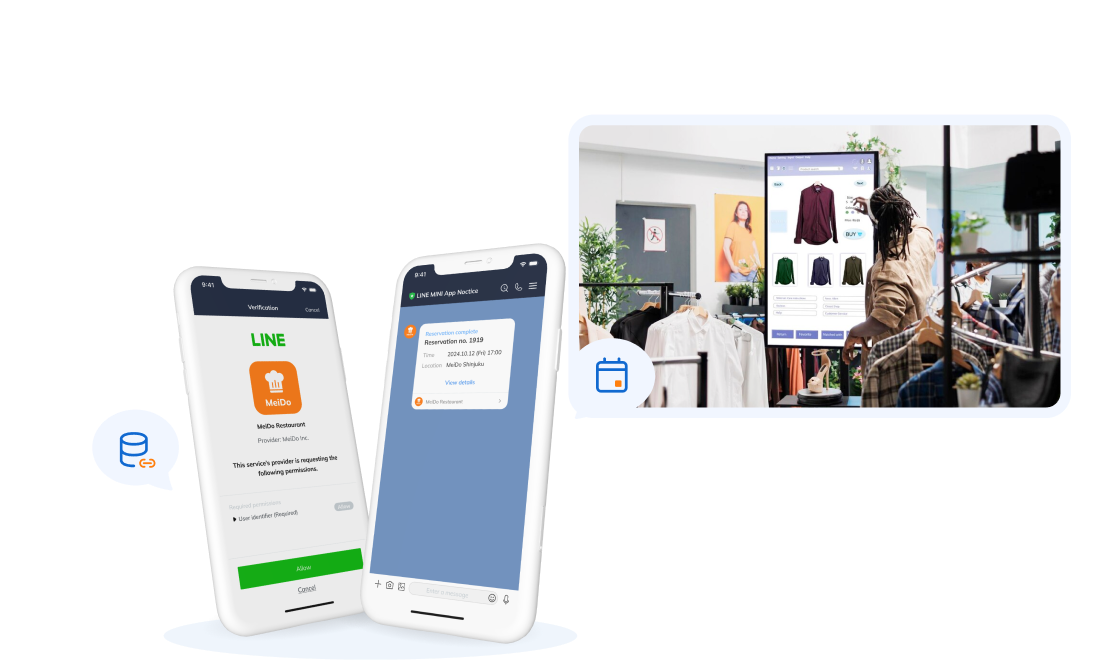
A customer may see an offer in an email, browse in the app, and redeem at a store till. The campaign has to recognize the same person and apply the same rules at each point. At minimum, align the customer or member identifier, qualifying order events, eligibility calculation, campaign message, coupon or benefit rules, redemption record, and reporting. Decide which system is authoritative for each value and how quickly changes must reach the other systems.
Returns and timing create some of the hardest cases. If an order is cancelled after points are issued, should the balance reverse? If a reward is redeemed in store, when should the online account stop showing it as available? If a customer opts out of email, does a queued send still go out? These questions belong in campaign acceptance criteria before launch, together with tests for duplicate orders and failed synchronization.
Contact preferences need the same care as reward eligibility. The UK ICO’s direct marketing guidance says organizations should respect objections and opt-outs and maintain suppression records to avoid contacting people again by mistake. Specific legal requirements depend on the market and channel, but the operational principle is straightforward: consent or permission status must reach the tool that actually sends the message.
This is where SupremeTech’s documented work is relevant. In a Shopify loyalty data pipeline project for a Japanese jewelry brand, the team connected loyalty information across channels so points could update consistently online and in store. That case illustrates the systems work behind a reliable member experience; it does not establish the performance of any particular campaign.
Examples: How Real Programs Handle Each Moment
These are documented moves from named retail loyalty programs, each reported by a news or trade publication, not vendor marketing material.
After a first purchase: Target Circle’s new-member welcome perks
When Target rolled out Circle nationwide, new members got 1% back on every purchase plus a birthday reward triggered once they’d signed up, both aimed at getting a freshly joined member to come back rather than just rewarding the signup itself. Target’s chief marketing officer said the goal was to “motivate shoppers to choose Target more often,” not just to collect emails. (Source: CNBC)
Approaching a reachable reward: Sephora’s point-expiration reminder
Sephora added a clause to its Beauty Insider terms that unredeemed points expire after 18 months (later tightened to 12) of no account activity, and the retailer notifies members before that happens. A single purchase, redemption, or birthday-gift claim resets the clock, so the reminder is really a nudge toward one small action rather than a full repurchase. (Source: TODAY)
Sephora gives every Beauty Insider member a birthday gift, but VIB and Rouge members get extra options, including a rotating online-exclusive pick and a points-instead-of-gift choice that lower-tier members don’t have. The tiering costs little to run but gives top spenders a visible, recurring reason their status is worth more than a discount. (Source: Retail Dive)
Measure retention, not just campaign response
Metrics such as open rates, click-through rates, and offer redemptions help assess the effectiveness of a campaign and gauge customer interest, yet they do not reveal the actual number of orders generated by the campaign. Loyalty program participants often have a higher baseline propensity to purchase; studies on supermarket loyalty programs indicate that failing to account for this self-selection bias leads to a significant overestimation of a program’s actual effectiveness. A similar caution applies when simply comparing a campaign’s target group against the rest of the customer base.
Choose one business outcome before launch, define its measurement window, and track the costs and side effects alongside it:
| Metric | Working definition | What it answers |
| Repeat-purchase rate | Eligible customers making another purchase within the defined window ÷ eligible customers | Did more people come back? |
| Reactivation rate | Previously inactive customers who returned within the window ÷ targeted inactive customers | Did the campaign bring lapsed customers back? |
| Redemption rate | Eligible recipients who used the benefit ÷ eligible recipients who could use it | Was the benefit understood and useful? |
| Incremental lift | Outcome rate in the test group minus the outcome rate in a comparable holdout | What changed beyond expected behavior? |
| Contribution after incentive | Incremental order contribution minus incentive, delivery, and operating costs | Was the change economically worthwhile? |
For a high-volume campaign, randomly assigning eligible customers to treatment and holdout groups gives a clearer answer than comparing members with non-members. Keep the groups’ starting criteria and time window consistent. Google describes the same underlying logic in its incrementality guidance: compare outcomes with and without the intervention. A loyalty test also needs to watch for spillover, such as an offer being shared with a holdout customer, and should be sized so a small difference is not mistaken for a reliable win.
After the initial result, look one purchase further. A win-back coupon may bring a customer in once and still fail to restore their normal buying pattern. Check the following purchase, margin, complaints, and unsubscribe rate before scaling a campaign that appears successful on redemption alone.
A practical launch check
Before scheduling the campaign, ask the people who own each part of the experience to walk through one real customer journey:
- Can we state the customer behavior we want to change in one sentence?
- Does the audience rule exclude customers for whom the offer is irrelevant or inappropriate?
- Is the benefit reachable, understandable, and available in every advertised channel?
- Do purchase, return, redemption, and contact-preference changes reach the right tools in time?
- Are the outcome window, holdout, incentive cost, and stop conditions agreed before launch?
If the team cannot answer one of these, reduce the campaign’s scope until it can. A small, measurable second-purchase or unused-reward campaign is often a better starting point than a sitewide promotion with several objectives.
Read more:
Conclusion
The strongest loyalty campaign has a clear reason to reach a customer and a fair way to learn whether the contact helped. Start with one moment in the relationship, connect the promised benefit across channels, and measure repeat behavior after the offer has passed. If inconsistent loyalty or order data prevents that, SupremeTech’s Omnichannel Retail Solutions can help you assess the integrations behind a more dependable customer experience.
Frequently asked questions
A program sets the ongoing membership benefits and rules. A campaign is a targeted, time-bound or triggered action aimed at a specific behavior, such as a second purchase, reward redemption, or reactivation.
Choose a customer moment with a clear behavior gap and reliable data, such as the period after a first purchase. Start with a small audience and a testable outcome instead of launching several offers at once.
No. Relevant guidance, early access, a useful service benefit, or clear information about an existing reward may give a customer a reason to return. Test an incentive when it is needed to change the behavior, and include its cost in the evaluation.
Define a repeat-purchase or reactivation window before launch and compare eligible customers who received the campaign with a comparable holdout. Check margin and later purchases as well as immediate redemptions.
Yes, if those channels share reliable member identification and consistent offer, redemption, and return rules. Otherwise a customer may receive an offer they cannot use or see a reward that has already been redeemed.