








Customer Loyalty Program App: What Features Retail Brands Need?
10/06/2026
673
A customer loyalty program app is not just a digital place to store points. For retail brands, it is the operating layer that connects rewards, referrals, tiers, personalization, customer data, and transaction behavior into one measurable retention system.
The business reason is clear. According to Harvard Business Review, acquiring a new customer can cost five to 25 times more than retaining an existing one, and the same article cites Bain & Company research showing that a 5% improvement in customer retention can increase profits by 25% to 95%.
A loyalty app matters because customer switching is already common. McKinsey found that more than 75% of consumers changed buying habits during an 18 month period, while 39% changed brands or retailers. McKinsey also found that top performing loyalty programs can increase revenue from customers who redeem points by 15% to 25% annually.
This is what many retail teams feel every week. A customer buys twice, disappears, returns only during discount season, or joins a rewards program but never redeems anything. The loyalty program exists, but the business cannot tell whether it is improving retention or merely giving away margin.
This article explains what features retail brands actually need in a customer loyalty program app, how to choose the right feature set, what architecture makes the app reliable, and when custom development becomes more practical than forcing a generic tool into a complex retail environment.
What a Customer Loyalty Program App Must Solve Before Features
The app must solve retention before it adds rewards
A customer loyalty program app should start with a retention problem, not a feature wish list. Rewards, referrals, tiers, and personalization only matter if they change customer behavior.
For a retail brand, the first question should be: which behavior needs to improve? The answer may be second purchase rate, visit frequency, average order value, referral conversion, member activation, or churn prevention.
Retail implication
If a fashion brand has many first time buyers but weak second purchase behavior, the app should prioritize onboarding rewards and personalized product reminders. If an F&B brand has frequent visits but low app engagement, the app should prioritize transaction based points, progress reminders, and barcode or QR code redemption at checkout.
The app must connect online and offline identity
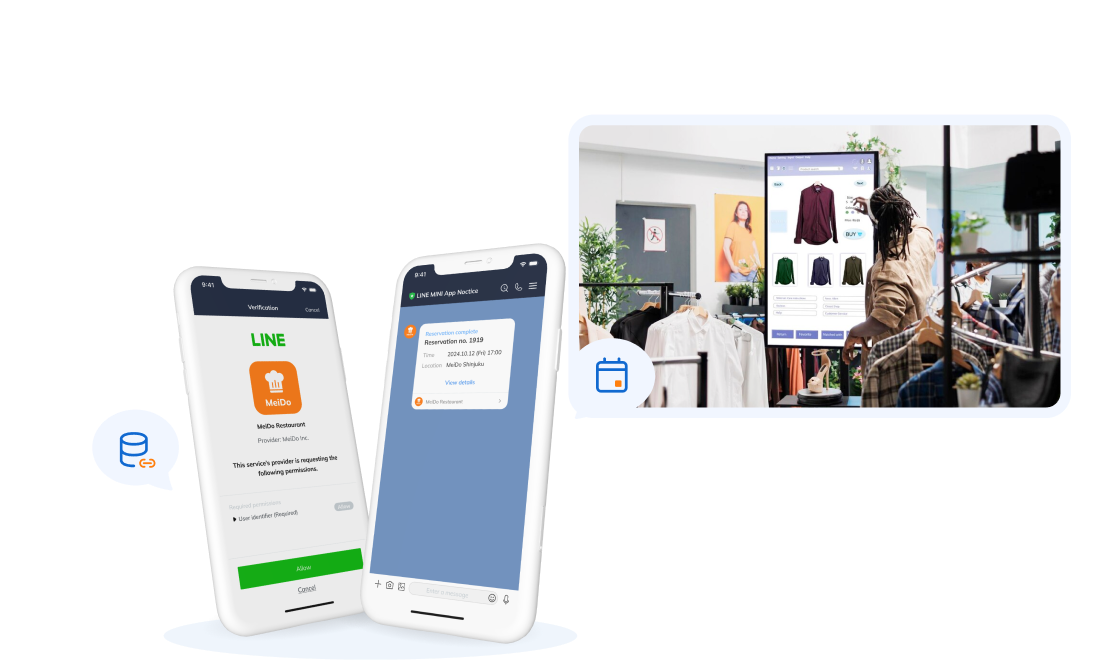
Retail loyalty breaks when the customer is recognized in one channel but treated as anonymous in another. A customer who earns points in store should see the same balance online. A customer who redeems an app coupon at checkout should have that transaction reflected immediately in their purchase history.
This is why loyalty app planning needs to include identity matching from the beginning. Phone number, email, member ID, app login, receipt history, and POS records should connect to the same customer profile wherever possible.
App implication
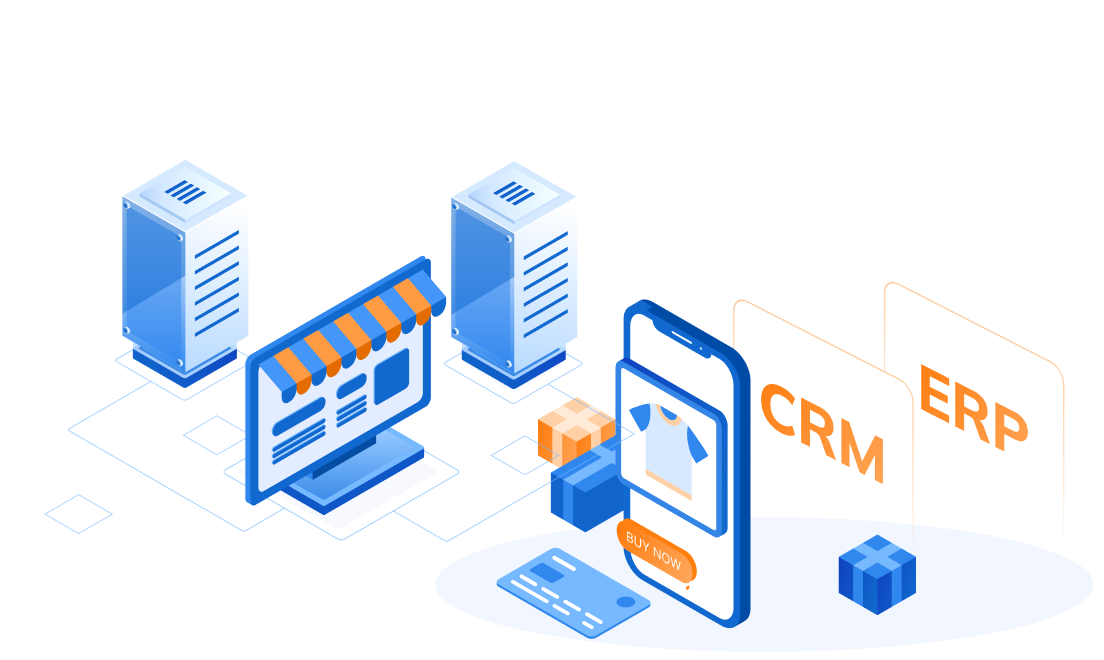
The loyalty app should not sit beside the business. It should connect to the systems where purchases, payments, coupons, and customer records already live. Otherwise, teams end up managing rewards manually, which creates errors and weakens customer trust.
The app must make value obvious to customers
Customers do not join loyalty programs because the back end is sophisticated. They join when the value is easy to understand. The app needs to show what the customer has earned, what they can unlock next, and what action moves them closer to the next reward.
A strong loyalty app makes progress visible. It should tell customers whether they are close to a voucher, a free product, a birthday benefit, a referral reward, or the next tier.
In practice
For a cosmetics retailer, this might mean showing “2 purchases away from VIP beauty access.” For a restaurant chain, it may mean showing available coupons, points balance, and next reward from the home screen before the customer reaches checkout.
What Features Should a Customer Loyalty Program App Include?
Feature 1: Rewards Wallet and Points Balance
The rewards wallet is the feature customers will check most often. It should show points balance, available coupons, expiry dates, reward history, and redemption instructions in one place.
The best version is not crowded. It answers three questions quickly: what do I have, what can I use now, and what should I do next?
For brands with physical locations, an in-app barcode is essential. Customers open the app, the cashier scans, and points are earned or redeemed in real time. When it works, it feels instant. When it lags, times out, or fails to sync with the POS, it creates friction at exactly the wrong moment — a customer standing at the counter with people waiting behind them.
Build detail
For retail teams, the rewards wallet also needs clear business rules. Points earning, points cancellation, expired coupons, returned products, partial redemption, and fraud prevention should be handled consistently behind the scenes. The barcode needs to tie into this logic: each scan should trigger a real-time eligibility check, apply active promotions, confirm the transaction, and update the customer’s balance immediately.
SupremeTech Case Study: Barcode Scanning and Real-Time POS Integration for a Global Restaurant Chain
A Japanese restaurant chain with nearly 6 million monthly active app users needed customers to earn and redeem points at the counter through a barcode scan. SupremeTech built a Point Gateway integrated into the existing mobile app: when a customer scans at POS, the system checks coupon eligibility, grants or deducts points, and syncs the updated balance back to the app within the same transaction.
The system was load-tested to handle 200,000 concurrent users every 30 minutes during peak dining hours. Within six months of launch, 25 to 26% of customers were actively using the point service at checkout.
Feature 2 — Referral flow that rewards both sides
Referral features work best when the incentive is simple for both the existing customer and the new customer. The app should generate a trackable link, code, QR invitation, or shareable offer that connects the referrer to the referred customer.
A referral feature should not only reward sharing. It should track whether the referred customer actually signs up, makes a first purchase, and becomes active after the first order.
Build detail
The app should support referrer status, referral attribution, anti abuse rules, and reward release timing. For example, the referrer may receive points only after the new customer completes a qualifying purchase.
Feature 3 — Tier logic that motivates without confusion
Tier features should give customers a reason to keep progressing. A simple three tier structure is often easier to understand than a complicated status system with too many rules.
Tiers can be based on annual spend, purchase frequency, points earned, category behavior, or membership duration. The right rule depends on what behavior the brand wants to encourage.
Build detail
Tier logic needs careful handling of qualification periods, renewal rules, downgrade rules, bonus multipliers, and benefit eligibility. If customers lose status unexpectedly, the app can damage trust rather than build loyalty.
SupremeTech Case Study: Rebuilding Tier Logic for a Japanese Luxury Jewelry Brand
A luxury jewelry retailer in Japan had two separate sales channels running two different tier structures with different qualification rules, different point expiration models, and different redemption logic. A customer who qualified as a top-tier member online might not be recognized as such in the boutique, and vice versa. The inconsistency was not visible in any single system. It only became apparent when customers interacted across both channels and noticed the discrepancy.
In luxury retail, tier status carries significant emotional weight. Being recognized as a VIP at the counter is part of what the customer is paying for. When that recognition fails, the damage is disproportionate to the technical cause.
SupremeTech’s first task was not to build new tier logic. It was to audit what existed: mapping the tier qualification rules, renewal periods, downgrade conditions, expiration models, and benefit eligibility structures from both channels, then identifying where the two systems conflicted. Only after that mapping was complete did the team design a unified, rules-based tier engine that both the Shopify storefront and the in-store POS could read from consistently.
The batch sync process built alongside it ensured that tier status updated on schedule across both channels, so a customer who crossed a qualification threshold in-store would see their updated tier reflected online within the same cycle, and the boutique team would see it the next time they came in.
The outcome was trust restored. Customers stopped encountering tier discrepancies between channels. The marketing team could design tier-based campaigns with confidence that the eligibility logic would execute the same way everywhere. And because downgrade rules were now clearly defined and applied consistently, the brand avoided the situation that damages loyalty most: a customer losing status they believed they had earned, with no explanation.
Feature 4 — Personalized offers based on behavior
Personalization is where a customer loyalty program app moves from generic rewards to customer specific retention. The app should use behavior data to decide which customer receives which offer, when, and through which channel.
According to McKinsey, pilot programs that integrate loyalty data with personalized marketing and pricing offers have produced two to four percentage point improvements in gross margin dollars compared with mass offers.
In practice
A customer who frequently buys skincare should not receive the same offer as a customer who buys fragrance once a year. A customer who has not purchased for 60 days may need a reactivation offer, while a high frequency customer may respond better to tier acceleration or early access.
Feature 5 — Analytics for loyalty ROI
A loyalty app should help the business measure performance, not just issue rewards. Basic dashboards should show active members, redemption rate, repeat purchase behavior, referral conversion, tier movement, churn signals, and campaign performance.
The most important metric is not total members. Many members enroll once and never return. The app should separate enrolled members, active members, redeemers, and high value repeat customers.
Build detail
This is where loyalty apps often need custom reporting. Retail leaders need to understand whether loyalty activity is incremental, whether rewards are bringing customers back, and whether high value customers are receiving better reasons to stay.
Feature comparison table for retail decision makers
| Feature | Customer value | Business value | Implementation risk |
| Rewards wallet | Shows points, coupons, and next reward clearly | Improves redemption and repeat engagement | Medium if POS and e-commerce data are disconnected |
| Referral flow | Makes sharing easy and rewarding | Creates lower cost acquisition through existing customers | Medium if attribution rules are weak |
| Tier logic | Creates status and progress motivation | Encourages higher spend or frequency | High if qualification rules are unclear |
| Personalized offers | Makes rewards feel relevant | Improves retention and margin control | High if customer data quality is poor |
| Analytics dashboard | Invisible to customers but improves their experience over time | Shows whether loyalty investment creates repeat behavior | Medium if teams do not define KPIs early |
In practice, most brands should not build every feature at once. A practical first release usually includes rewards wallet, member identity, transaction history, basic coupons, and analytics. Referral, tiers, and advanced personalization can follow once the data foundation is stable.
How Retail Brands Should Choose a Customer Loyalty Program App Feature Set
Use the RETAIN Framework to prioritize features
Key Concept — The RETAIN Framework: A retail brand should evaluate every loyalty app feature through six lenses: Repeat behavior, Experience friction, Transaction data, Activation speed, Incentive economics, and Next best action.
R — Repeat behavior
Start with the behavior the business wants to increase. For F&B, the target may be visit frequency. For beauty retail, it may be repeat category purchase. For fashion retail, it may be second purchase within a defined customer lifecycle.
In practice
If the goal is repeat visits, rewards should be visible and easy to redeem. If the goal is higher basket size, tier multipliers or bonus points for bundles may be more useful than a generic discount.
E — Experience friction
A loyalty app must reduce friction, not add another step customers avoid. If enrollment takes too long, login fails often, or staff cannot explain redemption clearly, the program will underperform.
In practice
A customer should be able to join quickly at checkout, see their rewards immediately, and redeem without staff confusion. For retail teams, this means app design, POS flow, and staff training all need to work together.
T — Transaction data
The app becomes more valuable when transaction data is reliable. Every purchase, return, coupon use, referral reward, and tier movement should update the customer profile accurately.
In practice
If a customer redeems a coupon in store but still sees the coupon as available inside the app, trust drops. Real time or near real time synchronization is not a luxury for loyalty. It is part of the customer experience.
A — Activation speed
The first reward should not feel too far away. If customers join but cannot experience value quickly, the app becomes another unused icon on their phone.
In practice
New members can receive a welcome reward, first purchase bonus, birthday benefit, or progress challenge. The app should make the first success moment easy to reach.
I — Incentive economics
Rewards must motivate customers without destroying margin. The app should support rules that let teams test different incentives by customer segment, product category, and campaign objective.
In practice
A discount may be useful for reactivating a lapsed customer, while a high value regular customer may respond better to early access or a service upgrade. The app should allow different incentives without creating operational chaos.
N — Next best action
The long term goal is not only showing rewards. It is guiding the customer toward the next useful action. That action may be redeeming points, trying a new category, referring a friend, completing a profile, or returning before churn risk increases.
In practice
A customer loyalty program app should become a decisioning surface. The better the data, the more specific the app can become about what each customer should see next.
How to Match Loyalty App Features to Retail Business Models
F&B brands need speed, POS accuracy, and high frequency engagement
F&B loyalty apps need to work during peak traffic. Customers do not tolerate slow redemption when they are ordering lunch, scanning a barcode, or paying at a crowded counter.
For this category, the most important features are points balance, coupon display, barcode or QR redemption, transaction sync, push reminders, and performance stability during peak periods.
In practice
A restaurant chain should prioritize reliable earning and redemption before complex tiers. If the customer buys frequently, the app should reward frequency clearly and update instantly after payment.
Fashion and beauty brands need personalization and lifecycle triggers
Fashion and beauty purchases are less frequent than daily food purchases, but they often carry stronger category preferences. The app should help customers discover relevant products and feel recognized across their purchase journey.
According to Deloitte via Wall Street Journal [7], 52% of surveyed consumers said they wanted tailored websites and apps, while only one third of surveyed brands had prioritized those offerings.
In practice
A beauty brand may personalize by skin concern, product category, purchase cycle, or membership tier. A fashion retailer may personalize by size, style preference, recent browsing behavior, or collection interest.
Grocery and convenience retailers need habit reinforcement
Grocery and convenience loyalty apps should make repeated shopping easier. The app can support saved offers, frequently purchased items, digital coupons, receipt history, and store based recommendations.
The challenge is not only acquisition. It is keeping the customer from switching stores when another retailer offers a temporary price advantage.
In practice
A convenience retailer may use weekly personalized coupons based on repeat purchase categories. A grocery retailer may use the app to show relevant offers before the customer builds a basket.
Omnichannel retailers need one customer view across channels
Omnichannel brands need their customer loyalty program app to connect online browsing, in store purchase, app engagement, returns, and customer service history. Otherwise, customers receive inconsistent treatment across channels.
The most valuable feature is not a flashy reward screen. It is a trusted customer identity layer that helps every channel understand the same customer.
In practice
If a customer earns tier status online, store staff should be able to recognize eligible benefits. If a customer returns an item in store, the app should update points and tier progress correctly.
Business model feature map
| Retail model | Start with these features | Add later when data matures |
| F&B chain | Points wallet, coupon display, POS redemption, performance monitoring | Personalized meal offers, referral campaigns, tier accelerators |
| Fashion retailer | Member profile, purchase history, birthday offers, tier status | Style based personalization, early access, lifecycle journeys |
| Beauty retailer | Profile preferences, product history, points redemption, samples or perks | Routine based reminders, VIP experiences, product replenishment nudges |
| Grocery or convenience | Digital coupons, store offers, receipt history, saved favorites | Predictive category offers, location based reminders, household segmentation |
| Omnichannel retailer | Unified customer identity, online and store transaction sync, campaign tracking | Advanced segmentation, churn prediction, next best action decisioning |
How a Customer Loyalty Program App Should Be Built for Scale
The app needs a customer identity layer
A customer identity layer is the foundation for rewards, referrals, tiers, and personalization. It connects login data, member ID, purchase history, coupon usage, referral activity, and communication preferences.
Without this layer, the loyalty app may look polished but still fail operationally. Teams cannot personalize accurately if customer behavior remains scattered across different systems.
Architecture note
Retail brands should define how identities are created, merged, updated, and protected before scaling the feature set. Poor identity logic often creates duplicate accounts, missing points, and customer service problems.
The app needs a transaction and rules engine
The transaction engine records what happened. The rules engine decides what the customer earns, spends, unlocks, or loses because of that transaction.
This matters for returns, cancellations, partial redemptions, referral rewards, tier upgrades, expired rewards, and campaign exceptions. A customer loyalty program app must handle these cases consistently.
Architecture note
A good rules engine lets business teams adjust earning rules and campaign rules without rewriting the entire app. This is especially useful for seasonal retail campaigns and market specific promotions.
The app needs reliable integration with POS and commerce systems
Retail loyalty fails quickly when app data and checkout data disagree. POS and commerce integration should support earning, redemption, coupon validation, order history, and customer identification.
For high traffic retail environments, the system also needs clear handling of downtime, retry logic, data reconciliation, and fraud prevention.
Architecture note
The app should be designed for the busiest day, not the average day. A campaign launch, holiday period, or lunch rush can expose weaknesses that normal testing misses.
The app needs analytics and experimentation capability
Analytics should be designed before campaigns scale. Retail teams need to know whether the app changes behavior, which rewards generate repeat purchases, and whether personalization improves incremental value.
According to McKinsey, the key to loyalty program success is having the right data to measure it, and redeemer members spend 25% more than enrolled but inactive members.
Architecture note
This means the app should track not only enrollment, but activation, redemption, repeat purchase behavior, offer exposure, referral conversion, and churn risk.
What Real Brand Case Studies Reveal About Loyalty App Features
Brand Case Study: SupremeTech loyalty points system for a global restaurant chain
SupremeTech developed a scalable loyalty points system for a global restaurant chain operating across Japan, Taiwan, Malaysia, and the United States. The client’s native mobile app served nearly 6 million monthly active users in Japan, and the new system needed to support real time point earning, coupon usage, POS integration, and heavy traffic. According to SupremeTech, the point service reached approximately 15% to 25% usage within the first six months after its July 2024 release, later stabilizing around 25% to 26%, while peak concurrent users increased fivefold to 200,000 users every 30 minutes.
What this means for retail teams
This case shows that loyalty app development is not only about reward design. It is also about performance, integration, security, and operational trust. If points do not update accurately at checkout, the customer experience breaks immediately.
Brand Case Study — Target Circle
Target’s loyalty strategy shows how a retailer can expand a loyalty program into a broader value proposition. AP News reported that Target launched a paid membership program in 2024 while building on an existing loyalty program with more than 100 million members. The case shows how a loyalty app can evolve from discounts and offers into a broader membership experience tied to convenience, fulfillment, and customer value.
What this means for retail teams
The lesson is not that every retailer needs a paid membership tier. The lesson is that loyalty programs can grow in layers. A brand may begin with rewards and offers, then add convenience benefits, exclusive access, referrals, or premium membership once customer behavior supports the expansion.
Shared pattern across the case studies
The strongest loyalty apps do three things consistently. They make value visible, they connect rewards to real transactions, and they use customer data to guide the next interaction.
In practice, the brand does not win because the app has more screens. It wins because the app makes the next customer action easier, more relevant, and more measurable.
How Retail Brands Should Measure ROI From a Customer Loyalty Program App
Metric 1 — Member activation rate
Activation rate shows whether enrolled customers actually use the app. This matters because total signups can look impressive while real usage remains weak.
Retail teams should measure how many members complete a meaningful action after signup, such as viewing rewards, making a purchase, redeeming a coupon, completing a profile, or joining a campaign.
In practice
If activation is low, the issue may be unclear onboarding, weak first reward value, poor staff explanation, or too much friction during signup.
Metric 2 — Redemption rate and redeemer value
Redemption rate shows whether customers believe the rewards are worth using. A program with many members but few redeemers may look large but still fail commercially.
This is why McKinsey emphasizes redeemers rather than enrollment alone. Customers who redeem are often more behaviorally engaged than customers who merely join.
In practice
Retail teams should compare redeemers against non redeemers by repeat purchase frequency, average order value, and churn risk. This helps separate loyalty that looks active from loyalty that creates value.
Metric 3 — Repeat purchase and purchase frequency
Repeat purchase is the clearest sign that the customer loyalty program app is changing behavior. The app should help compare member behavior against similar non member behavior whenever possible.
This comparison helps teams understand whether the program creates incremental purchases or simply rewards customers who would have returned anyway.
In practice
A fashion retailer can compare second purchase rate among app members and non members. An F&B brand can compare monthly visit frequency before and after a points campaign.
Metric 4 — Referral conversion and referral quality
Referral metrics should measure more than shares. The important question is whether referred customers join, buy, return, and become profitable.
A strong referral dashboard should track referral invitations, new member creation, first purchase conversion, reward release, and repeat purchase after the first transaction.
In practice
A retailer may discover that one referral reward generates many signups but weak first purchase behavior, while another smaller reward generates fewer signups but better repeat buyers. The app should make that comparison visible.
Common ROI mistake table
| Mistake | Why it hurts ROI | Better approach |
| Measuring only total members | Enrollment does not prove behavior change | Track activation, redemption, and repeat purchase |
| Using the same offer for everyone | Generic offers waste margin on customers who need different incentives | Segment by purchase behavior and lifecycle stage |
| Launching tiers too early | Customers may not understand progress or value | Introduce tiers after baseline engagement is stable |
| Ignoring POS integration | Points and coupons may become inaccurate | Connect earning and redemption to transaction systems |
| Treating loyalty as a marketing campaign only | The app becomes disconnected from operations and data | Design loyalty as customer infrastructure |
How SupremeTech Can Help

SupremeTech starts with a diagnostic conversation
A retail brand usually comes to SupremeTech with a feature request: a rewards app, a referral flow, a tiered membership system, or personalized coupons. The more useful starting point is the business question behind the request. Which customers are returning? Which customers are disappearing? Which touchpoints fail to recognize the same customer?
That diagnostic conversation helps separate loyalty strategy from feature accumulation. Sometimes the first problem is not the rewards screen. It is missing customer identity, disconnected POS data, slow campaign execution, or limited visibility across online and offline behavior.
SupremeTech connects loyalty features to retail systems
For brands selling across stores, apps, and online channels, SupremeTech can design the customer and transaction foundation through omnichannel retail solutions and e-commerce development. The goal is to make customer recognition, reward earning, coupon usage, and order history work together rather than sit in separate tools.
When a brand needs a loyalty flow that does not fit standard templates, SupremeTech can support custom software development to build rules, dashboards, referral logic, tier mechanics, or customer experiences around the way the business actually operates.
If your retail team is planning to build or modernize a customer loyalty program app, start with a diagnostic conversation. Talk to SupremeTech about the customer behavior, system integration, and scalability requirements behind your loyalty roadmap.
Read related articles:
- Shopify Loyalty Program: How to Add Rewards, Referrals, and Repeat Purchase Incentives
- Top Data Models Behind Successful Retail Loyalty Programs: Points, Tiers, Rewards, and Segments
- Loyalty Programs for Small Businesses: How to Build Customer Retention With Tight Budgets
FAQs Section
A customer loyalty program app is a mobile or web experience that lets customers earn, view, redeem, and manage rewards while giving the business measurable loyalty data. For retail brands, the app often connects points, coupons, referrals, tiers, member profiles, transaction history, and personalized offers. The strongest versions are connected to POS and e-commerce systems so customer behavior can be measured across channels.
Most retailers should start with member identity, rewards wallet, points or coupon logic, transaction history, basic campaign management, and analytics. These features create the foundation for activation and measurement. Referral programs, tier mechanics, and advanced personalization should come after the core data and redemption flow are stable.
The cost of inaction is not only missed loyalty revenue. It is continued dependence on acquisition campaigns, weak second purchase behavior, limited customer data, and slower response to churn. If customers keep buying once and disappearing, the brand has to keep paying to replace demand instead of building compounding customer value.
The biggest scalability risks are inaccurate point updates, slow coupon redemption, duplicate customer records, campaign traffic spikes, and disconnected POS data. These risks become visible during launches, holiday events, store peaks, and large promotional campaigns. A customer loyalty program app should be designed for peak behavior, not only normal traffic.
Retail brands should measure activation rate, redemption rate, repeat purchase behavior, purchase frequency, average order value, referral conversion, tier movement, and churn reduction. The goal is to compare loyalty members against similar non members where possible. This helps determine whether the app is changing behavior or only rewarding existing demand.