





Building a End-to-End SmartHR Integration for Enterprise Health Management Application
This case study shows how SupremeTech built an end-to-end SmartHR integration for an enterprise health management application. The solution helped connect SmartHR Plus with the client’s internal system, automate employee data sync, and reduce manual HR work.
Overview
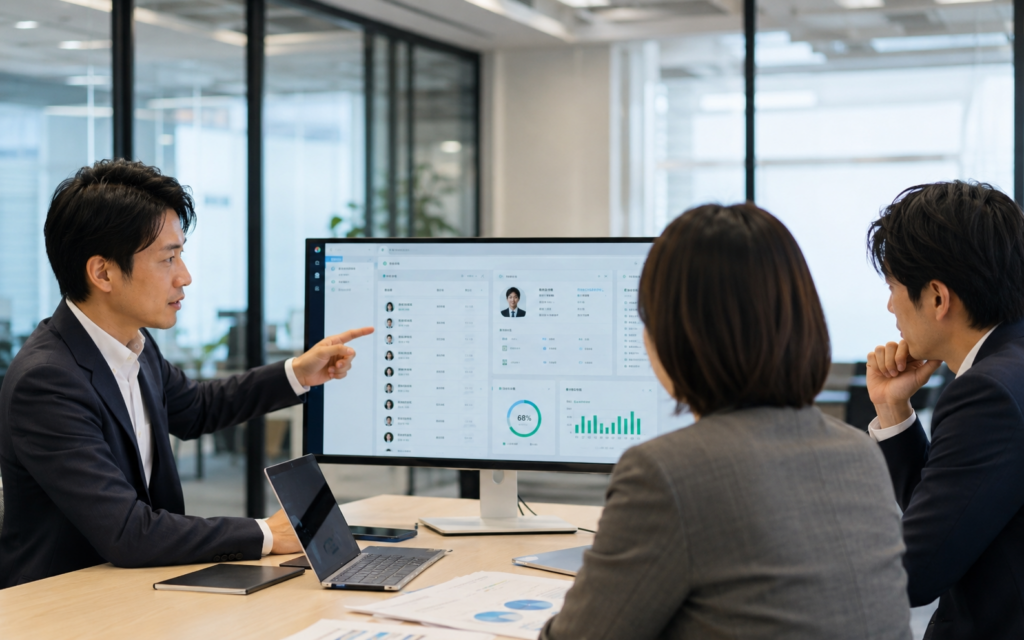
SmartHR is one of Japan’s leading HR SaaS platforms, trusted by more than 80,000 companies as a central employee database. For many businesses, this makes SmartHR more than an HR tool. It becomes the Single Source of Truth for employee information.
For this project, SupremeTech supported a Japanese healthcare technology company in integrating SmartHR with its enterprise health management application. The client’s application helps HR teams at companies run wellness programs, centralize employee health data, and support Japan’s 健康経営 (corporate health management) standards.
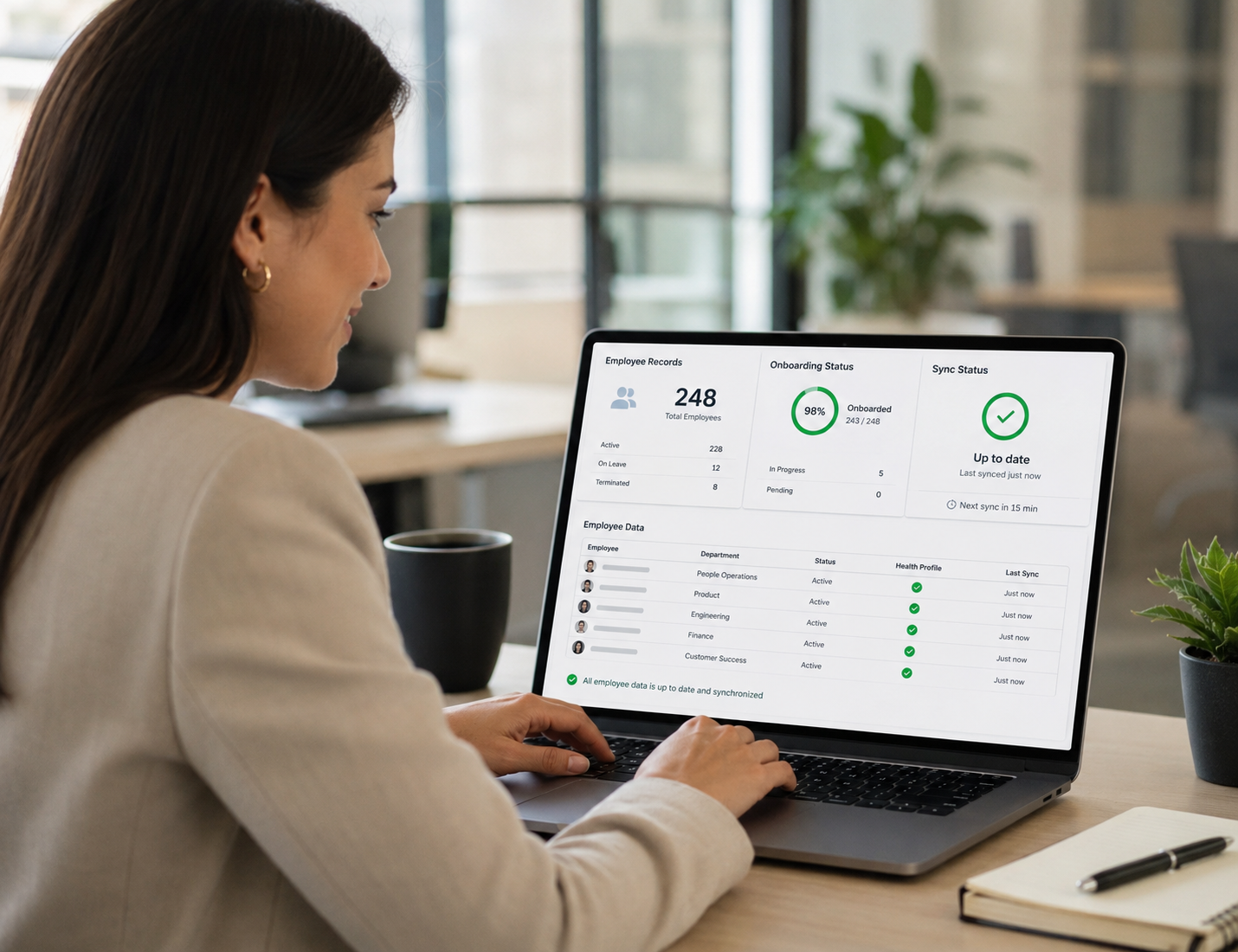
The client’s customers were already using SmartHR to manage employee records but the two systems had no connection, which meant any HR change had to be manually re-entered on both sides. The goal of this integration was to eliminate that gap: automating employee data synchronization from SmartHR so HR teams could manage the health of employees based on always-up-to-date records, and build a stronger foundation for digital transformation in HR operations.
This use case is also relevant for other companies using SmartHR. If a business wants to connect SmartHR data with an internal system, such as health management, workforce management, employee engagement, or corporate admin tools, SupremeTech can help design and build that integration flow.
The Challenges
For enterprise health management application, accurate employee data is the starting point for many important workflows. Before a company can manage employee health programs, user access, corporate admin settings, or onboarding support, it needs reliable employee information.
In this project, SmartHR served as the main system for employee data, while the health management application had its own user management and admin workflows. Without proper integration, HR teams could still face manual work when employee data changed in SmartHR but needed to appear in the internal health management system.
The client needed to solve several practical challenges:
- Duplicate data: HR teams could end up maintaining the same employee information across multiple systems.
- Delayed employee updates: New hires, profile changes, or inactive users might not be reflected quickly enough in the health management application.
- Data fragmentation: Different systems could show different employee records, making it harder for admin teams to trust the data.
- Manual workload for corporate admins: Routine data checking and updates could take time away from more valuable health management operations.
- Limited scalability: As the health application expanded to more corporate users, manual synchronization would become harder to maintain.
The challenge was not only about pulling data from SmartHR. The client needed a complete integration flow where the health management application of the client could work inside the SmartHR ecosystem, then use that connection to synchronize employee master data into the internal application.
The Solution
SupremeTech built a dedicated SmartHR integration flow for the client’s enterprise health management app. The solution covered both sides of the integration:
- Ensure that the client application is on SmartHR Plus
- Building the data synchronization flow from SmartHR into the internal system.
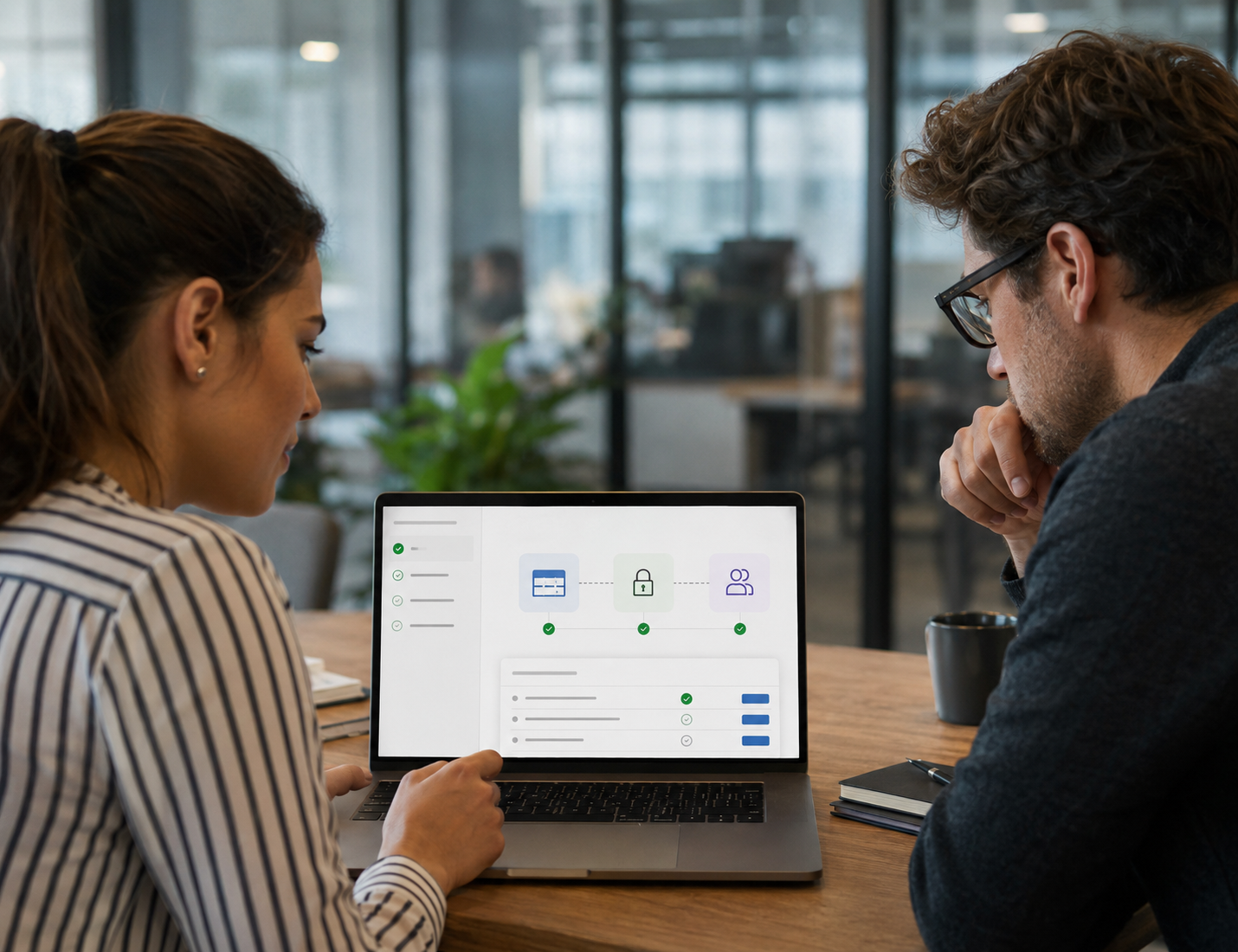
SmartHR data sync should not be treated as a standalone backend task. The external application first needs to be properly connected to the SmartHR ecosystem. After that, employee data can be synchronized through a secure and governed integration flow.
This is an important point for companies planning a similar SmartHR integration.
End-to-End SmartHR Integration Service
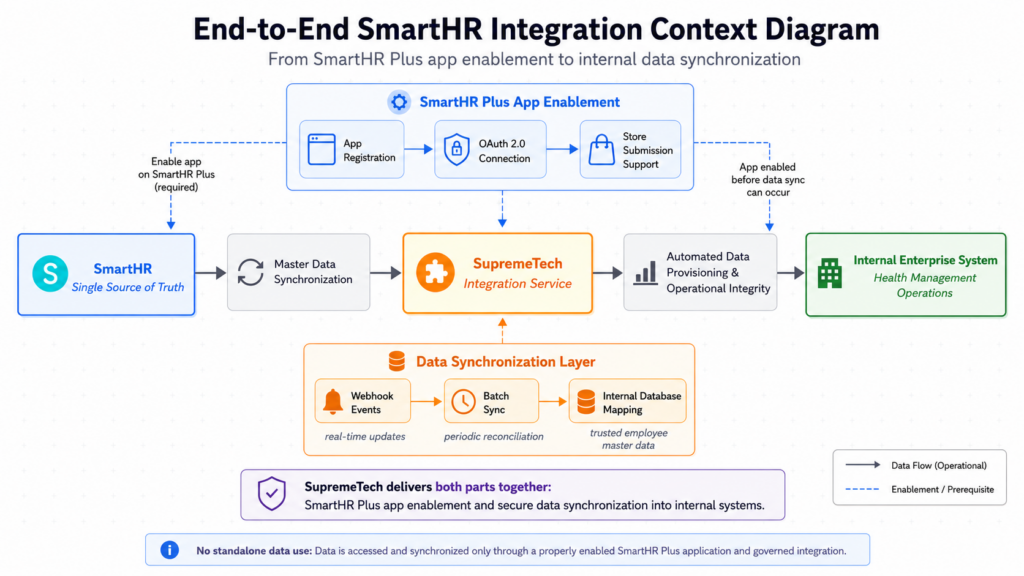
SupremeTech provided the integration service from end to end, including:
- Submit the client application for SmartHR Plus
- Building the SmartHR login and connection flow
- Setting up secure authentication with SmartHR OAuth 2.0
- Handling webhook event updates from SmartHR
- Building scheduled batch synchronization for data reconciliation
- Mapping employee data into the internal database
- Supporting testing and app submission to SmartHR Plus
This gave the client a complete integration model. Corporate users could start from the SmartHR side, connect the application, and then keep employee data synchronized with the internal health management application.
Technical Integration Design
The integration was designed around four core technical capabilities:
Secure authentication with SmartHR OAuth 2.0: The system used SmartHR OAuth 2.0 to establish a secure connection between SmartHR and the health management application. This allowed the application to exchange data through protected access tokens.
Real-time updates through Webhook Subscriptions: When employee information changed in SmartHR, such as a new employee being created, a profile being updated, or an employee being deactivated, webhook events helped notify the application so the related data could be updated faster.
Regular data reconciliation through Batch Sync: To protect data consistency over time, the system also included scheduled batch jobs using SmartHR Crew Export API. This helped verify and align master data, even if a webhook event was delayed, missed, or interrupted.
A connected data architecture for Single Source of Truth: The overall data flow combined webhook events and export-based synchronization, sending employee data into the application’s database and admin workflows. This helped SmartHR remain the main source of employee truth while the health management system stayed aligned with the latest HR data.
For other companies, the same approach can be reused for different internal systems. If the business already uses SmartHR as the employee database, SupremeTech can help connect that data with other internal systems that need accurate employee records.
The Result
The integration is live and running in production. Here is what changed.
For the client’s side:
- When a new corporate client signs up, their employee list is ready in the health management application from day one, no manual setup needed
- The integration scales as the client grows. No rework needed.
- Listed on SmartHR Plus, making the health management application easier to discover for companies already using SmartHR
- A stronger onboarding story for enterprise sales: when a prospect is already on SmartHR, the setup conversation becomes much simpler
For HR teams using client’s health management application:
- Employee data syncs automatically across both systems. No manual re-entry needed.
- When someone joins, changes roles, or leaves, the health management application reflects that change without anyone having to do anything extra
- Employee records stay accurate and consistent, so health program data can actually be trusted
- HR teams spend less time on admin work and more time on what actually matters
Behind the scenes, we also worked directly with the SmartHR team on sandbox testing, API validation and the full SmartHR Plus submission process. Coordinating across two vendor ecosystems takes time and patience. We handled it so the client did not have to.
What’s Next?
After the SmartHR integration, the application now has a stronger data foundation for future health management services. With employee information flowing more consistently from SmartHR, the client can continue improving the application for broader enterprise use.
The client continues to grow across Japan, and there’s more on the roadmap:
- Reaching more companies and cities across Japan
- Deeper analytics and organizational health reporting for HR teams
- AI-powered features for employee well-being insights
SupremeTech stays in the picture as their long-term development partner. Building new features, keeping the health management application running and helping them think through what comes next.
Tech Stack
- Backend: PHP
- Mobile: iOS, Android
- Database: MySQL
- Infrastructure: AWS, GCP
- Authentication: SmartHR OAuth 2.0
- Data Update: SmartHR Webhook Subscriptions
If your company is using SmartHR and needs to connect employee data with another internal system, SupremeTech can help design and build an integration that is secure, practical, and ready to scale.
Contact us to discuss your SmartHR integration project.

Technology Stack
Platforms
Infrastructure & Architect