





The E-commerce Customer Experience That Earns Loyalty Before Any Reward Is Offered
28/07/2026
167
Most conversations about customer loyalty in e-commerce start in the wrong place. They start with the rewards program: how many points per purchase, how the tiers are structured, what the redemption mechanics look like. The assumption underneath all of that is that customers are neutral about the brand until the rewards program gives them a reason to come back.
That assumption is wrong, and the data makes it obvious.
Forrester’s 2024 US Customer Experience Index found that US consumers were having, on average, the worst e-commerce experiences in a decade, citing a lack of smooth digital journeys, disappointing chatbot interactions, and friction in purchase flows as the primary drivers. PwC research found that 86% of buyers are willing to pay more for a better customer experience, and that customers will pay up to 16% more for a superior one. And Forrester’s 2025 analysis found that companies prioritizing customer experience generate 5.7 times more revenue than less customer-centric competitors.
None of those figures are about points programs. They are about what it feels like to buy from a brand.

Loyalty starts before the first reward point is ever earned. It starts the moment a customer decides whether they trust the site they are looking at, whether the checkout is worth completing, whether the delivery did what it promised, and whether someone picked up when something went wrong. This article covers each of those moments and what brands can do to make them work harder than any loyalty mechanic ever could.
How To Optimize Customer Experience on E-commerce to Earn Loyalty
PwC research found that 70% of buying decisions are influenced by emotion rather than logic, and that 95% of purchasing decisions are subconscious. The emotional signal a first-time visitor receives from a brand’s digital experience is doing more commercial work in the first 30 seconds than any points banner ever will.
For e-commerce brands, trust is built through specific, observable features. Clear product photography from multiple angles. Honest descriptions that address sizing, material, and fit rather than hiding behind aspirational marketing language. Real reviews including critical ones displayed where customers can find them. Transparent pricing with no surprise fees appearing at checkout. A return policy that is easy to find and written in plain language. Contact information that is real and responsive.
What erodes trust is equally specific. Slow load times on mobile. Pop-ups that appear before the customer has had time to decide whether they want to be there. Stock availability that is ambiguous until checkout. Shipping estimates that change between the product page and the payment screen. These are not UX annoyances. They are trust signals, and when they fail, they communicate something about the brand that no welcome email or points offer can undo.
Zappos built its entire e-commerce identity around making trust the default, not the exception. In a market where early online shoppers were genuinely nervous about buying shoes without trying them on, Zappos offered a 365-day return policy with free two-way shipping. Customers did not need to take a risk to buy from Zappos, because Zappos absorbed the risk on their behalf. The result: 75% of Zappos’ business comes from repeat customers, according to Medium’s analysis of Zappos’ retention strategy. Customers also pay, on average, 20% more for products at Zappos than at competitors. Trust, operationalized as a return policy and shipping model, generated a price premium that no discount program could produce.
The Checkout Experience Is Where Loyalty Is Won or Lost in Real Time

A customer who makes it to the checkout has already made most of the loyalty decisions. They like the product. They trust the brand enough to try. The checkout experience determines whether that intention converts into a transaction and whether the experience of completing it makes them want to do it again.
Baymard Institute’s research estimates that $260 billion in lost orders are recoverable through better checkout optimization in the US and EU markets alone. That figure represents the scale of revenue sitting between purchase intent and completed purchase, lost entirely to friction. Cart abandonment hovers at approximately 70% globally, according to Top E-commerce News’ 2026 analysis.
The friction points that cause abandonment at checkout are not mysterious. Mandatory account creation before purchase. Too many steps between cart and confirmation. Payment methods that do not include what the customer prefers. Shipping costs that appear for the first time at the final screen. Address form fields that do not auto-complete. On mobile, buttons that are too small or spaced too close together.
ASOS, the UK-based fashion e-commerce retailer, ran a systematic checkout optimization program in 2024 that reduced abandonment by 35%, adding millions in recovered revenue, according to Top E-commerce News’ analysis. The optimization was not about changing what was offered at checkout. It was about removing what was in the way. Guest checkout. Fewer form fields. Clearer progress indicators. Delivery cost displayed before the final screen. Small changes applied systematically across the checkout flow, each one removing a reason to abandon.
The loyalty implication of checkout quality goes beyond the conversion rate on any individual transaction. A customer who completes a purchase smoothly remembers the ease. A customer who abandons because the experience was frustrating remembers the frustration. The second customer is not a neutral prospect for the next purchase. They are a customer whose first association with the brand is a failed transaction.
Delivery Is the Brand Promise Made Tangible
Online, a brand communicates through its site design, its copy, and its imagery. The delivery experience is the first moment a customer gets to hold the brand in their hands, literally. It is also the moment that most frequently diverges from expectation in ways that directly affect whether a customer returns.
The specific expectations customers have around delivery have shifted significantly over the last five years. McKinsey research found that customers increasingly consider delivery speed and reliability as table stakes rather than competitive differentiators which means that meeting the expectation does not generate loyalty, but failing to meet it damages it.
The delivery touchpoints that matter most for e-commerce customer experience are three: accuracy of the delivery estimate shown at the time of purchase, quality and frequency of tracking updates after the order is placed, and how the brand responds when something goes wrong. The first creates the expectation. The second manages it in real time. The third determines whether a delivery failure becomes a churn event or a loyalty-building recovery moment.
Amazon has built its competitive moat in e-commerce around all three. The company proactively monitors potential delivery issues and, according to Forrester analysis cited by Renascence, often offers solutions or compensation before customers realize there is a problem. A customer who receives a proactive email offering a refund for a delayed order before they had noticed the delay experiences something qualitatively different from a customer who has to contact support to complain. One interaction builds trust. The other depletes it. The Forrester analysis found that companies implementing proactive customer service strategies reduce churn by 15% and significantly increase customer lifetime value.
The packaging layer of delivery is also worth noting, particularly for brands in categories where unboxing is part of the product experience: fashion, beauty, lifestyle, premium food. A box that arrives damaged, a product wrapped in excessive plastic that takes two minutes to unwrap, or a premium product packed in plainly generic materials communicates something about how much the brand cares about what happens after the click. These signals are not trivial. They are the tactile version of the trust signals the website communicates digitally.
Customer Support Is an Underused Loyalty Lever

Customer support interactions are almost universally treated as a cost center. They are staffed to minimize call time, designed to resolve issues at the lowest possible cost, and measured on ticket closure rather than on what the customer felt when the interaction ended.
The commercial framing that most accurately reflects what support actually is: a loyalty event. Every support interaction is a moment where a customer’s commitment to the brand either strengthens or weakens, based almost entirely on whether they felt heard, whether the issue was resolved, and whether the resolution was proportionate to the inconvenience.
Forrester found that improving customer experience by one point can increase revenue by $1 billion for a large company. Research cited by Renascence found that companies excelling in customer experience drive revenues 4 to 8% higher than market average. And Gartner found that when customers feel they received value from a service interaction, there is an 82% probability of repurchase and a 97% probability of positive word of mouth.
Zappos understood this before most e-commerce brands were thinking in these terms. The company built its customer service team around the concept of creating emotional connection rather than resolving tickets efficiently. Representatives are selected for personality fit with the brand’s values, are given full autonomy to resolve issues without scripts or call time limits, and are trained specifically in the idea that the call is never about the product problem. It is about whether the customer leaves the interaction feeling better about the brand than they did when they called. One of the most frequently cited examples is a Zappos representative who, during a call about a late delivery, discovered the customer had recently lost a family member and sent flowers as a gesture of condolence without a script, without approval. The customer told that story publicly for years. That single interaction generated press coverage, word-of-mouth referrals, and brand association that no loyalty campaign could have produced.
The lesson is not that every e-commerce brand should send flowers. It is that customer support, designed and staffed as a loyalty function rather than a cost function, produces commercial returns that are both measurable and disproportionate to the investment.
Personalization Is What Turns a Transaction Into a Relationship
A customer who visits an e-commerce site and sees the same homepage, the same product feed, and the same promotional offers as every other visitor is experiencing a brand that does not know them. After three purchases, five visits, and two years of behavioral history, they are still experiencing a brand that does not know them. That gap is a loyalty gap, and it is entirely created by the absence of personalization.
Personalization in e-commerce customer experience is not about recommending a product that is tangentially related to the last thing purchased. It is about demonstrating, across every touchpoint, that the brand has been paying attention. The browsing categories a customer returns to most often. The price range they consistently shop within. The time of week they tend to buy. The categories they have never bought from but consistently browse. Each of these signals, used well, produces an experience that feels less like a transaction with a store and more like a relationship with a brand that understands what the customer is looking for before they have finished articulating it.
McKinsey research found that personalization most often drives 5 to 15% revenue lift, with company-specific performance reaching higher depending on execution quality and sector. Personalization can improve marketing spend efficiency by 10 to 30%. Product recommendations alone can increase revenues by up to 26% for sessions where customers actively engage with them, according to Barilliance research cited by Envive.
The e-commerce brands that execute personalization well share a common characteristic: they treat the behavioral data they collect not as a marketing input but as a customer relationship signal. Knowing that a customer browses running shoes every Tuesday evening but has never purchased is not a data point. It is an opening. Knowing that a customer buys in a specific price bracket but has never seen anything from the brand’s premium line is a cross-sell opportunity. Knowing that a customer’s purchase frequency has dropped over the last two months is a retention intervention waiting to happen.
Deloitte’s 2024 Consumer Loyalty Survey found that nearly three-quarters of consumers value personalized loyalty programs. But the personalization that builds genuine loyalty operates at a more fundamental level than which reward offer a customer receives. It operates at the level of whether the brand feels, across every interaction, like it was designed for this specific customer, not for an average customer who happens to resemble them.
How These Experiences Connect to Loyalty Programs
Everything described in this article happens before a customer earns a single loyalty point. The trust built by a clear return policy. The ease of a well-designed checkout. The reliability of an accurate delivery estimate. The resolution of a support issue that left the customer feeling respected. The recommendation that made them feel seen. These experiences are the loyalty foundation. The points program is what the brand builds on top of that foundation.
This matters commercially because of a dynamic that most loyalty teams overlook. A customer who has had consistently good e-commerce experiences with a brand is predisposed to respond positively to a loyalty program invitation. The program feels like a natural extension of a relationship that is already working. A customer who has had consistently frustrating experiences with a brand’s site, checkout, or delivery is not going to be meaningfully converted by a points offer. The program is asking them to invest further in a relationship they have already decided they do not trust.
Bain and Company found that second-time customers spend 40% more than first-time buyers. Tenth-time customers spend 80% more than first-time buyers. That compounding spending behavior is only possible if the experience between the first and the tenth purchase was good enough to keep the customer returning without the loyalty program having to do all of the work. The program accelerates and rewards a relationship that the experience has already built. It cannot substitute for one that the experience has failed to create.
Forrester’s 2024 research identified customer obsession as the primary differentiator in retention performance, with customer-obsessed companies achieving 49% faster profit growth and 54% better customer satisfaction scores. Only 3% of companies currently qualify as truly customer-obsessed. That gap between the 3% who get this right and the 97% who are still leading with the rewards mechanic is the commercial opportunity this article is describing.
How SupremeTech Can Help
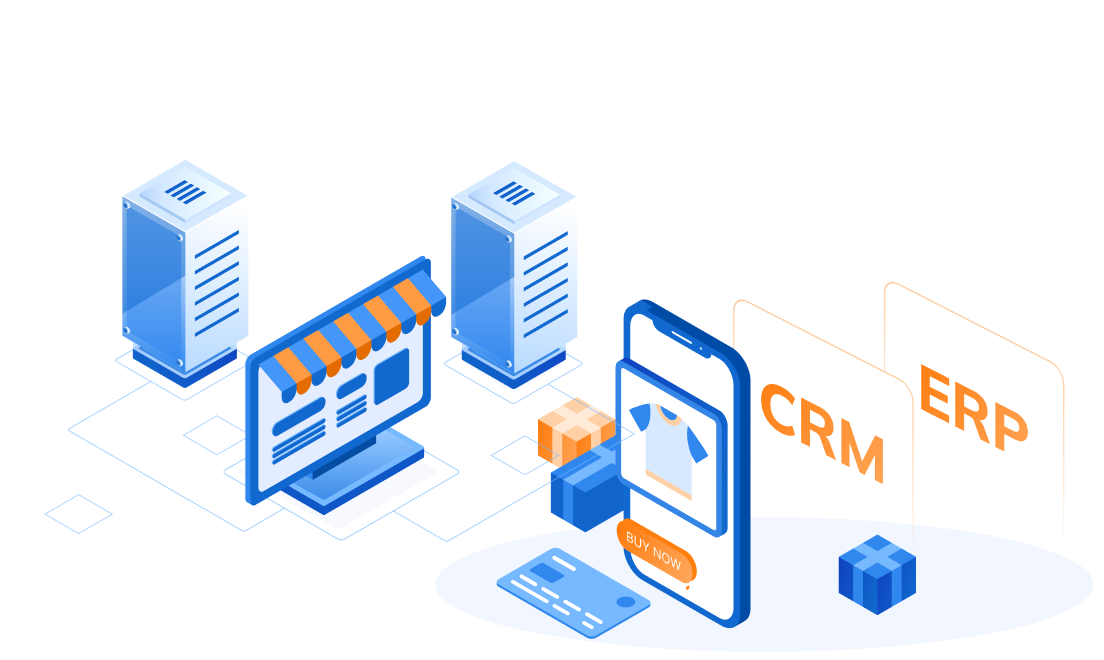
The brands that consistently deliver strong e-commerce customer experience are not doing so through better intentions. They are doing so through better infrastructure: a product data model that keeps inventory and delivery information accurate, a checkout flow that has been systematically tested and simplified, a customer data layer that makes personalization operationally possible, and a support system that gives agents the customer context they need to resolve issues in a single interaction.
Most of the brands that come to SupremeTech with loyalty or retention challenges have already identified the problem: customers are not returning at the rate the business needs. What the diagnostic usually reveals is that the experience layer, the site, the checkout, the delivery communication, the support interaction, has not been built to the standard that produces the emotional foundation loyalty programs need to build on.
SupremeTech Case Study: Enhancing Digital Customer Experience for a Century-Old Luxury Brand
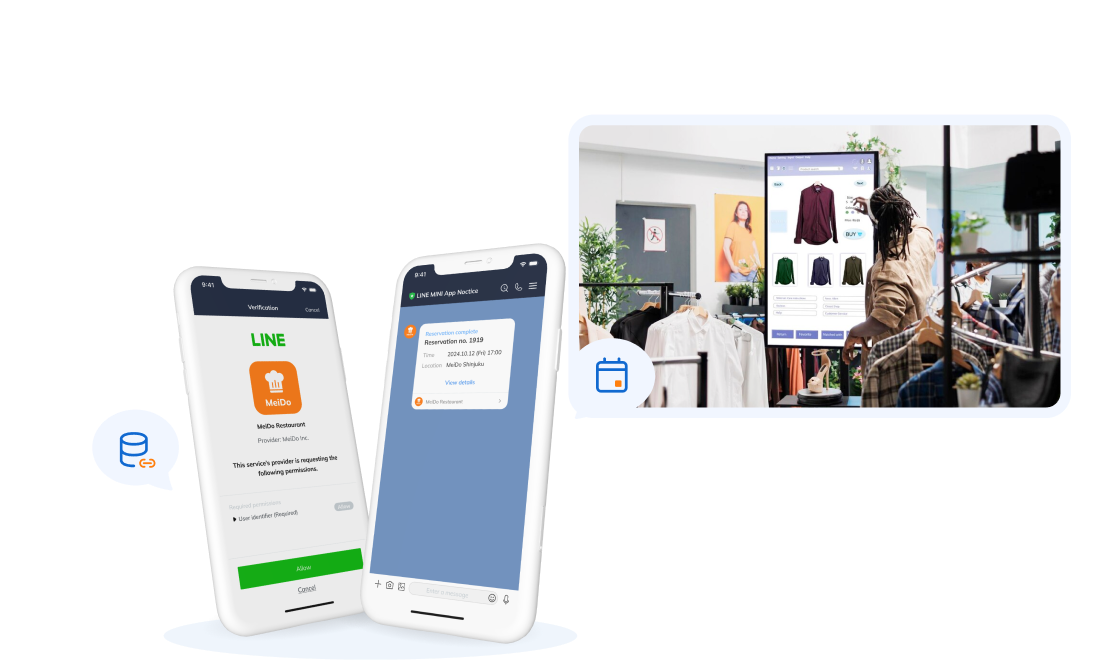
A luxury brand with over 100 years of history came to SupremeTech with a specific challenge. Their Japanese customers expected mobile-first, personalized experiences, but the brand’s existing digital tools could not deliver them without compromising the exclusivity and tone the brand had spent a century building. Manual processes like event RSVPs, store check-ins, and after-sales service were disconnected from the digital customer record. Every touchpoint that felt impersonal was quietly eroding the customer relationship.
SupremeTech built a tailored LINE MINI App that connected event bookings, personalized service access, and QR-code check-ins into a single mobile-native experience, integrated with the brand’s existing CRM and loyalty infrastructure. The solution made it possible for customers to RSVP to exclusive events, receive personalized follow-up content, and check in at the boutique, all from within the app they already used daily, without switching to a standalone brand application.
The key design principle throughout was the same one this article describes: the digital experience had to feel like a natural extension of the brand relationship, not a friction-generating add-on to it. Personalization, ease, and consistency across touchpoints were the requirements. The technology was in service of those requirements, not the other way around.
Want to build the e-commerce customer experience that loyalty programs can actually compound? SupremeTech helps retail brands design and implement the digital commerce infrastructure that earns customer trust before the first point is offered. Start a conversation with SupremeTech →
Read More on E-commerce, Loyalty, and Customer Experience
If this article was useful, these related pieces from the SupremeTech blog go deeper on the topics covered:
- Shopify Loyalty Program: How to Add Rewards, Referrals, and Repeat Purchase Incentives a practical guide to building loyalty mechanics on Shopify, starting from program design before any app is selected.
- Customer Loyalty Management in Retail: Aligning Your Team, Data, and Experience why loyalty management is a cross-functional discipline, not a marketing program, and what the four pillars that need to align actually look like in a retail organization.
- What Is Customer Loyalty Really? Why Retail Brands Should Stop Measuring Loyalty by Points Alone a deeper look at what customer loyalty actually means behaviorally and emotionally, and why points balances are the wrong proxy for it.
- Customer Loyalty Program App: What Features Retail Brands Need? a feature-by-feature breakdown of what a loyalty app needs to deliver for both customers and retail operations teams.
FAQ Section
Because loyalty programs can only reinforce a relationship the experience has already built. A customer who has had consistently good experiences with a brand’s site, checkout, delivery, and support is predisposed to respond positively to a loyalty invitation. A customer who has encountered friction at multiple touchpoints is not going to be meaningfully retained by a points offer.
The improvements with the highest direct impact on repeat purchase behavior are: reducing checkout friction (removing mandatory account creation, displaying shipping costs before the final screen, enabling guest checkout), improving delivery communication accuracy, designing support interactions around customer feelings rather than ticket resolution speed, and implementing behavioral personalization based on actual individual purchase history rather than demographic segments.
Personalization creates loyalty by making the customer feel recognized rather than processed. A brand that recommends products based on what a customer actually buys, communicates at the time and through the channel they prefer, and surfaces offers calibrated to their demonstrated preferences is delivering an experience that competitors cannot easily replicate with a larger discount.
The most useful metrics for measuring experience quality as a loyalty driver are: repeat purchase rate by acquisition cohort tracked over 90 days (a declining cohort trend signals experience deterioration); Net Promoter Score measured per post-purchase touchpoint rather than as a blended program average; cart abandonment rate at each checkout step (abandonment spike at a specific step indicates a friction point); post-support NPS and repeat purchase rate in the 60 days following a support interaction; and first-contact resolution rate in customer service. Together, these metrics surface where the experience is building loyalty and where it is eroding it.