





New Technology in Healthcare: 2026 Trends and Reality in Asia
29/07/2026
240
The common story often looks like this: A regional hospital network buys an AI diagnostic tool. The vendor demo looks great: faster reads, fewer missed findings, a real upgrade from manual review. Six months later, the tool is barely used. Not because it doesn’t work, but because the patient data it needs is scattered across three different systems that were never built to talk to each other, and nobody set aside time to fix that before the purchase order was signed.

This happens in health systems all over the world, and it says a lot about new technology in healthcare in 2026. The biggest change this year isn’t one new device or algorithm. It’s a shift toward technology that actually works inside daily hospital operations, not just in a demo. AI, remote monitoring, and connected data systems now depend on each other. A hospital needs to see real, measurable results, not just a vendor’s promise.
The Main Theme Problem of New Technology in Healthcare

Healthcare data didn’t become scattered by accident. Electronic health records, scheduling platforms, billing systems, and patient portals were adopted at different times, often from different vendors, each built for its own department rather than for the patient’s full journey. A doctor’s notes, a lab result, and a pharmacy record can all describe the same person without ever being connected in a system that a clinician, or an algorithm, can search in one place.
For a long time, this wasn’t a big problem. Most software just needed to store information, not act on it. That’s no longer true. AI models, predictive tools, and remote monitoring platforms only work well when they can see a full, up-to-date picture of the patient. Give them partial or outdated data, and they either perform poorly or give advice doctors can’t fully trust.
This is the problem healthcare organizations keep running into in 2026. In the past, buying decisions focused on what a new tool could do on its own. Now the better question is what that tool needs from everything around it in order to actually work.
New Technology in Healthcare: The Trends Shaping 2026
AI Is Becoming Part of Daily Clinical Work

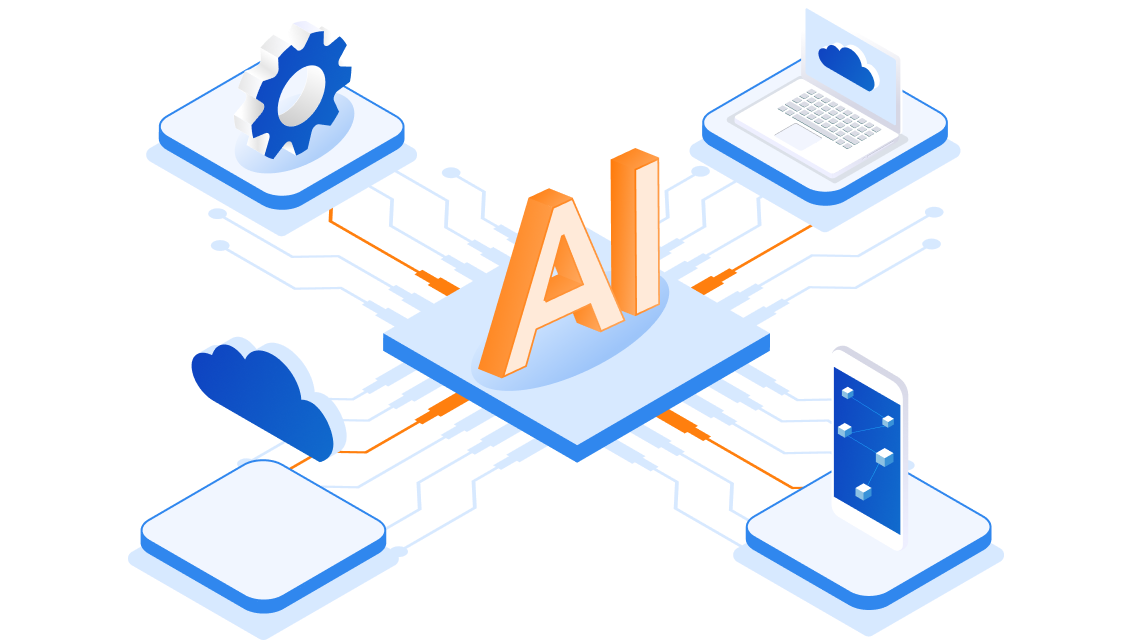
AI in healthcare has moved past the “interesting pilot project” stage for a growing number of real use cases. Medtronic, one of the companies behind this shift, built GI Genius, an AI tool that spots polyps in real time during a colonoscopy. It doesn’t replace the doctor. It gives them a second set of eyes. Forbes contributor Bernard Marr, who tracks healthcare technology trends, points to what’s coming next: AI systems that do more than flag problems, actively helping manage a patient’s care, from checking symptoms to booking follow-up tests and flagging results that need attention.
The pattern here is simple. AI works best when it’s built into a doctor’s existing workflow, not when it’s a separate app clinicians have to check on the side. And that only works if the AI can actually access the right patient data. That, more than the algorithm itself, is usually what decides success or failure.
SupremeTech has been building toward this kind of agentic AI directly, as the technology partner behind AskUnali, a healthcare startup developing an AI system that reasons through medical research to support patients with chronic illness. Instead of a chatbot that gives a generic answer, AskUnali reads through the relevant science and returns a recommendation grounded in evidence, delivered through an API so hospitals, care teams, and insurers can plug it directly into their own platforms.
The hard part was never getting the AI to respond. It was getting it to respond the same reliable way every time. SupremeTech’s engineers ran into a familiar problem with generative AI: the same question could return a slightly different answer depending on the run. The team treated every prompt as a structured test case, tracked and compared results using LangSmith, and pushed response accuracy above 97 percent. In a space where a wrong recommendation has real consequences, that kind of consistency is the actual product, not a footnote to it.
Remote Monitoring and Wearables Are Now Standard Care
Remote patient monitoring, telehealth, and at-home tests have moved from “nice extras” to something patients familiar with. Many health organizations now treat a wearable device or a home monitoring kit the same way they’d treat a normal follow-up visit.
The real question isn’t the device itself. It’s what happens to the data after it’s collected. A blood pressure reading taken at home is only useful if it reaches a doctor’s screen fast enough to act on, and if it’s automatically linked to the right patient file. Otherwise, it just becomes one more stream of data nobody has time to check.
Personalized Medicine Becomes Normal Practice
Genetic testing, biomarkers, and treatment plans built around a specific patient are moving from research hospitals into everyday clinics. The American Association of Nurse Practitioners named this one of its top five healthcare trends for 2026, reporting that more patients are getting treatment based on their own biology, risk factors, and lifestyle, not a generic plan built for the “average” patient.
This sounds like a clinical story, but it’s really a data story too. Matching treatment to a patient’s genetics and medical history only works if that history is complete and easy to find at the point of care. Which brings us back to the same issue: connected data.
Robots Take On More Jobs Outside the Operating Room
Surgical robots aren’t new. What’s changing in 2026 is where other robots are showing up: moving supplies around hospitals, helping with patient transport, and supporting elderly care in countries facing serious staff shortages. These robots don’t need to be impressive to be useful. A robot that reliably handles a simple, repetitive task frees up clinical staff for work that actually needs a trained person.
Why Data Connection Matters Most
If one trend decides whether all the others succeed, it’s this one. Health systems are under pressure to move past simply connecting systems, and start making sure those systems actually understand each other’s data. A blood pressure reading needs to be recognized as a blood pressure reading everywhere it goes, not retyped by hand or misread because of a formatting difference.
Standards like FHIR (Fast Healthcare Interoperability Resources) are helping here. Even large national efforts like the U.S. Trusted Exchange Framework are still expanding, not yet fully working across every hospital and insurer. In other words, even well-funded health systems haven’t fully solved this. For any hospital or healthtech company choosing a new tool, how well it connects to other systems deserves just as much attention as its main features.
What This Looks Like in Real Hospitals 2026
Lists of new technology in healthcare are easy to write and hard to act on. Here’s what this actually looks like once it reaches a real clinic or hospital.
A hospital rolling out AI-assisted diagnostics usually starts small: one type of scan, one department, tightly controlled. The tool has to prove itself before it scales up, and IT teams often spend as much time connecting it to the existing radiology system as they do testing the AI itself.
A remote monitoring program for chronic conditions works when the data flows straight into a doctor’s normal dashboard, triggers useful alerts, and doesn’t force a nurse to log into a separate app just to check it. Programs that need manual checking tend to lose staff interest within a few months.
This same pattern shows up outside clinical care too. SupremeTech recently built an integration connecting SmartHR, one of Japan’s leading HR platforms used by over 80,000 companies, with a health management application used to run corporate wellness programs. Before the integration, HR data had to be entered twice: once in SmartHR, once in the health app. Any change, a new hire, a role update, someone leaving, had to be manually copied over, and the two systems could quietly drift out of sync. The fix wasn’t a flashy new feature. It was a secure connection built on SmartHR’s OAuth 2.0 authentication, paired with webhook updates for real-time changes and a scheduled batch sync as a backup, so a missed or delayed event never left the data wrong for long. Once that was in place, every new company using the health app had its employee data ready from day one, with no manual setup. It’s a plain example of the same lesson: the health app didn’t need smarter features first. It needed a data foundation it could trust.
How Southeast Asia Is Adopting New Technology in Healthcare?
Most healthcare technology articles are written from a US or European point of view, but some of the more interesting changes in 2026 are happening across Southeast Asia. Citing WHO workforce data, Hitachi Digital Services reports the region is heading toward a shortage of around 4.7 million healthcare workers by 2030. That shortage is a big reason hospitals and clinics are turning to automation and remote care, not as a nice upgrade, but as a real necessity.
Telehealth use has grown quickly across the region, especially in Indonesia, the Philippines, and Thailand. In some cases, AI is filling gaps directly. Indonesian telemedicine platform uses an AI chatbot to screen patients before their appointment, giving doctors a short summary before the consultation even starts. That extends what a small clinical team can handle.
At the same time, digital maturity looks very different from country to country. Coverage of the Smart Health Asia 2026 conference noted that only about a quarter of hospitals in more advanced markets like China and Singapore currently use digital tools for diagnosis or remote monitoring. Government health leaders from Singapore, Malaysia, and Taiwan were honest that trust about AI is still a problem. Clinicians and patients need to see a tool actually help before they trust it.
For any company building or selling healthcare technology in this region, there’s a practical lesson here. A platform designed for a US hospital’s data setup rarely fits cleanly into a Southeast Asian one. Integration work and data handling usually need more custom engineering, or vendor’s pitch deck suggests.
How to Know If Your Organization Is Ready
Before choosing any new technology in healthcare, it’s worth checking your own systems first.
- Can the new tool reach the data it needs automatically? If someone has to manually export files or run a script, that’s an ongoing cost, not a one-time setup task.
- Does the vendor support real interoperability standards, like FHIR-based APIs? If a vendor can’t clearly explain how their tool connects to other systems, that tells you something about future support costs.
- Who owns decisions about data access and consent? This needs a clear answer before launch, not after something goes wrong.
- Does the tool fit into an existing workflow, or create a new one staff have to remember? Tools that need an extra login tend to lose adoption within months.
- Can you actually measure the result you’re paying for? Fewer readmissions, faster diagnosis, less admin time. Pick one specific number before rollout, not after.
None of these require advanced technology. They just require an honest look at whether your current systems are ready to support what you’re about to build on top of them.
SupremeTech works on exactly this kind of problem, from connecting HR and health data systems to building agentic AI that has to be reliable enough for real clinical and wellness use. If you want to see the details, read how SmartHR was integrated with a corporate health management app or how the team helped AskUnali build a science-backed agentic AI system for chronic illness care. If your organization is facing a similar problem, get in touch to talk through what it would take for your systems.
FAQs Section
Rather than one standout device or algorithm, the biggest shift is practical integration: AI, remote monitoring, and interoperable data systems increasingly work together instead of existing as separate pilot projects.
Most underperformance traces back to fragmented data. AI tools need a complete, current view of the patient, and disconnected systems (EHR, billing, scheduling) prevent that, regardless of how strong the underlying model is.
Interoperability is the ability of different healthcare systems to exchange and correctly interpret patient data. In 2026, the focus has shifted from basic data exchange to semantic interoperability, where systems understand the data, not just transmit it.
Southeast Asia faces significant healthcare workforce shortages, which is accelerating adoption of remote monitoring and AI-assisted triage. At the same time, digital maturity varies widely across countries, making trust-building and localized integration as important as the technology itself.
Before adopting a new tool, organizations should check whether it can automatically access the data it needs, whether the vendor supports recognized standards like FHIR, who owns data governance, and whether a specific, measurable outcome has been defined upfront.