





How Brands Use LINE as a CRM: A Practical Guide for Businesses Entering Japan
21/09/2026
1
This is written for marketers standing up a LINE presence for the first time, CRM specialists trying to slot LINE into a stack that already has Salesforce or HubSpot in it, and project owners scoping what it takes to build a real customer relationship channel in Japan. I want to walk through how it works, what it looks like when brands do it well, and the two mistakes I see most often.
Why LINE Behaves Like a CRM
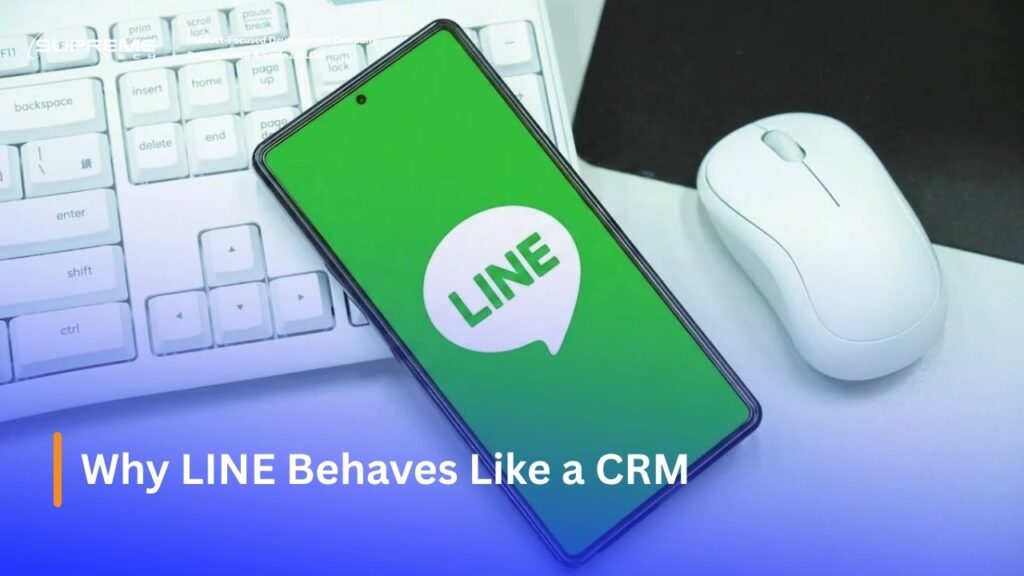
Here’s the thing that took me longer than it should have to notice: a LINE Official Account looks like a chat contact from the customer’s side, but on the business side, every follower is a row in a database, not a follower count. You can tag that row by what someone bought, which store they walked into, whether they’ve opened your last three messages, and then send three different customers three completely different messages in the same broadcast window.
How does LINE allow brands to do that? Two pieces of infrastructure make that possible.
The Messaging API is what lets a business send to a slice of its audience instead of the whole list. A retailer can message only the customers who bought a specific item last month, or only the followers near a store hosting a weekend event. It’s the difference between a mass newsletter and a targeted campaign.
The LINE uID is a persistent identifier attached to each follower, generated the instant someone taps into a Mini App, a rich menu, or an embedded form. That uID is what keeps segmentation and automation attached to one customer profile across every future purchase and conversation, instead of treating each interaction like it happened with a stranger.
Put those two things together and you get something that behaves a lot more like Salesforce with a chat window bolted on than it does like an Instagram page. That’s the whole reason marketers who actually run these accounts call it a CRM instead of a social channel.
What Results Looks Like When Brands Actually Do It Well
I went looking for real examples once I started diving deeper into this topic, and the pattern across every case that held up was the same: nobody was shouting louder. LINE makes them better listeners.
L’Occitane replaced physical membership cards with a segmented chat. After launching its Official Account, the brand split its audience and paired branding messages to the full following with merchandising specific messages sent only to relevant segments, layering in digital membership cards inside the app itself. During a stretch when foot traffic had collapsed, that setup produced a fivefold jump in ecommerce sales. It’s made possible because more people receive what feels relevant to act on.
Uniqlo turned its account into a bridge between browsing online and walking into a store. Customers can reserve products, find nearby stores, and receive offers built around what they’ve already looked at, all inside the same chat, an online to offline loop credited with a 40% lift in mobile driven sales. What makes it a CRM story rather than an ad story is that the offer changes based on the customer’s own behavior, rather than a fixed calendar.
Shiseido let a chatbot do the segmenting for them. Instead of pushing the same discount to every follower, the cosmetics group built automated conversations that route each customer toward a skincare routine based on how they answer a few questions. That personalized path was tied to a 25% increase in online sales, which tells me the segmentation was happening inside the conversation itself. Customers feel listened to and valued as if they were talking to a personal skin therapist.
Lawson skipped the big campaign entirely and just showed up daily. As one of Japan’s largest convenience store chains, Lawson sends daily coupons and offers tuned to routine, near-daily purchases rather than periodic promotions. It’s a reminder that CRM discipline on LINE doesn’t have to look sophisticated. It just has to be consistently relevant.
Setting Up a LINE Business Account: The Decisions That Actually Matter
Opening a LINE business account itself is almost anticlimactic, you register, verify, publish, and you’re live within days. The decisions that determine whether it ever behaves like a real CRM all happen after that, and this is where I’d tell marketers to pay attention to.
Decide your segments before you launch. Purchase category, store location, membership tier, whatever it is, pick it before your first follower arrives so tagging starts on day one instead of getting retrofitted onto a list you already built the wrong way. It’s important to design something that works in the long run first before jumping into execution.
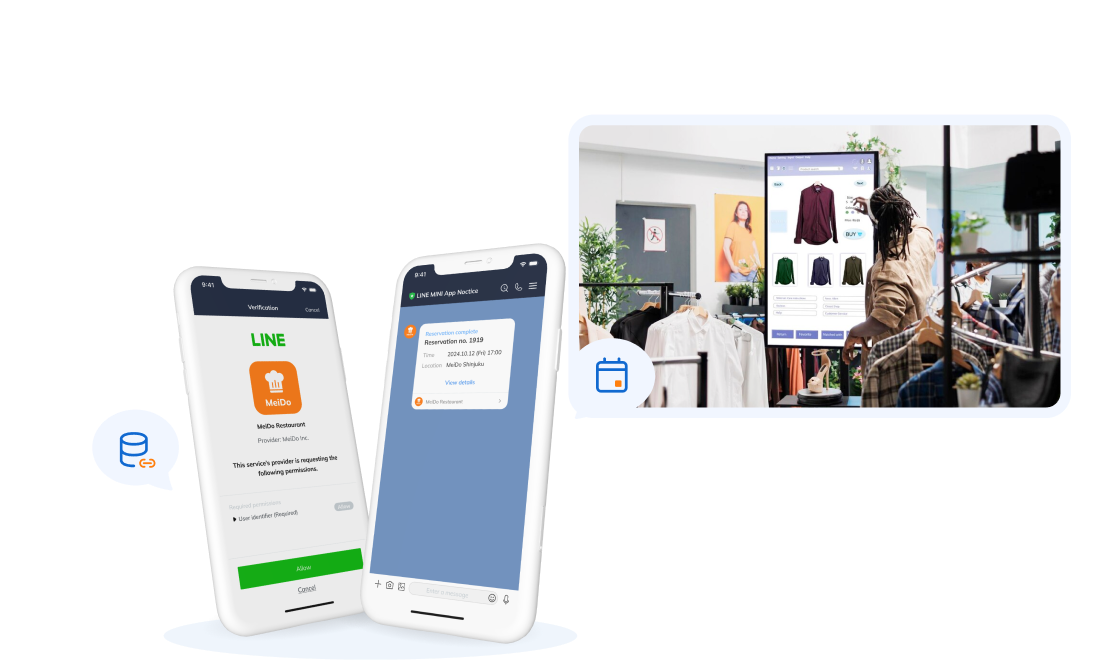
Treat the rich menu like a storefront. Rich menu is the tab bar customers see the second they open your chat. Shop, loyalty points, store locator, support, whatever keeps them acting inside the conversation instead of bouncing out to a browser is worth the real estate. On a mobile commerce build for a Japanese department store chain, the rich menu ended up being the single most used directory into the whole shopping experience, simple as it looks.
Push anything transactional into a Mini App. Bookings, order tracking, loyalty balances, all of it belongs inside a LINE Mini App rather than a link that dumps someone into a separate site. Every interaction inside a Mini App feeds a uID straight back into the same customer profile, which is the thing that keeps your CRM data unified instead of scattered. We saw this firsthand building a membership management Mini App on LIFF for a Japanese department store, where letting customers log in with their existing LINE ID removed the single biggest drop-off point in getting people to actually use the loyalty features.
Watch the block rate like it’s your smoke detector. Open rate and click rate tell you what’s working. Block rate tells you what’s about to stop working. A rising follower count next to a rising block rate almost always means the segmentation got lazy somewhere. Remember that Japanese people quit quietly when something feels not right for them anymore.
Some Mistakes You Should Avoid
First of all is the newsletter mistake: sending one message at a fixed schedule to every customer. It doesn’t fail outright, which is exactly what makes it dangerous. It generates just enough sales to look fine while quietly training your most engaged followers to stop paying attention, or worse, to block you outright, because in Japan people block an account that feels irrelevant rather than muting it.
The other mistake I keep seeing in other people’s setups is treating the Official Account, the Mini App, and any in-store loyalty program as three separate systems. When a customer’s loyalty points, order history, and chat activity all live in different places, you lose the one advantage that makes LINE worth the effort in the first place: a single, continuous view of a customer across every way they interact with you. It’s the exact problem we were brought in to solve on a project that replaced a retail chain’s physical point cards with a digital point card inside the LINE Mini App, so points, purchases, and messaging finally lived in one place instead of three.
What I’d Tell Anyone Starting This From Scratch
Personalization is the return on investment so invest from day one. Every case study I found ties its actual result, sales growth, engagement, retention, directly to segmentation and personalized CX. Do not get blurred by the huge number of followers. A smaller, well-segmented list beats a bigger, undifferentiated one.
The rich menu and Mini App are where your CRM data gets born. Messages alone tell you who opened what. The interactive pieces inside the app are what generate the behavioral data that makes smarter segmentation possible six months from now.
Let block rate keep you honest. Because Japanese users block first and ask questions never, it works as an early warning system, one that shows up well before your sales numbers would ever tell you something’s off.
The Brands That Win Here Are the Ones Paying Closest Attention
None of the brands in this piece are winning because of a clever campaign concept. They’re winning because they built the plumbing, segmentation, uID tracking, Mini Apps, that lets them keep learning about each customer and responding accordingly. That’s not really a LINE trick. That’s just what CRM has always meant, LINE just happens to be the channel in Japan where doing it properly pays off fastest.
At SupremeTech, we set up and manage LINE Official Accounts and build custom LINE Mini Apps for brands expanding into Japan, wiring messaging, loyalty, and commerce into one customer profile from the start instead of stitching it together after the fact.
FAQs Section
Brands use LINE as a CRM by collecting customer data through LINE Official Accounts, tagging users based on their behavior, purchases, or location, and sending personalized messages instead of broadcasting the same content to everyone.
A LINE Official Account is not a CRM by itself, but when combined with the LINE Messaging API, customer segmentation, and LINE Mini Apps, it becomes a powerful CRM channel for managing customer relationships and personalized engagement.
LINE is used by more than 80% of Japan’s population, making it one of the country’s primary communication channels. Businesses use it for customer service, loyalty programs, promotions, appointment booking, and personalized marketing.
A LINE Official Account is the communication channel businesses use to send messages and interact with customers. A LINE Mini App extends that experience by allowing users to shop, book services, manage memberships, or earn loyalty points without leaving the LINE app.
A LINE Mini App is a good choice when businesses need customers to complete transactions, manage memberships, collect behavioral data, or access personalized services directly inside LINE. It complements an Official Account by turning conversations into interactive customer experiences.