








What Is Customer Loyalty Really? Why Retail Brands Should Stop Measuring Loyalty by Points Alone
02/06/2026
583
Here is a scenario that plays out in retail boardrooms every week. A brand spends millions building a loyalty program, hits its member targets, watches redemption rates climb, and still loses customers to the competitor running a 10%-off flash sale.
That is not a marketing failure. It is a measurement failure.
Most loyalty programs are built around one easy-to-track proxy: points accumulated. But a customer who carries your card, earns rewards, and still switches the moment a better deal appears is not loyal. They are temporarily retained. What is customer loyalty, then, if not a full points card? The difference between genuine loyalty and temporary retention is enormous, and the cost of confusing them shows up quietly in your margins every quarter.
Bain and Company research by Frederick Reichheld found that increasing customer retention rates by just 5% can increase profits by 25% to 95%. And Harvard Business Review found that customers who are fully emotionally connected to a brand are 52% more valuable than those who are merely highly satisfied. Those two findings, read together, point to a significant commercial opportunity that points-only programs are structurally designed to miss.
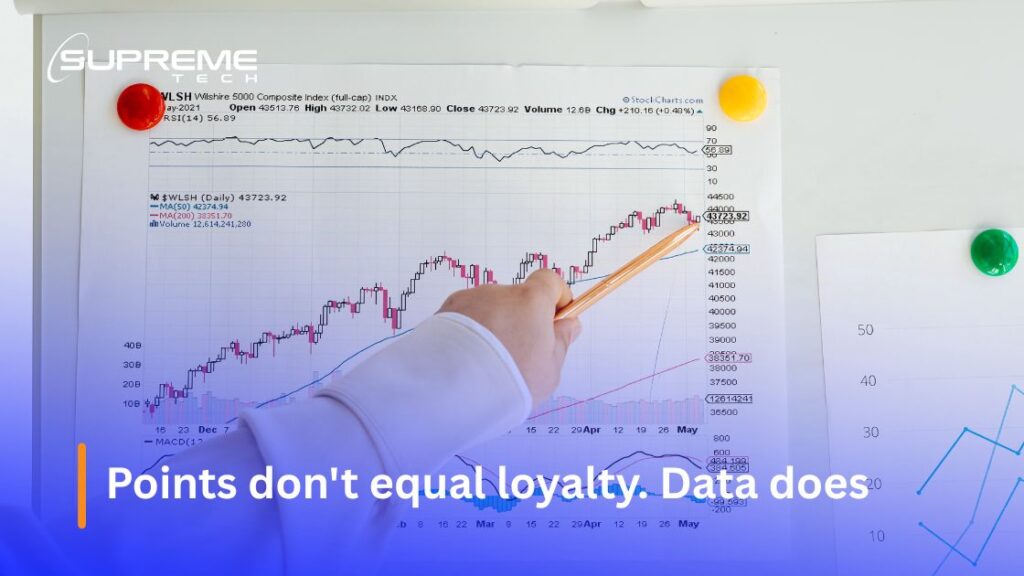
This article defines what customer loyalty actually is at a behavioral and psychological level, explains why transactional proxies fall short, and gives retail brands a more honest framework for measuring, building, and monetizing genuine loyalty.
What Is Customer Loyalty? A Definition That Goes Beyond Repeat Purchases
So what is customer loyalty, precisely? It is not a visit count. It is not a tier badge. At its core, it is a durable psychological commitment, expressed through repeated behavior, that holds even when the customer has better alternatives sitting right in front of them.
That distinction matters enormously in practice. It separates the customers who stay because they genuinely want to from the ones who stay because switching feels like effort.
Most of the research on this draws a clear line between two foundational types.
Transactional loyalty is behavioral and incentive-driven. The customer comes back out of habit, convenience, or accumulated rewards. Take the incentive away, and the behavior often disappears with it. This is what most traditional points programs are actually measuring, even if they do not say so.
Attitudinal loyalty, what most people mean when they say “emotional loyalty,” is something deeper. It is rooted in genuine belief: in the brand’s quality, values, and identity. Customers here are less sensitive to price, quicker to forgive the occasional service hiccup, and far more likely to tell others about you. According to Harvard Business Review, emotionally connected customers are anywhere from 25% to 100% more valuable in terms of revenue and profitability than those who are merely highly satisfied.
The takeaway is not that transactional loyalty is worthless. It is actually a useful foundation to build from. The mistake is treating it as the destination, or using transactional metrics as the only window into program health.
The contrast between these two types becomes very clear when you look at two brands that have earned genuine customer loyalty without relying on a points program at all.
Brand Case Study: Patagonia
Patagonia has no traditional points-based loyalty program. What it has instead is one of the highest levels of attitudinal loyalty in retail. The brand’s Worn Wear initiative encourages customers to repair and resell their gear rather than buy new. Its Ironclad Guarantee repairs or replaces any product that fails, regardless of age. Since 1985, Patagonia has donated 1% of all sales to environmental causes. The result: KPMG ranked Patagonia third in its 2024-2025 U.S. customer experience excellence survey, a rise of 16 places year over year. Around 30% of Patagonia customers have participated in the Worn Wear program. The brand’s customer loyalty rate sits at approximately 80%, according to CX Dive. Patagonia’s customers are not loyal because they are earning points. They are loyal because the brand reflects who they are.
Key Concept: The Loyalty Spectrum
Customer loyalty exists on a spectrum with five meaningful stages. Most loyalty programs are built only to influence Stage 1. The highest commercial returns live at Stages 4 and 5.
Stage 1: Transactional loyalty. Returns for practical reasons. Vulnerable to competitive offers.
Stage 2: Engagement loyalty. Actively interacts beyond purchases through reviews, social, and surveys.
Stage 3: Habitual loyalty. Returns by default. Low deliberation, moderate vulnerability.
Stage 4: Emotional loyalty. Genuine affinity. Brand-aligned values. Resistant to competitive switching.
Stage 5: Advocacy loyalty. Unprompted recommendation and defense of the brand. Highest lifetime value.
Why Points Programs Systematically Undercount Real Loyalty
The core design flaw in points-only programs is that they measure output, not cause. A customer can earn and redeem rewards for years without ever developing any real attachment to the brand. That is not a knock on the mechanics of rewards. They do a solid job of nudging purchase frequency. The problem is when the points balance becomes the primary health indicator for the entire loyalty strategy.
A few structural biases tend to compound this problem.
Bias 1: The Discount Dependency Trap. When a brand consistently rewards customers with discounts, it trains them to expect a lower price as the baseline. The undiscounted price starts to feel like a penalty. Meanwhile, Forrester’s 2024 Consumer Benchmark Survey found that 85% of US online adults belong to at least one retail loyalty program. The market is saturated. Most shoppers are simultaneously “loyal” to several competing brands at once, not out of emotional commitment, but because they have gotten good at extracting rewards from all of them.
Here is what that looks like in practice. A customer carries loyalty cards for three competing supermarkets. They shop at whichever one has the best weekly promotion. All three programs count this customer as an active member. None of them has any real loyalty from this customer at all.
Bias 2: The Redemption Illusion. High redemption rates look great in a dashboard presentation. But redeeming a reward is a transactional act that requires zero emotional investment. A customer can cash in their points on a Tuesday and happily shop at a competitor on Wednesday. Redemption confirms activity. It tells you nothing about commitment.
Bias 3: The Inactive Member Overcount. The average US consumer is enrolled in 17 loyalty programs but actively participates in only about half of them, according to Capital One Shopping Research. A program reporting 500,000 members may realistically have fewer than 250,000 engaged participants. That gap inflates program health metrics and quietly distorts where retention investment gets directed.
Bias 4: The Missing Emotional Signal. Points programs do not capture how customers feel. NPS scores, Customer Effort Scores, and sentiment data rarely make it into loyalty dashboards. That means the customers most at risk of leaving, those still purchasing out of habit but emotionally checked out, are effectively invisible in standard reporting until the day they stop buying.
The Business Case for Measuring Emotional Loyalty
If the argument against points-only measurement sounds qualitative, the financial data behind what is customer loyalty in its emotional form is anything but.
Harvard Business Review found that fully connected customers are 52% more valuable than highly satisfied customers when measured by actual revenue and profitability impact. They visit more often, care less about price, engage more readily with marketing, and refer others at significantly higher rates. Emotionally engaged customers recommend their brand at a rate of 71%, compared to 45% for the average customer, a finding from Motista research that has held consistently across product categories.
The numbers on retention economics are equally direct. Loyal customers spend an average of 43% more at the businesses they are committed to, and companies that lead in loyalty grow revenue approximately 2.5 times faster than industry peers, according to Capital One Shopping Research.
No brand illustrates this more clearly than Apple.
Brand Case Study: Apple
Apple has no traditional retail loyalty program. No points. No tiers. No redemption dashboard. What Apple has built instead is the highest level of attitudinal loyalty in consumer technology. In 2025, Apple’s iPhone customer retention rate sits at approximately 92%, with an NPS score of 61, well above typical tech industry averages, according to SQ Magazine’s Apple loyalty research. Among Millennial iPhone owners, 96.4% plan to repurchase with Apple. Emotionally invested Apple customers refer the brand at a rate of 71%, matching the Motista benchmark for emotionally engaged customers. Apple’s Services revenue reached $87 billion in trailing twelve months as of early 2024, driven entirely by customers who are already inside the ecosystem and have no interest in leaving. Apple does not reward loyalty with points. It earns loyalty through a product and experience ecosystem so coherent that switching feels like a loss, not a trade-off.
Bain and Company found that a 5% improvement in retention can boost profits by 25 to 95%. Given that acquiring a new customer typically costs five to 25 times more than keeping one, the case for investing in genuine loyalty rather than discount-funded retention is not philosophical. It is arithmetic.
| Metric | Transactionally Loyal Customer | Emotionally Loyal Customer |
|---|---|---|
| Price sensitivity | High. Will switch for a better offer. | Low. Brand value outweighs the price gap. |
| Defection risk | Moderate to high | Low |
| Advocacy rate | 45% recommend (average) | 71% recommend |
| Revenue premium vs. satisfied customers | Minimal | Up to 52% more valuable |
| Response to service failures | Low tolerance | Higher forgiveness rate |
| Lifetime value trajectory | Flat or declining | Increasing over time |
How to Measure What Loyalty Actually Is: The BERA Framework
Moving beyond points does not mean scrapping existing program infrastructure. It means adding measurement layers on top of the behavioral data already being collected, layers that finally let you see what is actually going on with your customers.
Key Concept: The BERA Framework: Behavioral, Emotional, Relational, Advocacy Signals
B: Behavioral signals. Purchase frequency, share of category wallet, recency, cross-category penetration. These are what most programs already measure. They are necessary but not sufficient on their own.
E: Emotional signals. Net Promoter Score, brand sentiment scores, qualitative survey data on brand affinity and trust. These tell you how customers feel, something behavioral data simply cannot.
R: Relational signals. Engagement depth beyond purchases: app usage, content interaction, community participation, customer service contact sentiment, willingness to give feedback.
A: Advocacy signals. Organic referral behavior, user-generated content, review quality and frequency, unprompted social mentions.
A customer who scores strongly across all four signal types is genuinely loyal. One who scores highly only on B is transactionally retained. The gap between those two populations is exactly where loyalty investment decisions should be focused.
In practice, a fashion retailer applying the BERA Framework might discover that its top 500 spending customers in the last 12 months show declining email engagement, falling NPS scores, and zero referral activity. Their B score is high. Their E, R, and A scores are collapsing. Under a points-only measurement system, this group looks like the healthiest segment in the program. Under the BERA Framework, they are the brand’s highest-priority defection risk.
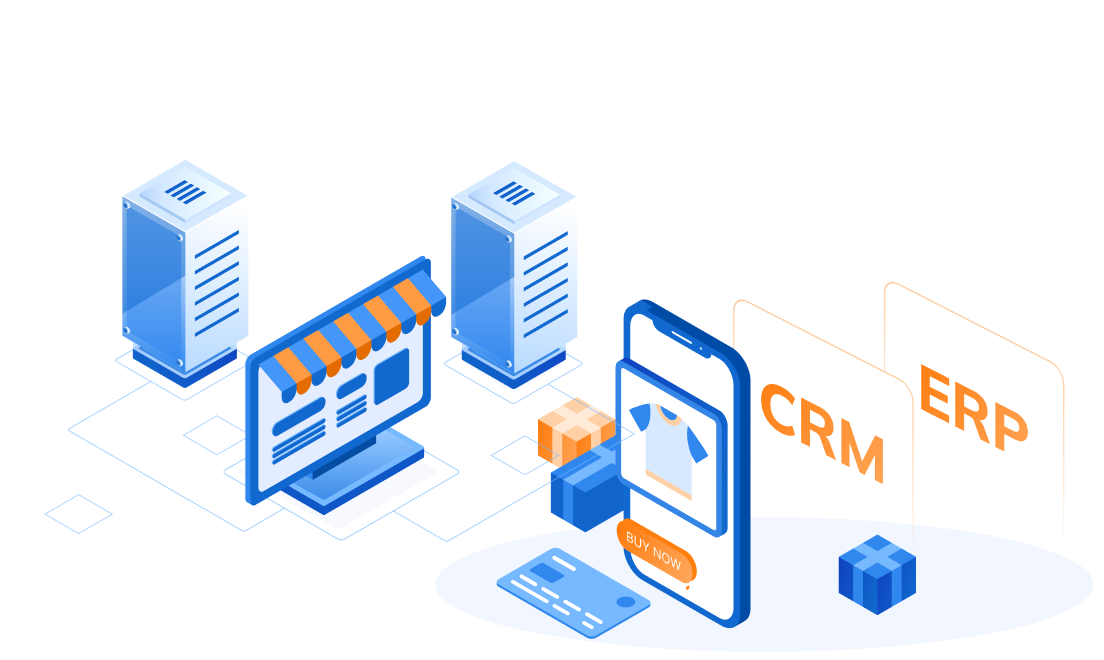
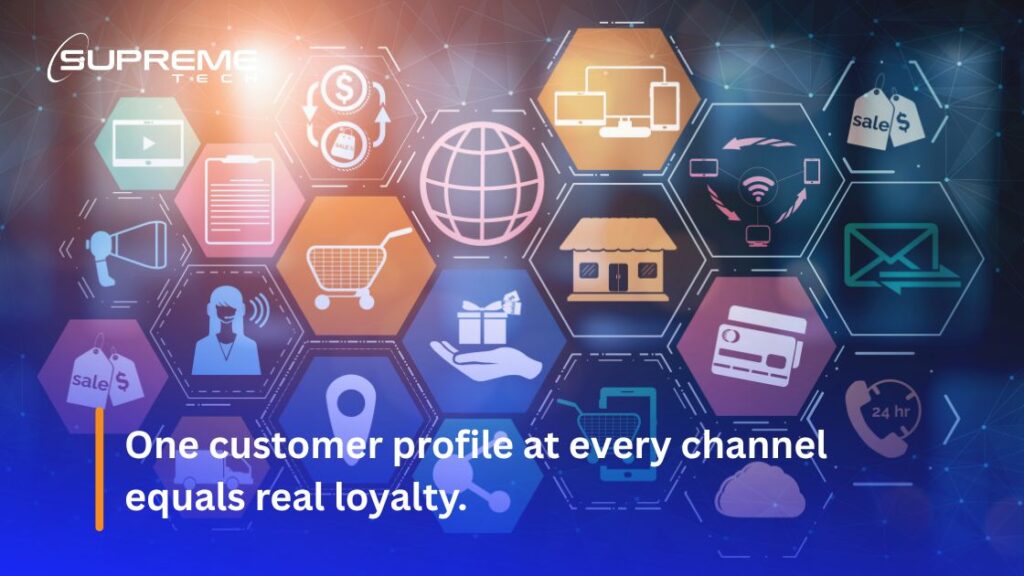
Putting this into practice requires unified customer data, and that is where most retail organizations run into trouble. CRM, point of sale, e-commerce platform, and loyalty engine each hold partial records that never get reconciled into a single customer profile. Without that unification, computing a composite loyalty score across all four signal types is simply not possible.
Aberdeen Group research found that companies with strong omnichannel customer engagement retain an average of 89% of their customers, compared to 33% for companies with weak omnichannel strategies. That 56-percentage-point gap is not a marketing outcome. It is a data architecture outcome. Brands that connect their data across touchpoints can see the full picture. Brands that cannot are flying blind.
What Signals Predict Loyalty Before a Customer Defects?
The most valuable use of a multi-signal loyalty framework is not looking backward at what happened. It is spotting what is about to happen. Early defection signals show up in the data weeks or months before a customer churns, and almost none of them appear in the points balance.
Signal 1: Declining engagement depth. A customer whose purchase frequency looks fine but whose app usage, email open rates, and content engagement have dropped sharply is starting to disengage emotionally before they disengage transactionally. This is the most common pattern that precedes voluntary churn, and it is invisible in a points-only view.
Signal 2: Channel contraction. Omnichannel customers shop 1.7 times more than single-channel customers and spend more per transaction, according to McKinsey. When a customer who used to engage across three or four channels suddenly pulls back to just one, that contraction is an early signal of declining commitment, even if their transaction count has not moved yet.
Signal 3: NPS regression. A promoter who drops to passive status on an NPS survey has not churned yet. But their probability of leaving has risen meaningfully. If that shift is not flagged and acted on within the loyalty infrastructure, it tends to resolve itself as a lost customer within a few months.
Signal 4: Service contact sentiment. How a customer service interaction gets resolved, and what the customer feels afterward, is one of the most direct emotional loyalty signals a brand has. A poorly resolved complaint with no follow-up is a high-defection risk sitting quietly in the data, regardless of how many points that customer has accumulated.
Signal 5: Referral silence. Advocates who stop referring are not necessarily unhappy yet. But they are losing emotional momentum around the brand. Tracking referral cadence and responding when it drops is an underused intervention trigger that most programs simply ignore.
Logic Chain: When to Intervene
IF a customer’s purchase frequency holds steady (transactional signal normal)… BUT engagement depth falls by more than 30% across non-purchase channels (emotional signal declining)… THEN this customer is at elevated defection risk despite appearing healthy in standard reporting. THEREFORE trigger an emotional re-engagement protocol: personalized outreach, a service check-in, or exclusive recognition, before the transactional behavior follows the emotional behavior downward.
The Role of Omnichannel Infrastructure in Building Durable Loyalty
Loyalty is not built in a single channel. It is built through an accumulation of consistent, personalized experiences across every place a customer encounters a brand, and that requires the channels to be genuinely connected at the data layer, not just linked at the surface.
A loyalty program that cannot recognize a customer consistently across in-store, e-commerce, mobile app, and customer service channels is structurally unable to build emotional loyalty at scale. Every time a customer has to re-identify themselves, explain their history again, or hit a different experience in a different channel, the brand burns through emotional capital rather than building it. According to McKinsey’s 2024 Personalization Report, 76% of customers expect personalized support across their interactions, and 71% say generic service actively frustrates them.
Here is what that frustration looks like from the customer’s side. A customer who has been shopping with a brand for three years walks into the store. They are a top-tier loyalty member. The store associate has no way to see this. They receive the same greeting and the same service as a first-time visitor. That interaction did not build loyalty. It quietly eroded it.
McKinsey research found that personalization programs in retail typically deliver a 1 to 2% lift in total sales for grocery businesses and a higher lift for other retail segments, mostly by increasing share-of-wallet among customers who are already engaged. Those programs also tend to reduce marketing and sales costs by around 10 to 20%, which makes the business case even cleaner.
How SupremeTech Can Help
Most of the retail brands and e-commerce operators that come to SupremeTech with loyalty challenges are not asking “how do we build a better points program.” They are asking “why are our best customers leaving when we are investing more in loyalty than ever before?”
The answer is almost always the same. The loyalty program is measuring the wrong things, and the data infrastructure underneath it is too fragmented to show what is actually happening.
A scenario we encounter regularly: a mid-sized retail brand has 200,000 enrolled loyalty members. The redemption dashboard looks healthy. But when we look at the data more carefully, we find that the top 10% of members by spend have shown a 35% drop in email engagement over the last six months. Their purchase frequency is holding, but their NPS scores have quietly moved from promoter to passive. Their referral activity has gone to zero. Under the brand’s current reporting, these customers look fine. Under a BERA measurement model, they are the brand’s most urgent retention problem.
Fixing this starts with the data architecture, not the rewards structure. SupremeTech’s omnichannel retail solutions practice builds the unified customer identity layer that connects in-store, e-commerce, mobile, and service touchpoints into a single customer record. That record is what makes it possible to compute BERA signals across all four dimensions, rather than looking at each channel’s data in isolation.
For brands that have the data foundation but have not yet built the models that turn data into action, SupremeTech’s AI-driven development team builds the predictive models and real-time automation that surface at-risk customers before they defect and trigger the right intervention at the right moment.
For brands scaling their digital retail presence and wanting to instrument their e-commerce platform for loyalty signal capture from day one, SupremeTech’s e-commerce development services build the behavioral data layer that feeds composite loyalty scoring rather than just transaction logs.
Where off-the-shelf loyalty platforms cannot meet a brand’s specific data integration or personalization requirements, SupremeTech’s custom software development team designs and builds bespoke loyalty engines that fit the actual data environment rather than forcing the brand to fit the platform’s assumptions.
The right starting point is not a technology selection decision. It is a diagnostic conversation about where the current loyalty measurement is falling short and which data gaps are creating the largest commercial blind spots.
Ready to measure loyalty with more than points? SupremeTech works with retail brands to build the omnichannel data infrastructure that turns loyalty programs from discount engines into genuine retention assets. Start a conversation with SupremeTech →
Summary: The Logic Chain of Customer Loyalty
IF a brand defines loyalty only by points accumulation and redemption rates, THEN it is measuring transactional retention, not emotional commitment, and will systematically undercount defection risk.
IF a brand adopts the BERA Framework (Behavioral, Emotional, Relational, Advocacy signals), THEN it can identify the gap between transactionally retained and emotionally loyal customers, and quantify the revenue opportunity in closing it. Brands like Apple and Patagonia demonstrate what that gap is worth: 92% retention rates and 80% customer loyalty rates, achieved without a single points program.
IF a brand’s data architecture remains fragmented across channels, THEN it cannot compute composite loyalty scores, detect early defection signals, or deliver the personalized experiences that move customers from transactional to emotional loyalty.
IF a brand builds unified omnichannel customer data infrastructure, THEN it can apply the predictive signals described above, intervene before emotional disengagement becomes behavioral churn, and reach toward the Aberdeen Group finding that strong omnichannel engagement correlates with 89% customer retention, versus 33% for fragmented programs.
THEREFORE, the most commercially productive loyalty investment a retail brand can make is not a redesigned points structure. It is the data infrastructure that makes multi-signal loyalty measurement possible in the first place.
FAQs Section
Understanding what is customer loyalty versus what is mere retention is one of the most practically important distinctions in retail strategy. Retention is an outcome: a customer did not leave during a given period. Loyalty is the cause: the psychological commitment that makes voluntary retention likely over time. A retained customer may be loyal, or they may simply not have found a compelling reason to switch yet. Brands that optimize only for retention without measuring loyalty tend to find themselves on a treadmill of increasing discounts and shrinking margins, managing symptoms rather than root causes.
The cost is structural and gradual. A brand that conflates points accumulation with genuine loyalty will underinvest in emotional engagement, overspend on discount-funded retention, and miss high-defection-risk customers entirely until they have already left. At the portfolio level, this means consistently losing the customers with the highest potential: the ones closest to shifting from transactional to emotional loyalty, while burning most of the retention budget on customers who were going to stay regardless. The Bain and Company finding that a 5% retention improvement can boost profits by 25 to 95% shows how large that missed opportunity compounds over time.
The most reliable metrics are: the revenue gap between emotionally loyal customers and transactionally loyal customers within the same behavioral cohort; the reduction in early defection rate after implementing predictive intervention triggers; the shift in NPS distribution over time; and the advocacy conversion rate, meaning the share of engaged customers who generate an organic referral. These metrics all require data integration that points-only programs typically cannot provide, which is why the measurement question and the infrastructure question are essentially the same question.
The infrastructure requirements scale with brand size, but the principles apply at any scale. A smaller brand does not need a full Customer Data Platform to start integrating emotional signals into loyalty management. Beginning with NPS surveys tied to purchase cohorts, monitoring referral cadence, and tagging customer service sentiment gives meaningful emotional signal data at relatively low cost. The bigger constraint is usually not budget. It is organizational willingness to act on qualitative and relational data alongside the transactional numbers.
Standard loyalty platforms are built for points mechanics: tiering, redemption, and communication templates. They are not built for multi-signal loyalty measurement, real-time defection prediction, or data integration across mixed retail systems. SupremeTech starts with a data architecture diagnostic: mapping where customer signal data currently lives, identifying where integration is missing, and designing the minimum viable architecture that supports composite loyalty scoring. Platform selection or custom build follows from that diagnosis. This avoids the common pattern of a loyalty platform launch that generates impressive member numbers but does not move the commercial metrics that actually matter.