











Dedicated Development Team: How the Model Works, What It Costs and How to Hire One
04/07/2023
1.76k
A dedicated development team is a group of engineers, testers and other specialists that a vendor assembles to work full time on one client’s product, usually for months or years. The vendor hires, pays and retains the people; the client sets priorities and owns the product. You pay a predictable monthly fee per team member instead of a fixed project price. The model fits companies that need a stable, long-term team quickly, have a product that will keep evolving, and want control over the roadmap without building an engineering organization from scratch.
What is a dedicated development team?

A dedicated development team is an outsourcing engagement model in which a software company provides a full-time team that works exclusively on one client’s project. “Dedicated” is the key word: the people are not shared across several clients, and they build deep knowledge of your product, codebase and business over time.
The vendor remains the legal employer. It recruits the team, pays salaries and benefits, provides equipment and office space, and replaces people when someone leaves. The client directs the work: it owns the product vision and the backlog, takes part in sprint planning and reviews, and accepts the output. In practice, a good dedicated team behaves like an extension of the client’s own engineering department, just located elsewhere and employed by someone else.
Most dedicated teams are remote, and many are offshore. That is now ordinary for software work. In the 2025 Stack Overflow Developer Survey, 32.4% of respondents described their work situation as fully remote, with most of the rest in some form of hybrid arrangement (Stack Overflow Developer Survey 2025). A remote team is no longer a compromise; it is how a large part of the industry already works.
How the dedicated team model works

The model rests on a clear split of responsibilities. When that split is written down and respected, the arrangement runs smoothly. When it is vague, both sides end up managing the same things or nobody manages them at all.
| Area | Client is responsible for | Vendor is responsible for |
|---|---|---|
| Product | Vision, roadmap, priorities, acceptance of work | Turning priorities into working, tested software |
| Backlog | Owning and ordering the backlog (product owner role) | Refining stories, estimating, raising risks |
| People | Approving team members and team size | Recruiting, payroll, benefits, retention, replacements |
| Process | Agreeing the delivery method and reporting | Running sprints, ceremonies, QA and releases |
| Infrastructure | Access to repositories, environments and tools | Hardware, office, network security, licenses for its staff |
| Security | Defining data classification and access rules | Applying controls, NDAs and secure working practices |
| Commercials | Paying the monthly fee | Transparent invoicing, notice of changes in team composition |
Billing is normally a fixed monthly fee per team member, based on role and seniority. On SupremeTech’s custom software development page, for example, the dedicated team model is described as fixed monthly payments per team member, with each person working full time on one project. You can add or remove people with notice, which makes the cost predictable month to month but flexible over a year.
Dedicated team vs staff augmentation vs fixed price

The dedicated team is one of three common ways to work with a software vendor. The best choice depends on how well defined your scope is, how long the work will last and how much management you can provide yourself.
| Factor | Staff augmentation | Dedicated team | Fixed price project |
|---|---|---|---|
| What you get | Individual engineers who join your team | A complete, self-organizing team for your product | A defined deliverable |
| Who manages daily work | You | Shared: you set priorities, the vendor runs delivery | The vendor |
| Scope | Flexible | Flexible and evolving | Fixed upfront |
| Billing | Per person, hourly or monthly | Per team member, monthly | Fixed total, by milestone |
| Typical duration | Weeks to months | Many months to years | Weeks to months |
| Knowledge retention | Low: people rotate out | High: stable team builds domain knowledge | Low after handover |
| Change requests | Easy | Easy: reprioritize the backlog | Costly: renegotiation |
| Your management effort | High | Medium | Low during build, high at specification |
| Best for | Filling a skill gap in a strong in-house team | Long-term products with changing requirements | Small, well-specified projects |
A useful rule of thumb: if you can write a complete specification today and it will not change, fixed price is efficient. If you have a strong engineering manager and only need extra hands, staff augmentation fits. If you have a product that will keep growing and you want a team that owns delivery, choose a dedicated team. We cover the contract side of each model in our guide to offshore software development services.
When a dedicated team is the right choice, and when it is not
A dedicated team is not the answer to every project. It works best under specific conditions, and it wastes money outside them.
A dedicated team is a strong fit when:
- Your product will be developed and maintained for at least six to twelve months, often much longer.
- Requirements will change as you learn from users, so a fixed scope would be fiction.
- You need several roles working together (development, QA, analysis), not one specialist.
- You cannot hire locally fast enough, or at an acceptable cost.
- You want to keep product decisions in-house while delegating delivery.
- You need to scale up for a launch and down afterwards without layoffs.
Consider another model when:
- The work is a small, well-defined project of a few weeks. A fixed price contract is simpler.
- You only need one or two specialists to join an existing team that already has strong management. Staff augmentation is lighter.
- Nobody on your side can act as product owner. A dedicated team without direction will build the wrong things efficiently.
- Regulation requires your own employees to handle the work or the data.
Why companies hire dedicated teams in 2026
The main driver is the same one that has pushed companies toward outsourcing for years: it is hard to hire good engineers fast. The difference in 2026 is that the shortage has moved toward newer skills.
- Hiring difficulty is widespread. ManpowerGroup’s 2026 Talent Shortage Survey of 39,063 employers in 41 countries found that 72% report difficulty filling roles. AI model and application development is now the hardest skill to find, cited by 20% of employers (ManpowerGroup, February 2026).
- Demand for developers keeps growing. The US Bureau of Labor Statistics projects employment of software developers, QA analysts and testers to grow 10% from 2025 to 2035, with about 106,100 openings each year (BLS).
- In-house engineers are expensive. The same BLS data puts the median software developer wage at $135,980 in May 2025, before benefits and overhead.
- Spending on outside expertise is rising. Gartner forecasts worldwide IT services spending of $1.57 trillion in 2026, up 5.3% on 2025 (Gartner).
A dedicated team answers all four pressures at once: the vendor already has the recruiting pipeline, the people cost less than an equivalent local hire in high-cost markets, and the team can start in weeks rather than after months of hiring.
What a dedicated development team looks like
There is no standard team. The composition follows the product. But most dedicated teams share a core structure, and the roles change as the product moves from building to running.
| Role | What they do | Discovery and MVP | Growth | Maintenance |
|---|---|---|---|---|
| Project manager or Scrum master | Runs delivery, removes blockers, reports progress | Part time | Part or full time | Part time |
| Business analyst | Turns business needs into clear requirements and acceptance criteria | Full time | Part or full time | Part time |
| Tech lead or architect | Owns technical design, code quality and standards | Full time | Full time | Part time |
| Front-end developers | Build web interfaces | 1 to 2 | 2 or more | 1 |
| Back-end developers | Build APIs, business logic, data | 1 to 2 | 2 or more | 1 |
| Mobile developers | Build iOS, Android or cross-platform apps | As needed | As needed | As needed |
| QA engineers | Test plans, manual and automated testing | 1 | 1 or more | Part time |
| DevOps or infrastructure | Cloud setup, CI/CD, monitoring | Part time | Part time | Part time |
| UI/UX designer | Research, flows and interface design | Full time | Part time | As needed |
Fractional roles are what make small teams affordable. A product does not need a full-time project manager or infrastructure engineer when the team has six people. A good vendor allocates those roles at 25% or 50% and adjusts as the product grows.
A real example of team composition
Our work with XERO, Inc., the startup behind the ZeroRegi mobile ordering and POS platform for restaurant chains in Japan, shows how this looks in practice. The platform had grown fast and struggled under peak-hour traffic. The dedicated team that stabilized and then scaled it was made up of a project manager (0.25), a project technical lead (0.5), a business analyst (0.5), an infrastructure engineer (0.5), two back-end developers, one front-end developer, 1.5 mobile developers, one QC engineer and a communicator (0.5): 7.75 full-time equivalents in total. The business analyst is fluent in Japanese and acted as the bridge between the teams.
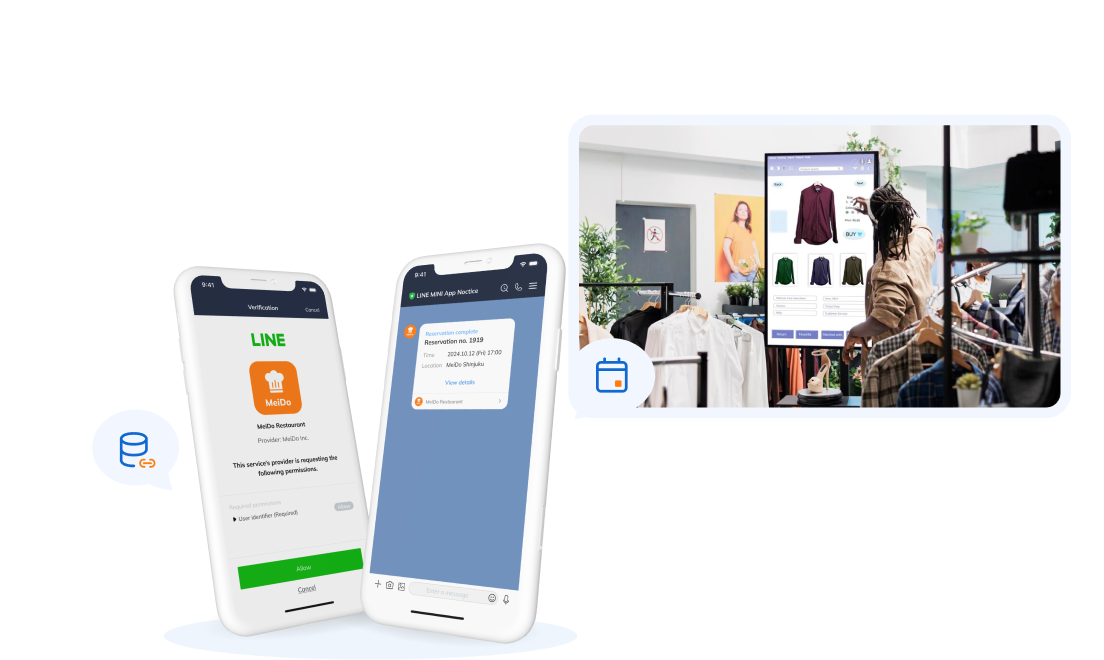
Working in three phases (stabilize, improve operations, scale), the team audited the system, refactored the back end, built a new admin portal, added a LINE Mini App integration and moved to a modular white-label architecture. By the end of 2025, the platform had opened 54 new stores, order volume was up 20% and system requests were up 30%, and the product had expanded to the Philippines. The full story is in the ZeroRegi white-label mobile ordering case study.
How much does a dedicated development team cost?
The honest answer is that it depends on four things: how many people, what seniority, where they are located, and what the monthly fee includes. Any article that quotes a single number without those variables is not telling you much. What we can do is show you how to compare a dedicated team with the alternative properly.
The main cost drivers
- Team size and composition: the number of people and the mix of roles. Fractional roles reduce cost for small teams.
- Seniority: a team weighted toward senior engineers costs more per month but often less per feature, because it needs less rework and supervision.
- Location: rates follow local salary levels, so the same team costs very different amounts in different countries.
- Technology: scarce skills, such as AI application development, cost more everywhere.
- Language and domain skills: analysts who speak the client’s language or know the industry add value and sometimes cost.
- What is included: some vendors include project management, QA and infrastructure; others bill them separately.
Compare with the true in-house cost, not the salary
The fair comparison is the monthly fee against the fully loaded cost of hiring the same people yourself. In the US, wages and salaries are only 70.0% of total employer compensation costs in private industry, with benefits making up the remaining 30.0% (BLS Employer Costs for Employee Compensation, June 2026). Applied to the median developer salary of $135,980, that suggests a loaded cost of about $194,000 a year per developer, before recruiting fees, equipment, software licenses, office space and management time.
A dedicated team fee normally bundles those extra costs. When you compare offers, make sure both sides of the comparison include the same items.
What the monthly fee should and should not include
| Usually included | Check before signing | Usually extra |
|---|---|---|
| Salaries and statutory benefits | Project management and QA time | Third-party software licenses and cloud hosting |
| Recruitment and replacement | Overtime and on-call support | Travel for on-site visits |
| Office, hardware and network | Public holidays in the vendor’s country | Specialist audits (penetration tests, certifications) |
| Vendor management and HR | Notice period for adding or removing people | Work outside the agreed team’s capacity |
[SupremeTech detail: add an indicative monthly range for a typical dedicated team, or a sentence on how SupremeTech prices teams, if marketing can publish it. Leave this out if not.]
How to hire a dedicated development team in 7 steps
Hiring a dedicated team is closer to choosing a long-term partner than buying a service. These steps reduce the risk of choosing wrong.
1. Define the product and the outcome
Write a short brief: what you are building, for whom, what success looks like in six and twelve months, your current technology stack and any constraints (deadlines, regulation, integrations). You do not need a full specification; you need enough for a vendor to propose a team.
2. Decide what you will keep in-house
At minimum, keep product ownership. Decide whether architecture, design or DevOps stays with you or goes to the team. This defines the roles you need from the vendor.
3. Shortlist vendors on evidence
Look for case studies in a similar domain or technology, client references you can actually call, security certifications (such as ISO/IEC 27001), time zone overlap and language skills. Independent review platforms help, but a direct reference call tells you more. Our guide on how to choose a software development company goes deeper on vendor evaluation.
4. Ask for a team proposal, not just a rate card
A good proposal explains which roles the vendor recommends, at what allocation, why, and how the team would change over time. It also names the delivery process, reporting and communication plan. Vague proposals predict vague delivery.
5. Interview the key people
Meet at least the tech lead, the business analyst and the project manager who will work on your product. Check technical depth, communication and how they handle ambiguity. Ask them to walk through a past project, including what went wrong.
6. Start with a pilot or a discovery phase
A few weeks of discovery, or a small first milestone, shows you how the team works before you commit to a long contract. It also produces something useful: a refined backlog, an architecture outline or a working slice of the product.
7. Sign a contract that protects both sides
Check IP assignment, confidentiality, replacement terms, notice periods for scaling up and down, termination and handover obligations. The contract section below lists the essentials.
The first 90 days: an onboarding plan
Most dedicated team failures trace back to the first three months: unclear ownership, missing access, no rhythm. This plan gives the team the best start.
| Period | Goals | Key activities |
|---|---|---|
| Week 1 | Access and context | Kickoff, product walkthrough, access to repositories, environments and tools, introduce the product owner and decision makers |
| Weeks 2 to 3 | Shared understanding | Backlog review, architecture walkthrough, agree definition of done and coding standards, first small tickets |
| Weeks 4 to 6 | First delivery | First full sprints, first demo, first release to a test environment, set up reporting dashboards |
| Weeks 7 to 9 | Steady rhythm | Predictable sprint velocity, retrospectives produce changes, QA and code review are routine |
| Weeks 10 to 13 | Ownership | Team proposes improvements, takes on larger features, first quarterly review of team size and composition |
Two things matter more than any tool. First, one named product owner on the client side who can answer questions within a working day. Second, a fixed meeting rhythm: daily stand-up or written update, sprint planning, demo and retrospective. Our guide to managing offshore development teams covers the routines in detail.
How to measure a dedicated team’s success
Measure outcomes, not hours. The team is paid monthly regardless, so the question is whether that month produced value. These metrics give a balanced view.
| Area | Metric | What it tells you |
|---|---|---|
| Delivery | Sprint commitment met, cycle time from start to done | Whether the team plans realistically and delivers steadily |
| Release | Deployment frequency, lead time to production | How fast work reaches users |
| Quality | Escaped defects, change failure rate, test coverage trend | Whether speed is coming at the expense of stability |
| Reliability | Uptime, time to restore service | Whether the product holds up in production |
| Product | Feature adoption, user feedback, business KPIs | Whether the team is building the right things |
| Team | Retention, satisfaction in retrospectives | Whether the team will still be there next year |
Review these monthly with the vendor’s project manager and quarterly at a governance level. Trends matter more than any single number.
Dedicated team vs building your own in-house team
The real alternative to a dedicated team is often not another vendor model but hiring the same people yourself. Both can work. The difference lies in speed, fixed commitments and who carries the people risk.
| Factor | In-house team | Dedicated team |
|---|---|---|
| Time to a working team | Months of recruiting, role by role | Weeks, drawing on the vendor’s pipeline |
| Cost structure | Fixed salaries, benefits and overhead | Monthly fee per member, adjustable with notice |
| Scaling down | Layoffs, severance, morale impact | Remove people with notice |
| Hiring and retention risk | Yours | The vendor’s |
| Culture and long-term knowledge | Strongest | Strong if the team stays stable |
| Access to rare skills | Limited to whom you can attract | Vendor can add specialists for short periods |
| Management load | Full: hiring, appraisals, career paths | Lower: you manage priorities, the vendor manages people |
Many companies combine the two: a small in-house core of product owners, architects and senior engineers, with a dedicated team that provides most of the delivery capacity. The in-house core keeps strategic knowledge and decisions; the dedicated team provides scale and range of skills.
How to scale a dedicated team up or down
One of the main reasons to choose this model is flexibility, but scaling still needs care. Adding people too fast slows a team down before it speeds up, because new members need onboarding from the people who are already productive.
Scaling up well:
- Add people in small steps, one or two at a time, and let each step settle before the next.
- Grow by adding a second team with its own lead once a team passes about nine people, rather than making one team bigger.
- Pair each newcomer with an experienced team member for their first sprints.
- Give the vendor enough notice: the contract should state how long it takes to add a role.
- Check that the backlog is ready: new people without clear work cost money and add noise.
Scaling down well:
- Plan reductions around release cycles, not in the middle of a major feature.
- Keep the people with the deepest product knowledge; reduce fractional roles before core developers.
- Ask for a handover of documentation and open work from anyone leaving.
- Move to a maintenance setup with clear service levels if active development is ending.
The ZeroRegi example shows the other side of scaling: the team kept the platform highly available through a 20% rise in orders and a 30% rise in system requests without adding staff, because the earlier stabilization work made growth cheaper to support.
Signs your dedicated team is working
After the first quarter, a healthy dedicated team shows these signs. If most of them are missing, raise it at your next governance review rather than waiting.
- Sprint demos show working software every time, not slides or partial work.
- The team asks questions about users and business goals, not only about tickets.
- Estimates are getting more accurate and surprises are rarer.
- The team raises risks and proposes improvements before you ask.
- Defects found in production are falling, or stable at a low level.
- You spend less time supervising and more time on product decisions.
- The same people are still on the team, and they can explain the product to a newcomer.
Contract essentials for a dedicated team
A dedicated team contract is usually a master services agreement plus a statement of work for the team. Make sure it covers:
- IP ownership: all code, designs and documentation created for you are assigned to you, with no exceptions for reused components unless listed.
- Confidentiality: NDAs that cover the vendor and every team member.
- Team composition: named roles and seniority, and your right to approve changes.
- Replacement: how fast the vendor replaces someone who leaves, and whether an overlap period is included for handover.
- Scaling: notice periods for adding and removing people.
- Security: access control, data handling, incident reporting and audit rights.
- Reporting: what you receive, how often, and who attends governance meetings.
- Termination and handover: notice period, handover of code, documentation and credentials, and knowledge transfer support.
Red flags when evaluating dedicated team vendors

- The vendor cannot name or introduce the people who would join your team.
- Every candidate is “senior”, but nobody can explain a past project in depth.
- The proposal has rates but no recommended roles, process or reporting.
- No QA role is included, or testing is described as “developers test their own code”.
- The vendor resists giving you direct access to repositories, boards or the team.
- References are unavailable or only from projects years ago.
- Security is described in general terms with no certification or concrete practice.
- The contract makes it hard to leave: long lock-ins, no handover obligations, unclear IP terms.
Dedicated teams for Japanese companies
Japanese companies have specific needs when they work with an offshore dedicated team: requirements often arrive in Japanese, decision making involves detailed documentation and consensus, and quality expectations are high. Three practical factors make the difference.
- Language at the requirements stage. SupremeTech’s business analysts speak Japanese and join requirement meetings with clients directly. That removes the translation layer where most misunderstandings, and most rework, begin. In the ZeroRegi project, the Japanese-fluent analyst was the bridge between the client and the engineering team.
- Time zone. Da Nang is two hours behind Tokyo, so a Japanese client and a SupremeTech team share almost a full working day. Questions are answered the same day and meetings happen in normal hours on both sides.
- Security and scale. SupremeTech is ISO/IEC 27001 certified and has delivered multi-million-user products for Japanese corporations.
When you evaluate any vendor for a Japanese project, ask to meet the business analyst who would attend your requirement meetings, and run part of the interview in Japanese. Ask how specifications, meeting minutes and test reports are written and in which language. These details predict day-to-day friction far better than a sales presentation does.
The same team setup also supports Japanese companies expanding abroad. The ZeroRegi platform went from Japan to the Philippines with the same dedicated team behind it.
Common mistakes to avoid
Treating the team as a ticket factory. A dedicated team gives its best when it understands the why behind features. Share user feedback, business goals and metrics. Teams that only receive tickets deliver exactly what was written, including the mistakes.
No product owner on your side. If nobody can make decisions quickly, the team either waits or guesses. Both are expensive.
Starting too big. A team of fifteen on day one, before the backlog and architecture are clear, burns money while people wait for work. Start with a core team and scale in steps.
Skipping QA to save money. Defects found in production cost far more to fix than defects found in testing. A QA role, even part time, pays for itself.
Ignoring documentation. Include documentation in the definition of done. It protects you when people change, on the vendor’s side or yours.
Choosing on rate alone. The cheapest team per month is rarely the cheapest per working feature. Compare proposals on roles, process, evidence and communication, then on price.
The bottom line

A dedicated development team gives you a stable, full-time team that knows your product, without the time, cost and risk of building an engineering organization yourself. It works best for long-running products with evolving requirements and a client who can own the product direction. Choose a vendor on evidence (real teams, real case studies, verifiable security) rather than rate cards, invest in the first 90 days, and measure outcomes rather than hours.
If you are planning a dedicated team for a web or mobile product, SupremeTech can propose a team composition and onboarding plan for your project. See our custom software development services, read how a 7.75 FTE team helped scale ZeroRegi across Japan and into the Philippines, or contact us.
Frequently Asked Questions
It is an outsourcing model in which a vendor provides a team of developers and other specialists who work full time and exclusively on one client’s product. The vendor employs and manages the people administratively, while the client sets priorities and owns the product.
Staff augmentation adds individual engineers to your existing team, and you manage them directly. A dedicated team is a complete unit, usually with its own project manager, analyst and QA, that takes responsibility for delivery while you set the priorities.
Cost depends on team size, role mix, seniority, location and what the monthly fee includes. Vendors usually charge a fixed monthly fee per team member. Compare that fee with the fully loaded cost of hiring the same roles yourself, including benefits, recruiting, equipment, office and management time.
It depends on the roles and the vendor’s existing bench, but a dedicated team is usually much faster to assemble than hiring the same people yourself. Plan for a short discovery or pilot phase, then the first full sprints within the first month or two.
Most products start with a core of about five to nine people, which keeps communication simple. Small teams use fractional roles, such as a part-time project manager or infrastructure engineer. Larger products split into several teams, each with its own lead.
You should. The contract should assign all intellectual property created for you to your company, and the code should live in repositories you control. Check this clause carefully before signing.
The vendor is responsible for finding a replacement. A good contract states how quickly that happens and includes an overlap period so the departing person can hand over knowledge. Documentation in the definition of done reduces the impact.
Often, yes, especially after the first version of a product, when requirements change frequently and the company needs a stable team without the time and cost of building an engineering department. Very early ideas may be better served by a short fixed scope discovery or MVP project first.