











Secure Cloud Data Migration Strategy for Data-Heavy Businesses
29/04/2026
491
What Cloud Data Migration Actually Means for a Data-Heavy Business
Most organizations are not starting their cloud data migration from a blank slate. They already run workloads in the cloud. The problem is that their data remains fragmented across legacy databases, SaaS tools, data warehouses, local servers, and a growing number of applications that were never designed to share information with each other.
Cloud data migration, in this context, is not simply moving files from one location to another. It is the deliberate process of consolidating fragmented data sources into a unified, governed cloud environment where that data can be accessed, analyzed, and activated reliably at scale.
For businesses in retail, e-commerce, and travel, this distinction matters more than almost any other industry. The data these organizations generate is high-volume, high-velocity, and high-stakes. A purchase event, a loyalty redemption, a hotel booking confirmation, or a real-time inventory update carries real operational and financial weight. When that data is siloed, delayed, or inconsistently formatted, the consequences are not abstract. They show up as missed personalization opportunities, inaccurate demand forecasting, compliance gaps, and rising cloud costs that are difficult to trace.
A well-executed cloud data migration strategy treats these problems as the primary target. It does not just move data. It improves how data is structured, governed, accessed, and used.
Why Most Cloud Migrations Underdeliver on Data Value
Cloud migration projects rarely fail technically. The infrastructure moves. The data arrives in the cloud target. The legacy system gets decommissioned on schedule. What fails, more often, is the outcome.
Analytics teams are still waiting for clean, reliable data. Reporting tools are pulling from multiple sources that disagree with each other. A compliance audit surfaces data that was migrated without adequate access controls. Cloud costs are higher than projected because the data environment was not structured for efficient querying. And the AI or personalization initiative that was supposed to follow migration is delayed because the data foundation is not ready to support it.
These failures share a common root. The migration was planned as a data transfer project, not as a data strategy initiative. The decision of what to move was made before the decision of what the data needs to do in its new environment.
Four patterns consistently drive this outcome. First, organizations migrate without resolving existing data quality problems, so technical debt moves with the data. Second, governance frameworks are treated as post-migration cleanup rather than migration prerequisites, which creates compliance exposure that only surfaces later. Third, migration architecture is designed for storage rather than for the analytics and operational workloads that will consume the data. Fourth, legacy system complexity is underestimated, leading to dependency failures and delayed decommissioning.
The cost of a migration that underdelivers is not just the project budget. It is the continued inefficiency of a data environment that looks modern from the outside but operates with the same structural problems as the system it replaced. For organizations in retail, e-commerce, and travel, where data volume is high and business decisions depend on real-time accuracy, that cost compounds quickly.
Understanding these failure patterns is the first step in designing a migration strategy that avoids them.
Building a Cloud Data Migration Strategy That Holds
A structured cloud data migration strategy addresses both the technical and business dimensions of the migration. It creates a repeatable framework that scales as the organization’s data requirements grow.
Phase 1: Discovery and Data Source Audit
Before any migration begins, every data source in the organization needs to be inventoried. This means documenting where data lives, what format it is in, who owns it, who uses it, how often it changes, and what systems consume it. In a retail environment, this audit typically surfaces more sources than the IT team initially expects: POS systems, loyalty platforms, e-commerce backends, ERP databases, supplier portals, marketing platforms, and customer service tools are all separate data sources that need to be mapped.
The discovery phase also identifies data quality issues that need to be resolved before or during migration. Duplicate customer records, inconsistent product identifiers, and missing transaction fields are examples of issues that compound over time if they enter the cloud environment unresolved.
Phase 2: Migration Architecture and Design
The migration architecture defines how data will flow from source systems into the cloud target. This includes decisions about batch versus real-time ingestion, transformation logic, cloud storage structure, and the data pipeline tools that will be used. For organizations with real-time operational requirements, such as a hotel chain that needs up-to-the-minute room availability or a retailer that needs live inventory data, the architecture must account for continuous data flow, not just a one-time bulk transfer.
This phase also defines the data model for the cloud environment: how data will be organized, what naming conventions will be used, how different data sources will be joined or unified, and what the target schema looks like for each domain. Data migration planning at this level prevents the structural problems that cause analytics failures after migration.
Phase 3: Secure Data Transfer and Validation
The actual migration should be executed in controlled phases rather than a single large-scale transfer. Phased migration reduces risk, allows for validation at each stage, and makes it possible to roll back specific data domains if a problem is detected. Each migration phase should include data validation checks that compare source and target record counts, verify data integrity, and confirm that downstream systems are receiving correct data in the expected format.
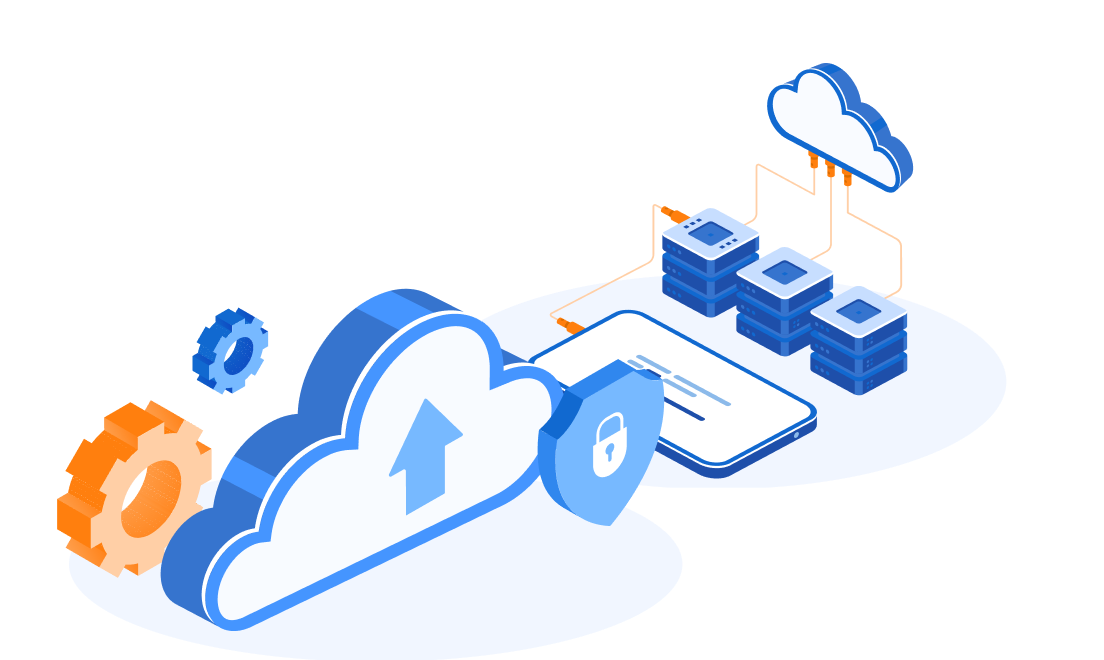
Security during data transfer requires encryption in transit and at rest, strict access controls on the migration environment, and audit logging of all data movement. For organizations subject to GDPR, CCPA, or industry-specific compliance frameworks, these controls are not optional. They must be built into the migration process from the beginning.
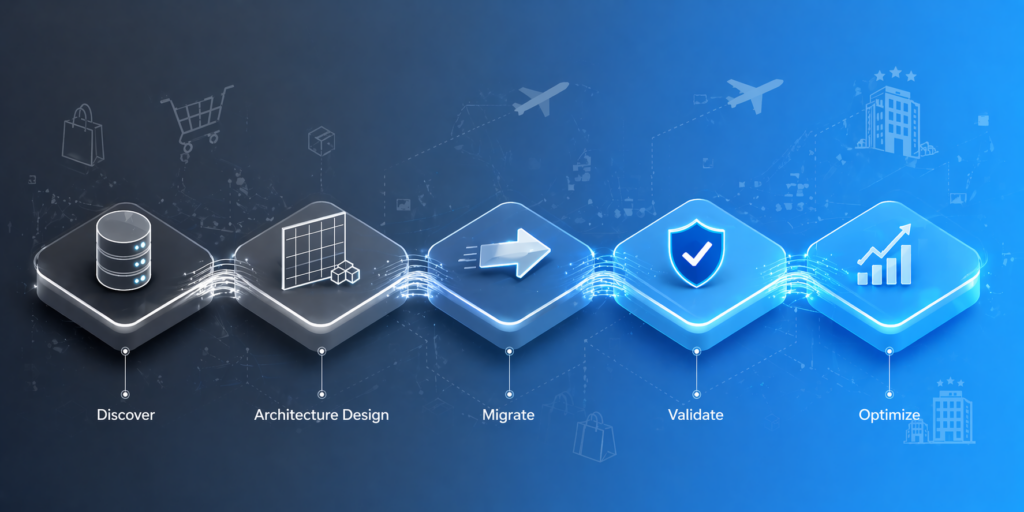
Phase 4: Cutover and Parallel Running
For production systems, a clean cutover from the legacy environment to the cloud environment requires careful timing. Many organizations run source and target systems in parallel for a defined period, comparing outputs to validate that the cloud environment is producing accurate results before the legacy system is decommissioned. In retail, this parallel running period often coincides with a lower-traffic operational period to reduce the risk of a disruption during peak business hours.
Phase 5: Post-Migration Optimization and Governance
Migration completion is not the end of the project. The post-migration phase establishes ongoing data quality monitoring, cost optimization practices, and governance processes that ensure the cloud data environment remains reliable as data volumes grow and new sources are added. This phase also captures lessons from the migration process and prepares the organization for the next phase of data modernization.
Read related articles about Data Migration here:
- Zero-Exposure Data Mobility: AWS PrivateLink Cross-Account Database Migration Blueprint Using AWS DMS
- Discover Effective Data Integration Solutions for Customer Data Platforms
What Data Migration to Cloud Looks Like in Retail and E-Commerce
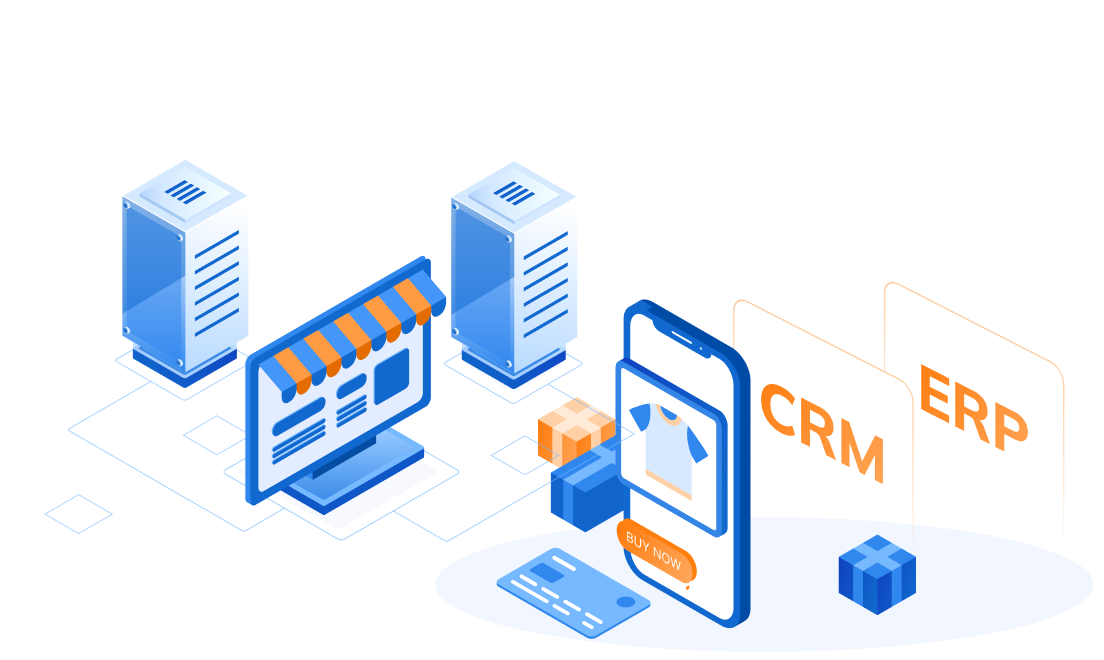
Retail and e-commerce organizations generate some of the highest-volume, highest-complexity data in any industry. A single retail brand may operate physical stores with POS systems, an e-commerce platform, a mobile app, a loyalty program, an ERP system, multiple supplier portals, and a marketing automation platform. Each of these is a separate data source with its own format, its own update frequency, and its own customer identifier scheme.
Cloud migration for retail is not just a technical exercise. It is an opportunity to resolve the data fragmentation that prevents retail organizations from delivering consistent, personalized customer experiences and making accurate operational decisions.
Unifying Customer Identity Across Channels
One of the highest-value outcomes of retail cloud data migration is the ability to unify customer identity across in-store and digital channels. A customer who buys in-store with a loyalty card, browses online on a mobile device, and receives email promotions may exist as three separate records in a fragmented system. A well-designed cloud migration resolves these identities into a single customer profile that enables accurate segmentation, personalization, and lifetime value calculation.
Real-Time Inventory and Order Data
Retailers that operate across online and physical channels need real-time inventory visibility to prevent overselling, optimize fulfillment, and enable ship-from-store or buy-online-pick-up-in-store capabilities. A cloud data environment that ingests POS and warehouse data in real time, rather than batching overnight, fundamentally changes what is operationally possible.
Loyalty and Promotional Data Integration
Loyalty programs generate high-frequency transaction and redemption data that often sits in a separate platform from the core e-commerce or POS system. Migrating and connecting this data to a unified cloud environment enables real-time loyalty triggers, more accurate customer segmentation, and the ability to measure true campaign ROI across all customer touchpoints rather than in isolated channel reports.
Travel and Hospitality Applications
In travel and hospitality, cloud data migration addresses similar fragmentation challenges at a different scale. Booking systems, property management platforms, revenue management tools, guest loyalty programs, and OTA (online travel agency) data feeds each carry separate but interdependent data. A unified cloud environment makes it possible to apply dynamic pricing models, personalize the guest experience across stays, and build predictive analytics for demand forecasting that draws on the full history of booking behavior.
Security, Compliance, and Governance During Migration
Data security during migration is one of the most consistent concerns raised by IT leaders and compliance teams. The transition from a legacy environment to a cloud environment creates a window of elevated risk if security controls are not built into the migration process from the beginning.
Encryption at Every Stage
Customer data, financial transaction records, and personally identifiable information must be encrypted both in transit and at rest throughout the migration process. This applies to data that is extracted from source systems, held in staging environments during transformation, and loaded into the cloud target. Encryption key management needs to be documented and audited, particularly in organizations subject to PCI-DSS, GDPR, or HIPAA requirements.
Access Controls and Privilege Management
Migration environments frequently receive elevated access permissions that are not revoked after the project completes. A secure cloud data migration strategy defines access control policies explicitly, limits privileged access to the migration team and period, and revokes temporary permissions as each migration phase closes. Role-based access controls in the cloud target environment should mirror or improve upon the access governance model in the source environment.
Compliance Alignment
GDPR requires that personal data is only transferred to environments that meet adequate protection standards. CCPA creates obligations around consumer data rights that must be preserved and traceable in the cloud environment. For retail organizations processing cardholder data, PCI-DSS compliance requirements apply to the cloud environment as much as to any on-premise infrastructure. A migration plan that does not account for these frameworks creates compliance exposure that may only surface during an audit or incident response.
Data Lineage and Audit Trails
The cloud environment should provide clear data lineage: the ability to trace where any piece of data came from, how it was transformed, and where it currently resides. This capability is not just a governance best practice. It is increasingly a regulatory requirement in financial services and healthcare, and a practical necessity for any organization that needs to debug data quality issues, respond to data subject access requests, or demonstrate compliance during an audit.

Legacy Data Migration: The Hidden Complexity Most Plans Ignore
Legacy data migration deserves its own strategic attention because legacy systems introduce a category of complexity that modern data migration tools do not fully address on their own. Many organizations have databases that were built decades ago, run on proprietary formats, carry undocumented schemas, and have integrations that are only understood by staff members who may no longer be with the company.
Undocumented Schemas and Business Rules
Legacy databases often contain business logic embedded directly in stored procedures, triggers, or custom field encodings that are not visible in the schema alone. Migrating these databases without understanding the business rules they encode means that the data arrives in the cloud environment in a format that seems correct but produces incorrect outputs. Data profiling and business rule discovery must be part of the legacy migration assessment phase.
Carrying Forward Data Quality Problems
Legacy systems accumulate data quality issues over years of operation: duplicate records, inconsistent encoding, missing values, and outdated reference data. These issues do not resolve themselves during migration. Unless a data cleansing and standardization step is included in the migration pipeline, the cloud environment inherits the same problems in a new location. For retail organizations, this often means migrating years of inconsistent customer records, product catalogs with missing attributes, and transaction histories with unresolved currency or unit discrepancies.
Decommissioning Timelines and Dependency Risk
Legacy system decommissioning is frequently delayed because downstream applications and reporting tools are still consuming data from the source system even after the migration is technically complete. A detailed dependency map is required before any decommissioning timeline is committed. Organizations that decommission too early risk breaking business processes that were not identified during the planning phase.
Cloud Data Management After Migration: Where Most Value Is Lost
The migration event captures organizational attention and budget. What happens after migration is less visible but often determines whether the investment delivers its intended value.
Data Cataloging and Discovery
A cloud data environment without a functioning data catalog quickly becomes a data swamp. Teams are unable to find the data they need, trust degrades, and shadow data processes emerge as workarounds. A data catalog makes cloud data discoverable, documented, and governed. It is not a luxury feature. It is the operational infrastructure that makes data useful at scale.
Ongoing Data Quality Monitoring
Data quality does not maintain itself. New data sources are added, source system schemas change, integrations break, and upstream processes evolve. An ongoing data quality monitoring framework detects issues early, before they propagate into analytics dashboards, machine learning models, or operational reports. For retail organizations, a data quality failure in the product catalog or customer profile database can affect live pricing, personalization, and loyalty calculations simultaneously.
Cloud Cost Optimization
Cloud data environments generate cloud costs that scale with data volume and query frequency. Without active cost management, organizations find that their cloud data spend grows faster than the business value they are extracting. Storage tiering, query optimization, data archiving policies, and compute scaling rules are all part of responsible cloud data management. These decisions should be made by data and infrastructure teams together, with input from finance.
AI and Analytics Readiness
The cloud data environment becomes significantly more valuable when it is structured to support advanced analytics and AI workloads. This means maintaining clean, well-documented data, building semantic layers that analytics teams can query reliably, and exposing APIs that machine learning pipelines can consume without manual data preparation steps. Organizations that invest in this foundation after migration extract compounding value from each new analytics or AI initiative they launch.
Choosing the Right Cloud Migration Partner
A strong cloud migration partner understands both the technical architecture of cloud data environments and the business context of the industry they are serving. For retail and e-commerce migrations, this means experience with POS systems, loyalty platforms, and high-volume transaction data. For travel and hospitality, it means familiarity with booking system complexity and guest data governance requirements.
Beyond industry knowledge, the partner’s capability in data engineering, data quality, governance, and post-migration support determines whether the migration produces long-term value or just a technical transition. References from organizations of similar scale and complexity are more reliable evaluation criteria than platform certifications alone.
If you’re planning your cloud migration but not sure where to start, this is the moment to move from ideas to action. A well-designed strategy can reduce risk, control costs, and unlock real business value faster than you think.
Whether you’re modernizing legacy systems or building a scalable digital ecosystem, the right partner makes all the difference. Ready to take the next step? Talk to our cloud experts and get a tailored migration roadmap built around your business goals.
FAQs Section:
Cloud data migration strategy refers to the process of moving data from one environment, typically on-premise or a fragmented multi-cloud setup, to a target cloud environment. Cloud data modernization is a broader initiative that includes migration but also encompasses restructuring data models, improving data quality, establishing governance frameworks, and optimizing the cloud environment for analytics, AI, and operational use. In practice, a well-designed cloud data migration should include modernization as a built-in component rather than treating it as a separate follow-on project. Organizations that separate the two typically find that migration delivers infrastructure change but not business value improvement.
Minimizing downtime requires a phased migration approach combined with parallel running of source and target systems during the transition period. For business-critical data domains, such as order management, inventory, or customer profiles in retail, the migration should be planned for low-traffic periods, validated against the source system before cutover, and supported by a documented rollback plan if issues are detected. Real-time ingestion pipelines allow organizations to keep source and target systems synchronized during the migration window, which reduces the cutover risk significantly. The right answer depends on the specific workload, data volume, and tolerance for latency during the transition.
A secure cloud data migration strategy dictates that compliance controls must be built into the process from the planning phase, not added as an afterthought. This means encrypting data in transit and at rest throughout the migration pipeline, restricting access to authorized personnel only, and maintaining detailed audit logs. For organizations subject to GDPR, CCPA, or PCI-DSS, the compliance team should be active participants in design decisions. Data classification must be confirmed before the first byte moves, ensuring sensitive information is never left unprotected in staging environments.
The timeline for a cloud data migration strategy depends on data volume, system complexity, and the degree of data quality remediation required. For a mid-size retailer with POS integration and an e-commerce platform, a phased migration typically takes between three and nine months when properly resourced. Enterprise-scale migrations with global residency requirements often extend to twelve months or more. Ironically, the fastest way to finish is to move slowly through discovery; organizations that rush the planning phase almost always pay for it later in rework.
When defining your cloud data migration strategy, prioritization should be driven by business value and risk, not technical convenience. Start with data domains that create immediate impact when unified, such as customer profiles and real-time operational data. Low-risk archival data can wait for later phases. The sequence must also respect dependencies: if System B lives on Data A, Data A needs to be in the cloud before System B makes the jump.
Capability in executing a cloud data migration strategy is demonstrated through evidence, not just certifications. Ask prospective partners to describe a migration for a similar industry, specifically focusing on the data quality challenges they encountered and how they resolved them. Evaluate their data engineering capability independently from their infrastructure skills—they are different disciplines, and you need strength in both. A partner who is honest about past migration failures and how they now prevent them is far more credible than one who claims a perfect record.