





How Customer Data Turns into Personalized Retail Experiences
05/05/2026
616
Retail is no longer about selling the same product to everyone but personalized retail experiences have become essential. Today, customers expect brands to understand their needs, preferences, and shopping behavior. They want offers that match their interests, product suggestions that make sense, and communication that feels relevant.
Personalization is no longer a luxury for large brands. It is a competitive requirement. Retailers that fail to personalize risk losing customers to competitors who can deliver more relevant recommendations, faster service, and better offers. On the other hand, businesses that use data strategically can increase conversion rates, improve customer loyalty, and maximize marketing efficiency.
What Are Personalized Retail Experiences
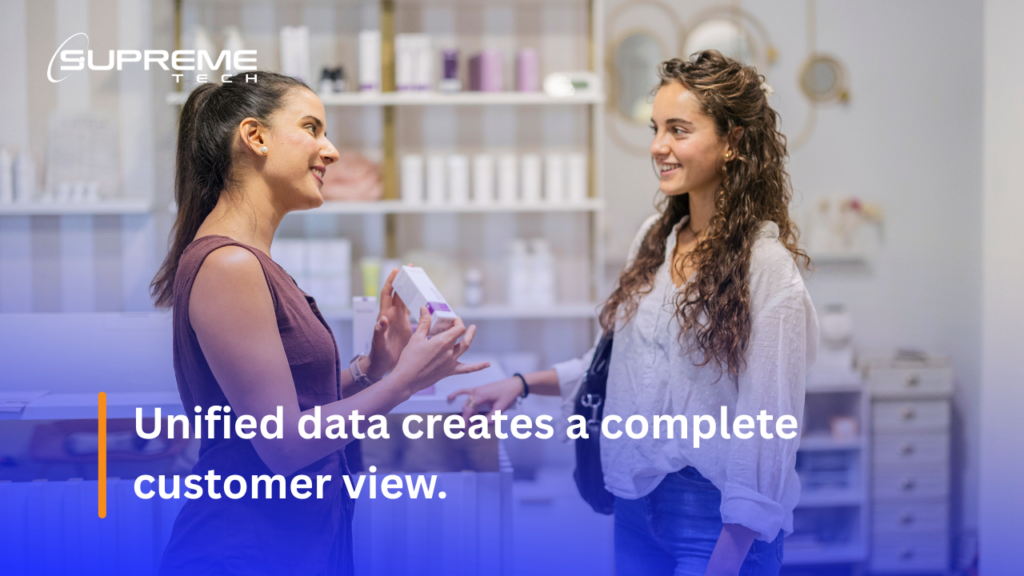
Personalized retail experiences refer to the practice of using customer data to tailor products, content, offers, and interactions to individual shoppers. Instead of showing the same message to every customer, retailers adjust the shopping journey based on each person’s behavior, preferences, and purchase history.
At its core, personalized retail experiences are about relevance. When customers see products they are likely to buy, receive promotions that match their interests, or get reminders at the right time, they are more likely to engage and convert.
Online Personalization
In ecommerce, personalization often appears in the form of:
- Product recommendations based on browsing history
- Suggested items related to past purchases
- Personalized homepage banners
- Targeted email campaigns
- Customized push notifications
For example, when a customer views running shoes multiple times, the website may highlight similar sports products or offer a limited time discount. This increases the chance of purchase because the content aligns with the customer’s intent.
Offline Personalization
Personalized retail experiences are not limited to digital channels. Physical stores also use data to improve in store engagement. This may include:
- Loyalty programs that track purchase behavior
- Personalized coupons at checkout
- Sales associates accessing customer profiles
- Location based offers through mobile apps
By connecting online and offline data, retailers can create a seamless experience across all touchpoints.
Read more related blogs about personalized retail experiences
- The Future of Customer Data Platform in Retail
- How Loyalty Apps Can Improve Customer Lifetime Value (CLV)
How Data Becomes Actionable Insights
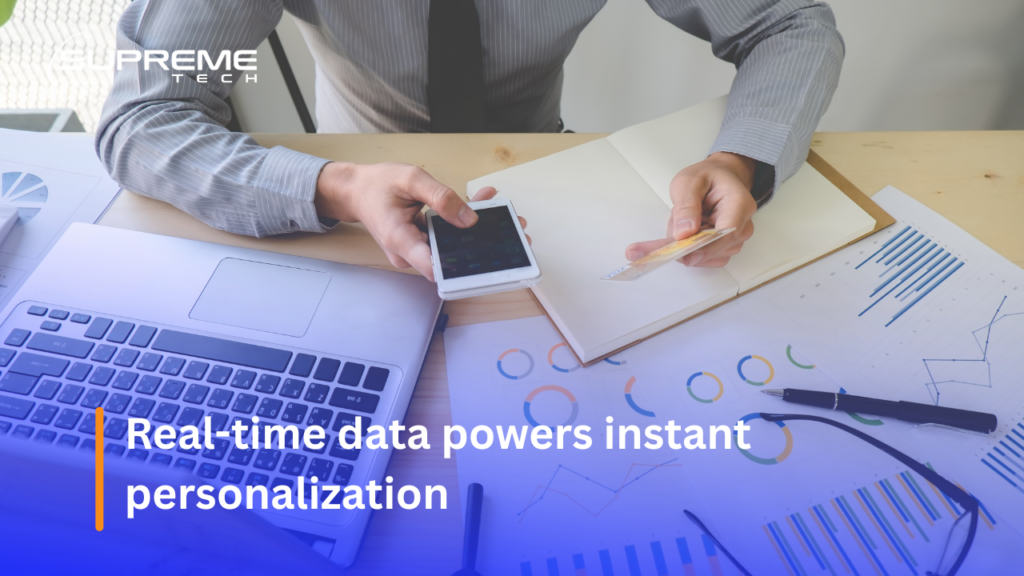
Collecting data does not automatically create personalized retail experiences. Raw data on its own has little value. The real impact comes from processing, analyzing, and transforming that data into clear insights that guide business decisions.
Here is how the process typically works.
1. Data Collection Across Channels
Retailers gather data from multiple sources, including ecommerce platforms, mobile apps, point of sale systems, loyalty programs, and social media. The goal is to capture customer interactions at every stage of the buying journey.
An omnichannel approach is important. If data remains separated between online and offline systems, retailers cannot build accurate personalized retail experiences.
2. Data Cleaning and Integration
Raw data is often incomplete or duplicated. Before analysis, retailers must clean the data by:
- Removing duplicate records
- Fixing errors
- Standardizing formats
- Linking customer profiles across channels
Data integration creates a unified customer view. This means combining profile, behavioral, and transaction data into a single record for each customer.
Without this step, personalization efforts may be inaccurate or inconsistent.
3. Customer Segmentation
Once data is structured, retailers group customers into segments based on shared characteristics, such as:
- Purchase frequency
- Average order value
- Product preferences
- Engagement level
Segmentation makes personalized retail experiences more scalable. Instead of targeting one customer at a time, retailers can design tailored strategies for specific customer groups.
For example, high value repeat buyers may receive early access to new collections, while inactive customers may receive re engagement campaigns.
4. Predictive Analytics
Advanced retailers go beyond historical analysis. They use predictive analytics to estimate future behavior.
Predictive models can answer questions such as:
- Which customers are likely to churn
- Which products a customer may buy next
- When a customer is ready to make another purchase
By anticipating needs, retailers can deliver proactive personalized retail experiences rather than reactive ones.
5. AI and Machine Learning
Artificial intelligence and machine learning enhance personalization at scale. These technologies analyze large datasets in real time and continuously improve recommendations.
Examples include:
- Recommendation engines that adjust based on browsing behavior
- Dynamic pricing systems
- Real time product suggestions
AI enables retailers to deliver relevant experiences instantly, even when managing millions of customers.
Data becomes powerful only when it guides action. When retailers combine clean data, clear segmentation, and intelligent analytics, they can create personalized retail experiences that drive measurable results.
Technologies Behind Personalized retail experiences
personalized retail experiences rely on a strong technology foundation. Without the right systems in place, data remains fragmented and difficult to use. Below are the key technologies that enable retailers to turn data into meaningful customer interactions.
1. Customer Relationship Management Systems
A Customer Relationship Management system stores and manages customer profile data, purchase history, and communication records.
With a centralized CRM, retailers can:
- Track customer interactions across channels
- Segment audiences based on behavior
- Support sales and customer service teams with accurate information
CRM systems are often the starting point for building personalized retail experiences because they create a single source of truth for customer data.
2. Customer Data Platforms
A Customer Data Platform collects data from multiple systems and unifies it into one comprehensive customer profile.
Unlike traditional databases, a CDP focuses specifically on customer identity resolution. It connects online browsing behavior, in store transactions, mobile app activity, and email engagement into one unified view.
This integration enables retailers to deliver consistent personalized retail experiences across all touchpoints.
3. Retail Analytics Tools
Retail analytics platforms process large volumes of transactional and behavioral data. They help businesses understand:
- Sales trends
- Customer lifetime value
- Product performance
- Demand forecasting
By identifying patterns and insights, analytics tools support smarter decision making and targeted personalization strategies.
4. AI Recommendation Engines
Artificial intelligence plays a major role in scaling personalized retail experiences. Recommendation engines analyze data in real time and adjust suggestions dynamically.
These systems power:
- Product recommendation widgets
- Personalized search results
- Dynamic content display
- Automated cross selling strategies
AI improves accuracy over time by learning from customer interactions.
5. Marketing Automation Platforms
Marketing automation systems allow retailers to trigger personalized messages based on customer actions.
For example:
- Sending a reminder email after cart abandonment
- Triggering a birthday reward
- Launching a re engagement campaign for inactive customers
Automation ensures that personalization happens consistently and efficiently without manual effort.
6. Omnichannel Integration Systems
To create seamless personalized retail experiences, all systems must communicate with each other. Integration tools connect ecommerce platforms, POS systems, CRM databases, and marketing platforms.
When integration is strong, customers experience continuity between online browsing and in store purchases. This consistency builds trust and improves satisfaction.
Technology alone does not guarantee success. However, when these tools are implemented strategically, they provide the infrastructure needed to deliver scalable and effective personalized retail experiences.
How SupremeTech Can Help Your Retail Business Catch Up
Implementing personalized retail experiences requires more than ideas. It requires strong technology, seamless data integration, and tailored digital solutions that match your business goals. That is where SupremeTech steps in to support retail brands in building future-ready experiences.
Custom E-commerce and Retail Platforms
SupremeTech provides custom ecommerce development services that help retailers create or upgrade online stores on platforms such as Shopify, Magento, WooCommerce, and more. These solutions include features that support personalized product displays, customer accounts, and integrated analytics to help tailor promotions based on real shopping data.
Omnichannel Retail Solutions
SupremeTech’s omnichannel retail solutions connect data from online stores, mobile apps, marketplaces, and physical points of sale into a unified system. This makes it easier for retailers to track customer behavior across channels, deliver consistent product recommendations, and create personalized offers that match real-time engagement.
Data Integration and Real-Time Analytics
Strong personalized retail experiences depend on clean, connected data. SupremeTech helps integrate customer, transaction, and behavioral data into a consistent view, enabling retail teams to make data-driven decisions quickly. This setup supports segmented campaigns, predictive recommendations, and targeted marketing workflows.
Generative AI and Advanced Customization
Beyond basic personalization, SupremeTech also develops advanced AI applications tailored to business needs. These tools can support smarter product recommendation engines, predictive analytics, and automated marketing triggers that make personalization scalable and precise.
Full Lifecycle Support
From strategy to deployment and ongoing maintenance, SupremeTech offers end-to-end services. This ensures that your personalization infrastructure stays reliable, secure, and aligned with your business growth goals.
By working with a technology partner that understands both retail challenges and modern digital capabilities, retailers can accelerate their journey toward meaningful, data-driven personalized retail experiences that delight customers and improve performance.
Conclusion
Data is the backbone of modern retail transformation. Retailers that use customer data effectively can create personalized retail experiences that feel relevant, timely, and customer-centric. When brands tailor product suggestions, communication, promotions, and loyalty incentives to what customers actually want, they not only drive higher conversions and stronger loyalty but also build long-term competitive advantage in a crowded market. Retailers that ignore personalization risk losing customers to competitors who deliver more meaningful experiences. With the right strategy and technology, every retailer can turn customer data into a powerful engine for growth.
FAQs Section
Personalized retail experiences are tailored interactions and offers delivered to customers based on their data, such as browsing history, purchase behavior, and preferences. It goes beyond one-size-fits-all marketing to make each customer feel uniquely understood.
Because today’s customers expect relevance. Personalized experiences can increase conversion rates, average order value, customer retention, and overall revenue growth by delivering what customers want at the right time.
Retailers use customer profile data, behavioral data, transaction history, device and location signals to create a complete view of each customer and build tailored experiences.
AI and machine learning analyze large datasets in real time to predict customer preferences, deliver smarter product recommendations, and automate personalized content across channels.
Personalization uses data and algorithms to tailor experiences automatically for each customer. Customization allows customers to manually adjust preferences or product features themselves. Both improve experiences but work in different ways.