












Customer Master Data Management Solutions: How to Choose the Right One for Retail
10/08/2026
187
What Counts as a Customer Master Data Management Solutions (and What Doesn’t)

A customer master data management solution is purpose-built software for matching, merging, and governing customer records across multiple source systems so the business works from one trusted version of each customer. Three categories get lumped together under this label, and only one of them is a true MDM platform.
Standalone MDM platforms, such as Profisee, Informatica MDM, Oracle Customer Hub, TIBCO EBX, and Semarchy, are built specifically for matching, deduplication, and governance workflows at scale. A CDP with MDM features layers some matching and unification logic on top of a platform whose core job is activation, meaning campaigns, segments, and personalization, not governance. A homegrown or manual approach uses spreadsheets, SQL scripts, or a data warehouse’s native deduplication tools to approximate MDM without dedicated software.
The distinction matters because retailers often buy a CDP expecting it to solve a master data problem it wasn’t built to solve. A CDP can unify data for marketing use cases while still leaving finance, customer service, and fraud teams working from inconsistent records, because those teams typically don’t touch the CDP at all.
Build Versus Buy: When a Manual Process Is Still Fine
A manual, spreadsheet based approach to customer data consolidation remains a reasonable choice for retailers with a single sales channel, a customer base under roughly 50,000 active records, and no regulatory pressure forcing formal governance.
Below that threshold, a quarterly export, dedupe, and reconciliation process run by one analyst can keep customer records accurate enough for day to day operations. The moment a retailer adds a second channel, whether that’s opening an e-commerce storefront alongside physical stores or launching a loyalty program with its own signup flow, duplicate and conflicting profiles start accumulating faster than a manual process can catch them.
Multichannel enterprise retailers, meaning any retailer running POS plus e-commerce plus loyalty plus a CRM system at once, cross that threshold almost immediately. At that point the volume of new customer touchpoints outpaces what a person checking spreadsheets can realistically reconcile, and a dedicated MDM solution starts paying for itself in the hours it saves and the duplicate outreach it prevents.
Evaluation Criteria for Choosing a Solution

Six criteria determine whether an MDM solution will actually work for a retail data stack: matching accuracy, integration depth, governance tooling, scalability, total cost of ownership, and vendor support.
Matching and Deduplication Accuracy
Matching accuracy measures how reliably a solution identifies that two customer records, entered through different channels with different spellings or contact details, represent the same person.
Ask any vendor for their match rate benchmark on messy retail data specifically, not their benchmark on clean B2B contact data, since retail customer records tend to include more typos, nicknames, and incomplete addresses than typical CRM data. A platform that claims a 98 percent match rate on curated test data can perform meaningfully worse on real point of sale entries, so request a proof of concept using an actual sample of the retailer’s own data before signing anything.
Integration With POS, E-commerce, Loyalty, and CRM
Integration depth determines whether an MDM solution can actually reach the systems holding customer data, not just whether it has a generic API.
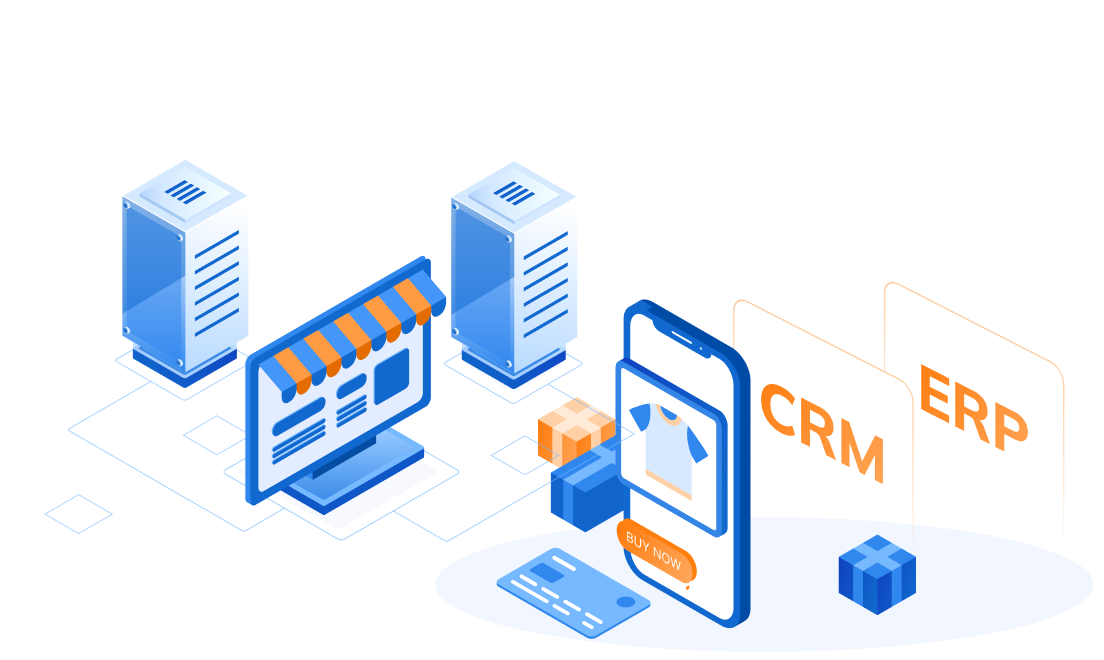
Retail customer data typically lives across four or five systems: the POS platform, the e-commerce storefront (commonly Shopify or a similar platform), the loyalty program, the CRM, and often a separate email or SMS marketing tool. A solution with prebuilt connectors to common retail POS and e-commerce platforms will implement faster than one requiring custom integration work for each source, and custom integration work is where MDM project budgets most often run over.
Governance and Workflow Tools
Governance tooling covers how a solution lets the business define who owns each type of customer data, who approves changes to a golden record, and how conflicting updates from two systems get resolved.
Look for configurable approval workflows, an audit trail showing who changed what and when, and role based access so a store associate can view a customer profile without being able to overwrite fields a data steward controls. Solutions without this layer end up functioning as expensive deduplication tools rather than genuine master data management, because nobody owns the ongoing accuracy of the golden record after go live.
Scalability and Data Volume Handling
Scalability determines whether match and merge processing stays fast as a retailer’s customer base and transaction volume grow, particularly during seasonal peaks.
A retailer processing holiday season order volume needs a solution that can run matching jobs against millions of records without falling behind, since a backlog of unmatched records during peak season is exactly when duplicate profiles cause the most damage, including missed loyalty redemptions and repeated marketing sends. Ask vendors for real throughput numbers at the retailer’s actual record volume, not generic marketing claims about enterprise scale.
Total Cost of Ownership
Total cost of ownership adds license fees, implementation services, and ongoing maintenance into one number, since license price alone routinely understates what an MDM project actually costs.
Implementation services for a mid-size retail deployment commonly run one and a half to three times the first year’s license cost, and ongoing maintenance, meaning a data steward’s time plus platform administration, continues indefinitely after go live. A cheaper license with an expensive, lengthy implementation can cost more in year one than a pricier platform with faster time to value.
Vendor Support and Time to Value
Time to value measures how many weeks or months pass between contract signature and the first governed golden record being usable by the business.
Ask for reference customers in retail specifically, not just enterprise customers broadly, and ask those references directly how long implementation actually took versus what the vendor originally quoted. A vendor with strong retail specific support resources, including implementation partners who have done retail POS and e-commerce integrations before, will typically deliver a working golden record faster than a generalist implementation team learning retail data quirks for the first time.
| Criterion | What Good Looks Like | Common Failure Mode |
| Matching accuracy | Validated against the retailer’s own messy data, not clean sample data | High advertised match rate that drops sharply on real POS records |
| Integration depth | Prebuilt connectors to common POS and e-commerce platforms | Custom integration work for every source system, blowing the budget |
| Governance tools | Configurable approval workflow, audit trail, role based access | Deduplication only, with no ongoing ownership of the golden record |
| Scalability | Proven throughput at the retailer’s actual peak volume | Matching jobs fall behind during holiday season traffic |
| Total cost of ownership | Transparent license plus implementation plus maintenance estimate | Low license price hides a lengthy, expensive implementation |
| Vendor support | Retail specific reference customers and implementation partners | Generalist team learning retail data quirks during the project |
Solution Categories by Retailer Size

Retailer size and channel complexity, more than budget alone, determine which category of MDM solution fits.
Small and mid-size retailers running one or two channels are usually better served by lightweight or embedded MDM features, meaning the matching and deduplication tools built into a CRM or CDP the retailer already owns, rather than a standalone platform. The implementation overhead of a dedicated MDM platform rarely pays off below a certain data complexity threshold, and a retailer in this category often gets 80 percent of the value from configuring existing tools well.
Enterprise retailers running POS, e-commerce, loyalty, and CRM simultaneously across many locations are the segment dedicated platforms like Profisee, Informatica, Oracle Customer Hub, TIBCO EBX, and Semarchy are built for. These retailers have enough record volume and enough downstream systems depending on accurate customer data, including fraud detection, personalized marketing, and customer service, that the governance and matching sophistication of a dedicated platform becomes worth its cost.
Implementation Timeline and Cost Expectations
A realistic customer MDM implementation for a mid-size to enterprise retailer runs three to nine months from kickoff to a governed golden record in production, phased across data audit, matching rule design, and rollout.
Smaller, single region deployments with two or three source systems tend to land toward the three to four month end of that range. Multi-location enterprise retailers integrating five or more systems, including regional POS variations and multiple loyalty programs from acquisitions, tend to land toward the seven to nine month end, and sometimes longer when data quality issues surface mid-project that weren’t visible during the initial audit.
Hidden costs to budget for include data cleansing work discovered only after the initial audit, since retailers routinely underestimate how much of their existing data needs remediation before matching rules can run reliably. Integration maintenance also adds ongoing cost as source systems change their APIs over time, as does the ongoing cost of a data steward role, since master data does not stay accurate without someone owning it after launch.
Read related articles:
- What is Customer Master Data? Customer Master Data Management Best Practices
- Top Rated CDP Solutions for Enterprises: Why Small and Mid Sized Companies Can Benefit Too
- Data Governance in Cloud: How to Manage Customer Data Quality, Access Control, and Compliance
- Discover Effective Data Integration Solutions for Customer Data Platforms
Questions to Ask Vendors Before Signing
Four questions separate vendors who will deliver a working solution from vendors who will deliver an expensive integration project.
How flexible is the data model if the retailer adds a new channel or acquires another brand? A rigid schema that requires vendor professional services for every structural change will cost more over time than a flexible one, even if the flexible option has a higher sticker price.
How deep are the native integrations with the retailer’s specific POS and e-commerce platforms, and can the vendor demonstrate a working connector rather than describing one on a slide? A described integration and a proven, currently deployed integration are not the same thing.
What are the support SLAs for production issues, specifically how quickly a critical matching failure gets addressed during a high traffic period like a holiday sale? Retail data problems are often time sensitive in a way generic enterprise software support models don’t always account for.
What migration support does the vendor provide for moving off a previous MDM tool or manual process, and has the vendor done this specific kind of migration for another retail customer before? A vendor who has handled retail data migrations before will surface risks a first time implementation partner won’t anticipate.
FAQs Section
An MDM solution focuses on creating one trusted, governed record for each customer and actively managing conflicts as new data arrives. A data warehouse is built for storage and analytics, holding historical data for reporting rather than actively resolving which version of a customer record is correct right now.
Costs vary widely and most vendors quote based on data volume and complexity rather than publishing flat pricing. As a rough guide, small and mid-size deployments often land in the tens of thousands of dollars annually for license plus a comparable or larger one-time implementation cost, while enterprise deployments can run into six figures annually once implementation and maintenance are included.
Not fully. A CDP is built to activate customer data for marketing, meaning segments, campaigns, and personalization, while an MDM solution is built to govern data accuracy across every system that touches customer records, including systems marketing never sees, like finance or fraud detection. Some overlap exists in unification features, but the core purpose differs.
At minimum the POS system, the e-commerce platform, and the loyalty program, since these are usually where the same customer generates the most conflicting entries. CRM and email or SMS marketing platforms typically follow once the core transactional systems are integrated.
Most mid-size to enterprise retail deployments take three to nine months, depending on the number of source systems and how much data cleansing the initial audit uncovers. Smaller, single region deployments with fewer source systems land toward the shorter end of that range.