











What is Customer Master Data? Customer Master Data Management Best Practices
04/11/2024
3.15k
Every business collects customer data from website sign ups, online purchases, support tickets, and social media. But as this data grows, it scatters across systems. Sales holds one version of a customer. Marketing holds another. Support holds a third. Nobody has the full picture.
Customer Master Data Management (MDM) solves this problem. It creates one accurate, trusted record for each customer and keeps that record consistent across every system your business runs on.
This guide covers what customer master data actually is, the types of data it includes, how customer MDM differs from a CRM or a CDP, proven best practices, a step by step implementation roadmap, common challenges, and where the discipline is heading next.
>>> See more:
- What is Customer Data Integration (CDI) and why is it essential for OMO retail?
- What is Middleware Integration for CDI? | Benefits and Examples
- How to Build a Cloud-Based Customer Data Pipeline for Omnichannel Retail
What is Customer Master Data?
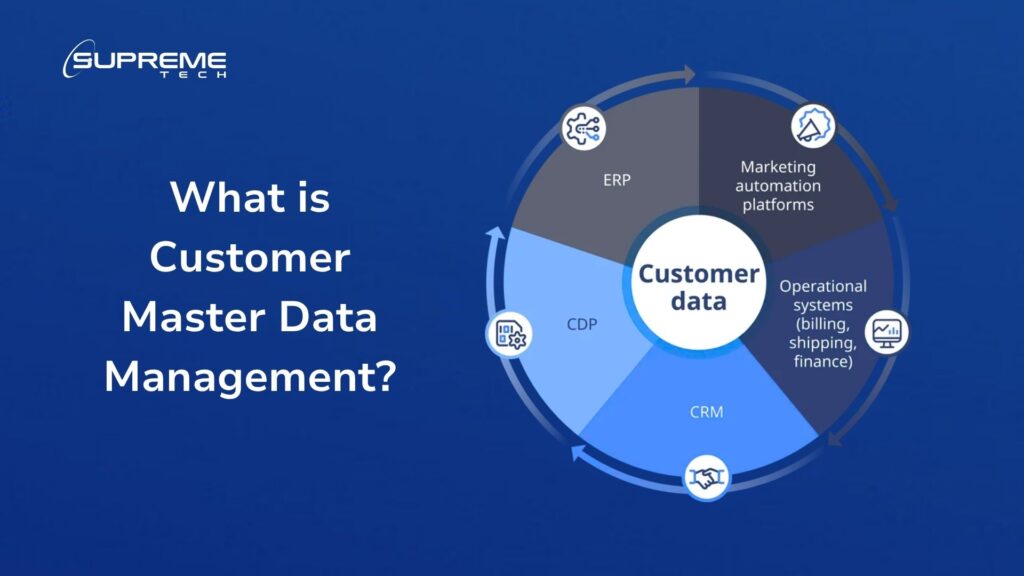
Customer master data is the core, stable information that identifies a customer and defines the business relationship: name, contact details, billing and shipping addresses, account identifiers, and financial profile. It differs from transactional data, which records a single purchase or support ticket, because master data stays relatively constant and gets reused across every interaction.
When this data lives in one trusted place, it becomes the organization’s single source of truth. Every department, sales, marketing, finance, and support, pulls from the same accurate record instead of maintaining its own version.

Types of Customer Master Data
A complete customer profile is built from several data types working together.
1. Identifying information: name, address, phone, email, customer ID
2. Demographic data: age, gender, income, education, location
3. Behavioral data: browsing history, purchase frequency, app usage
4. Transactional data: purchase history, payment methods, lifetime value
5. Engagement data: website visits, email opens, support inquiries
6. Preferences and interests: favorite categories, content interests, communication frequency
7. Account and membership data: loyalty tier, reward points, subscription status
8. Customer feedback: reviews, survey responses, sentiment
9. Service and support data: tickets, chat logs, resolution history
For a subscription business like an OTT streaming platform, account and membership data and behavioral data carry unusual weight. A viewer’s plan tier, renewal date, and watch history often predict churn faster than demographics do. Getting those two data types right first, before trying to unify everything at once, is usually the fastest path to a return.
Together, these nine types form a 360 degree customer view, one record that reflects the whole relationship rather than a single transaction.
Customer MDM vs CRM vs CDP vs General MDM
These four terms get used interchangeably, and that confusion is one of the most common reasons customer data projects stall before they start.
| CRM | CDP | General MDM | Customer MDM | |
|---|---|---|---|---|
| Main job | Manage sales and support interactions | Activate marketing audiences | Govern master data across all domains | Govern the customer record specifically |
| Who uses it | Sales and support teams | Marketing teams | IT and data teams | Cross functional teams |
| Data scope | Interactions and activities | Behavioral and campaign data | Customers, products, suppliers, locations | Customer data only |
| Typical output | Account and contact views | Audience segments | Master records across domains | One governed golden customer record |
In practice these systems work together rather than compete. A CRM becomes more useful once it pulls clean data from a customer MDM. A CDP activates campaigns using the identity resolution a customer MDM already solved. General MDM covers customer data as one of several domains, while customer MDM makes that single domain its full focus.
Why Customer MDM Matters
When customer data is fragmented, every downstream process inherits the mess: campaigns miss people, support agents repeat questions customers already answered, and reports disagree with each other. Consolidating that data changes what’s possible.
- Improved customer experience. A support agent can see full order and interaction history instantly instead of asking a customer to repeat themselves.
- Better decision making. Complete, accurate data lets managers plan campaigns and forecast demand with real numbers instead of guesses.
Operational efficiency. Teams stop wasting hours reconciling conflicting records. Gartner puts the average annual cost of poor data quality at $12.9 million per organization, a number driven largely by exactly this kind of manual cleanup.
- Stronger compliance. Regulations like GDPR and CCPA require clear control over where customer data lives and who can access it. A governed master record makes that control possible instead of aspirational.
- Higher profitability. A complete customer view surfaces cross sell and upsell opportunities and helps target the segments most likely to convert or churn.
The gap between where most companies are and where they want to be is large. Gartner’s own survey of enterprise leaders found that just 14% of organizations have achieved a full 360 degree customer view, while 82% say it’s still a goal they’re chasing. Customer MDM is the discipline that closes that gap.
Best Practices for Customer Master Data Management
Technology alone doesn’t fix fragmented data. These six practices, followed together, do.
1. Establish a single source of truth. Pick one centralized master record that every department treats as authoritative. Without this, teams keep maintaining parallel, conflicting versions of the same customer.
2. Define strong data governance and ownership. Assign data stewards who own specific domains, decide how records are created and updated, and resolve conflicts when two systems disagree.
3. Focus on data quality: cleanse, standardize, enrich. Deduplicate records, validate formats such as emails, phone numbers, and addresses, and enrich profiles with demographic or firmographic data from trusted sources.
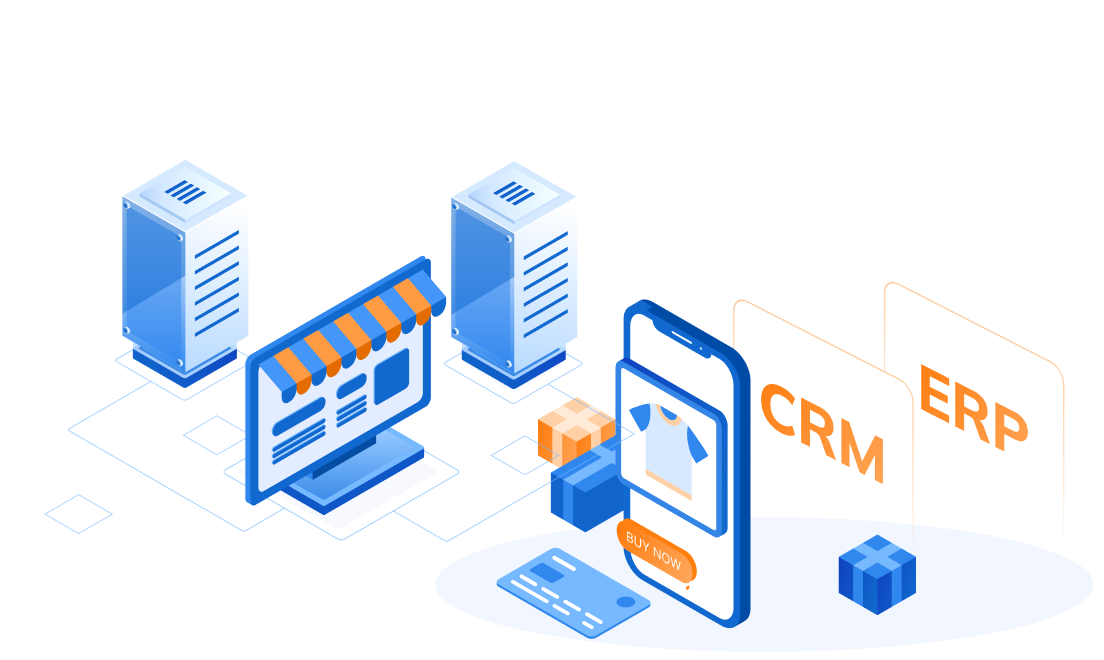
4. Integrate customer data across all systems. Connect CRM, ERP, marketing, and support platforms so an update in one place flows everywhere else automatically, through APIs or real time pipelines rather than manual re entry.
5. Protect customer data and ensure privacy compliance. Encrypt sensitive fields, apply role based access controls, and audit regularly. This isn’t optional under GDPR, CCPA, and similar regulations.
6. Monitor, audit, and continuously improve. Customer information changes constantly. Build regular data quality reviews into the process instead of treating MDM as a one time project.
Getting Started: A Six Step Implementation Roadmap
Most customer MDM programs that stall do so because they skip straight to buying software before defining the problem. This sequence avoids that.
1. Define scope and business case. Name the specific problems, such as duplicate campaigns, inconsistent support, or unreliable reporting, and the systems and segments included in the first phase.
2. Map data sources. Find every place customer data lives, including the spreadsheets and shadow tools nobody mentions in the first meeting.
3. Select or build the platform. Decide between a commercial MDM platform and a custom built solution based on your data complexity, budget, and existing systems.
4. Assign governance roles. Name data stewards and define who approves changes to sensitive fields before go live, not after.
5. Cleanse and harmonize records. Deduplicate, standardize formats, and resolve conflicting values using clear survivorship rules.
6. Monitor continuously. Track duplicate rates, completeness, and integration health with dashboards, and treat data quality as an ongoing metric rather than a launch milestone.
Timelines vary by complexity. Straightforward, single system projects can show results in weeks. Full enterprise programs spanning CRM, ERP, and support typically take several months to mature.
Common Challenges in Customer Master Data Management
- Inconsistent and incomplete data. Customer details vary between departments because each system was built and updated independently, without a shared standard.
- Duplicate records. The same customer can appear multiple times under slightly different names or emails, especially after mergers or when customers interact through more than one channel.
- Ongoing data quality decay. Outdated, missing, or incorrect information accumulates constantly as people change jobs, move, or update contact details. Cleansing has to be continuous, not a one time project.
- Integration complexity. Customer data lives across CRM, billing, and support platforms that were rarely designed to talk to each other, and connecting them well takes real engineering effort.
- Organizational resistance and unclear ownership. Departments often want to keep control of their own version of customer data, and without clear stewardship, that resistance can stall a program indefinitely.
Integrating Customer MDM with CRM and Other Systems

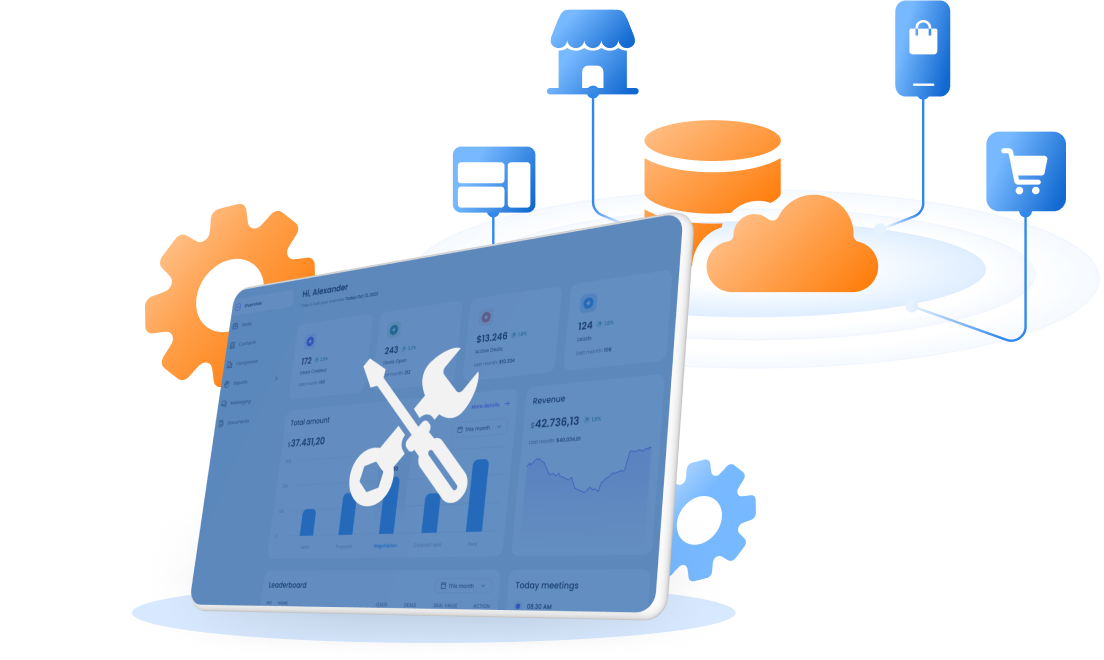
Integration is where customer MDM either proves its value or quietly fails. The goal is to make the master record the one trusted source every other platform pulls from.
Start by mapping where customer data currently lives and how those systems connect. Clean and standardize records before integrating, not after. Otherwise you are just synchronizing duplicate and inconsistent data faster.
Use APIs or real time data pipelines so a change made in one system, such as a new address or an updated payment method, propagates everywhere automatically. Batch synchronization works fine for less time sensitive updates like historical reporting, but real time matters wherever the data affects an active customer decision, such as fraud checks, personalization, or service response.
Review these integrations regularly as your business adds new tools or channels. An integration that worked well at 50,000 customer records can break quietly at 5 million.
Customer MDM in OTT and Subscription Streaming
Generic MDM advice tends to assume a retail or B2B sales context. Subscription businesses, OTT and streaming platforms among them, face a narrower but sharper version of the same problem.
A streaming platform’s customer master record typically needs to reconcile identity across several devices per household, a subscription and billing status that changes monthly, and watch history that spans content libraries. Get the account and membership data wrong, for example a lapsed trial marked as active or a downgraded plan still billed at the old tier, and the damage shows up immediately in churn and revenue leakage, not just in a messy report.
The practical starting point for a streaming or subscription business is narrower than a full enterprise rollout: unify billing status, plan tier, and device identity first. That combination typically resolves the support tickets and churn miscalculations that cause the most damage, before expanding to behavioral and engagement data.
Future Trends in Customer Master Data Management
- AI assisted cleansing and matching. Machine learning increasingly handles deduplication and enrichment work that used to require manual rules, catching pattern based matches, such as recognizing that two different name spellings refer to the same account, that simple exact matching misses.
- Real time synchronization becomes the default. Batch updates are giving way to real time pipelines as customers expect immediate, consistent responses across every channel.
- Cloud native platforms. Cloud based customer MDM reduces infrastructure overhead and scales more easily than on premises systems, which matters most for fast growing subscription and retail businesses.
- Tighter integration with customer data platforms. As CDPs handle activation and customer MDM handles governance, the line between the two is blurring into one connected stack rather than two separate purchases.
How SupremeTech Can Help
Managing customer data isn’t just a technology exercise. It’s a matter of clarity, trust, and connection between every team that touches a customer relationship.
SupremeTech’s Custom Software Development service helps organizations design and implement customer MDM solutions built around their specific data, whether that means building a centralized system from scratch or integrating an existing customer master record into CRM, ERP, and analytics platforms already in use.
We combine deep technical expertise with practical business insight, so a customer MDM initiative delivers measurable impact rather than just a cleaner database. From designing the data architecture to automating validation and synchronization, we help you build a single source of truth your teams can actually rely on.
Book a free consultation to talk through where your customer data stands today.
Conclusion
Customer master data management is a strategic foundation, not a one time technical project. Understanding the types of data involved, knowing how customer MDM differs from a CRM or CDP, and following proven best practices gives your organization a single record every team can trust.
Clean, connected customer data does not just reduce complexity. It unlocks the personalization, compliance confidence, and decision making speed that fragmented data makes impossible. With the right approach, and the right partner, your customer master data becomes a real competitive advantage.
>>> Explore our expertise:
- From Raw Data to Perfect API Responses: Serialization in NestJS
- How to Upgrade Aurora MySQL Databases: Lessons Learned from SupremeTech
- Enhance the Customer Experience on Digital Platforms While Protecting the Legacy for Luxury Brands
FAQs
Customer master data is the centralized, stable set of information that identifies a customer and defines the relationship, including contact details, billing information, account identifiers, and interaction history. It acts as the single source of truth shared across departments.
A CRM manages sales and support interactions with a customer. Customer MDM governs the underlying identity and record that the CRM, and every other system, relies on for accuracy. Customer MDM does not replace a CRM, it makes the CRM’s data trustworthy.
No. A CDP activates customer data for marketing campaigns and audience segmentation. Customer MDM creates the trusted, governed identity that a CDP uses as its foundation. Most organizations that use a CDP well also need a customer MDM behind it.
It depends on scope. A narrow, single system project can show results in weeks. A full enterprise rollout spanning CRM, ERP, billing, and support systems typically takes several months to reach maturity, though modern platforms with agile deployment can compress that timeline.
CRM systems, ERP platforms, e-commerce databases, customer support tools, marketing automation software, and billing systems. Integrating these is what creates a complete, accurate profile.
Track reduced duplicate rates, faster campaign turnaround, lower manual reconciliation time, and improved retention or cross sell revenue. Set the baseline before you start so the improvement is measurable, not anecdotal.
No. Smaller, fast growing businesses, particularly subscription and streaming platforms, often feel the pain of fragmented customer data sooner, because a single billing or identity error affects revenue immediately, not just reporting accuracy.
Start by identifying where customer data lives today, assessing its quality, and assigning governance roles. Then integrate systems, cleanse existing records, and build regular audits into the process rather than treating it as a one time fix.