








Voice-Based Marketing Automation in Retail: Transforming Customer Service and Sales
31/03/2026
2
Voice-based marketing automation is emerging as a powerful technology that helps retailers automate customer interactions, improve service quality, and increase sales efficiency. In modern retail environments, customers expect instant responses when asking about product availability, order status, store locations, or return policies. Traditional customer service models that rely only on human agents often struggle to handle high call volumes, especially during peak shopping periods.
At the same time, voice communication remains one of the most trusted channels for customer engagement. Many shoppers prefer speaking directly with a business when they need quick answers or assistance with a purchase. Voice technology is becoming increasingly common in retail, with around 71% of shoppers using voice assistants to research products and nearly half completing purchases through voice interactions.
As competition in retail continues to intensify, businesses that adopt voice automation early can gain a significant advantage in both customer experience and operational efficiency. Understanding how voice-based marketing automation works will help retailers prepare for the next generation of customer engagement.
What Is Voice-Based Marketing Automation in Retail
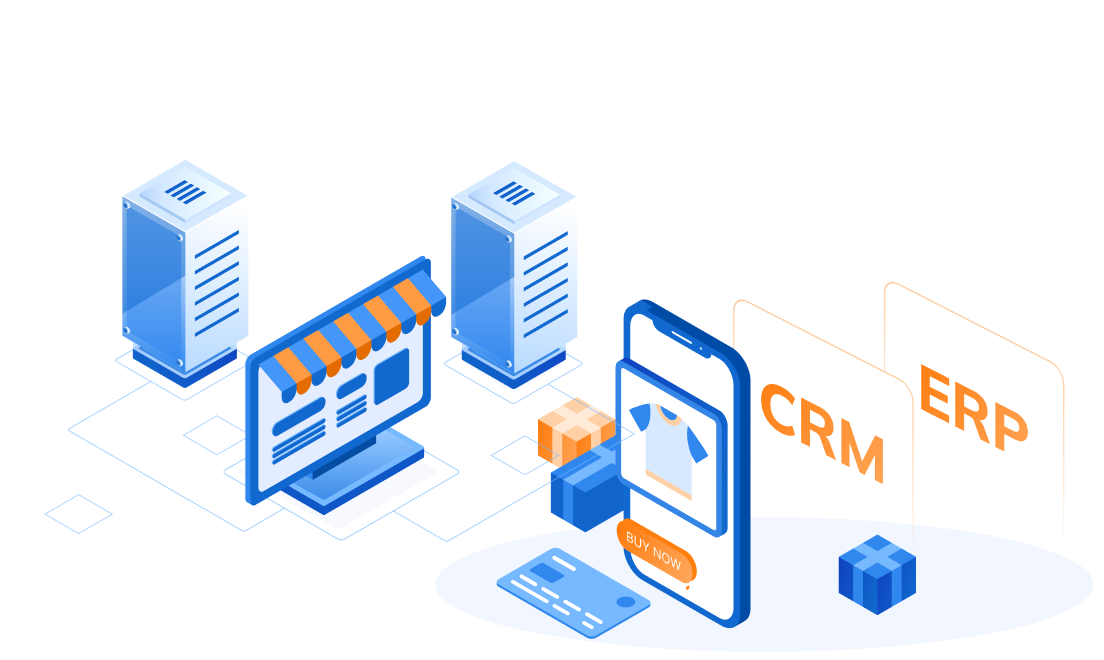
In a retail environment, voice-based marketing automation connects customer calls with backend systems such as ecommerce platforms, customer relationship management systems, and order management systems. This integration allows retailers to respond quickly to inquiries about products, orders, and services while collecting valuable data about customer behavior.
How It Differs from Traditional Call Centers
Traditional call centers rely mostly on human agents to answer calls and manually process customer requests. While this model works for small volumes, it becomes inefficient when retailers experience high call traffic, such as during seasonal sales or promotional campaigns.
Voice-based marketing automation improves this process by introducing automated workflows that can handle many routine interactions. These platforms can automatically answer calls, collect customer information, and route inquiries to the correct department or agent based on predefined rules.
Automation also ensures that no potential sales opportunity is missed. By tracking the marketing source behind each call, businesses can measure which campaigns generate the most phone leads and adjust their marketing strategies accordingly.
Core Components of Voice Automation in Retail
Several technologies work together to power voice-based marketing automation systems.
Call tracking and analytics
Call tracking tools connect incoming calls to specific marketing campaigns such as search ads, social media promotions, or website pages. This helps retailers understand which marketing activities generate phone inquiries and conversions.
Interactive voice response systems
Interactive voice response systems allow customers to interact with automated phone menus using voice commands or keypad input. These systems gather information and route callers to the correct department or provide self service options.
Voice broadcasting and automated outreach
Retailers can also use voice broadcasting to send automated messages to large groups of customers. These messages may include order confirmations, delivery notifications, promotional campaigns, or event announcements.
Why Voice Automation Matters for Retail
Retailers deal with a large number of repetitive customer questions, such as order status, product availability, return policies, and store hours. Voice-based marketing automation can handle many of these routine inquiries automatically, allowing human agents to focus on complex or high value interactions.
By integrating voice communication into marketing and customer service systems, retailers can provide faster responses, capture more customer insights, and improve overall service efficiency.
Customers Prefer Fast and Convenient Interactions
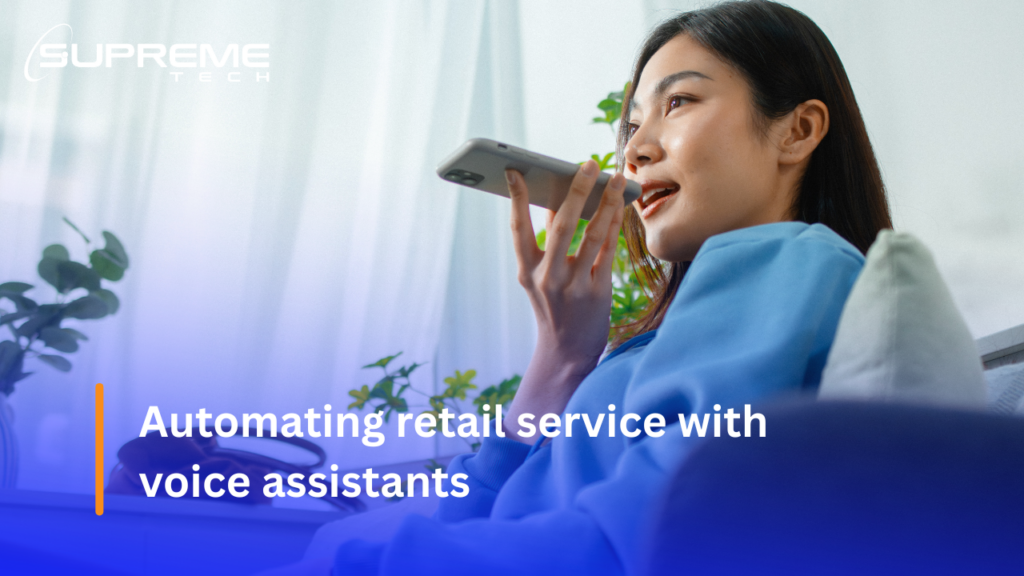
One major reason voice is gaining importance is convenience. Speaking is often faster than typing, especially when customers want immediate information. Studies show that 49 percent of consumers use voice assistants because they find them easier to use, and 44 percent say voice interactions help them complete tasks faster.
Voice Technology Is Becoming Part of the Shopping Journey
Voice assistants are now commonly used throughout the shopping journey. Many consumers use voice technology to search for products, compare options, and even complete purchases.
This trend demonstrates that voice communication is no longer limited to customer support. It is becoming an important part of product discovery and purchasing decisions.
Read more related blogs about Retail articles:
- How to Build a High-Performing E-commerce Store
- Optimizing Conversion Rates with Shopify Checkout Extensions
How Voice-Based Marketing Automation Works in Retail Systems
To understand the value of voice-based marketing automation, retailers need to understand how the technology works behind the scenes. Modern voice automation platforms combine several technologies such as speech recognition, artificial intelligence, conversational engines, and system integrations to handle customer conversations automatically.
Below is a simplified breakdown of how voice automation operates inside a retail technology ecosystem.
1. Speech Recognition Captures Customer Requests
The first step in any voice interaction is automatic speech recognition (ASR). This technology converts spoken language into text in real time so the system can process the customer’s request.
For example, when a customer calls and says, “Where is my order?” the system immediately transforms the spoken sentence into digital text that the AI system can analyze. Modern speech recognition models are trained to handle accents, background noise, and variations in speech patterns to ensure accurate understanding.
2. Natural Language Understanding Identifies Customer Intent
Once speech is converted into text, the next step is natural language understanding (NLU). This technology analyzes the sentence to identify what the customer actually wants.
For instance, the system can recognize that phrases such as:
- “Where is my order?”
- “Track my package”
- “Has my delivery arrived?”
all refer to the same customer intent: order tracking.
3. Integration with Retail Systems Retrieves Real Data
Voice automation becomes truly powerful when it connects to core retail systems. AI voice platforms typically integrate with:
- Customer Relationship Management systems (CRM)
- Ecommerce platforms
- Inventory management systems
- Order management systems
- Point of sale systems
Through these integrations, the system can retrieve real-time data to answer customer requests accurately. For example, the voice assistant may check an inventory database to confirm product availability or query an order management system to provide delivery updates.
4. Decision Engines Execute the Right Action
After understanding the customer request and retrieving relevant data, the system uses a decision engine to determine the best response.
This step may trigger different automated actions, such as:
- Providing order tracking information
- Recommending related products
- Routing the call to a human agent
- Triggering a promotional offer
- Recording customer feedback
5. Text-to-Speech Generates a Natural Voice Response
Once the system generates the response, text-to-speech technology (TTS) converts the reply back into natural sounding speech. The customer hears a voice response similar to speaking with a human agent.
Modern TTS systems can adjust tone, pacing, and pronunciation to create more natural conversations and improve customer trust during automated interactions.
How Voice-Based Marketing Automation Works in Retail Systems

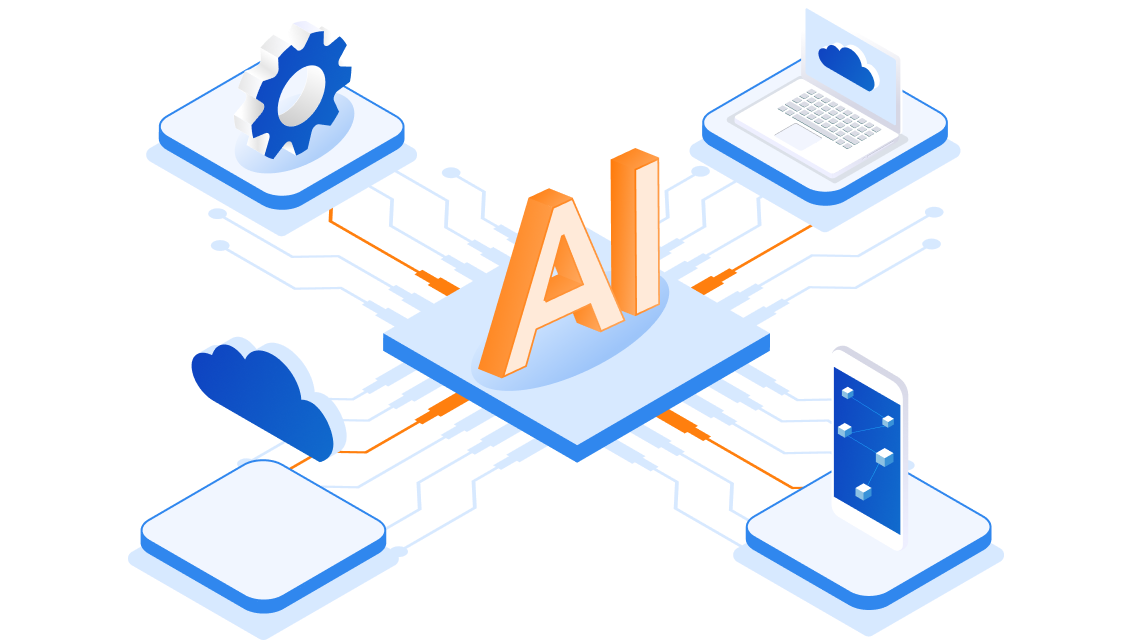
To understand the real value of voice-based marketing automation, it helps to look under the hood. In modern retail environments, voice automation is not just a chatbot with sound, it is a fully integrated system that connects AI, data platforms, and operational workflows to deliver real-time, personalized interactions at scale.
The Core Technology Stack Behind Voice Automation
At its foundation, voice-based marketing automation relies on a multi-layer AI pipeline that processes and responds to customer conversations in real time:
- Automatic Speech Recognition (ASR)
Converts customer speech into text so the system can process it. - Natural Language Understanding (NLU)
Interprets customer intent, such as identifying whether a shopper is asking about product availability, order status, or promotions. - Dialogue Management
Determines the next best action based on context, business rules, and customer history. - System Integrations (APIs)
Connects to retail systems like CRM, CDP, inventory, and order management systems to retrieve or update data instantly. - Natural Language Generation (NLG) + Text-to-Speech (TTS)
Generates human-like responses and converts them back into natural voice output.
How Voice Automation Fits into Retail Architecture
In real retail systems, voice-based marketing automation does not operate in isolation. Instead, it sits as a layer on top of existing digital infrastructure, orchestrating interactions across multiple systems:
- CRM & CDP
Provide customer profiles, preferences, and purchase history for personalization - E-commerce platforms
Enable product search, recommendations, and order placement - Order Management Systems (OMS)
Support order tracking, updates, and returns - Marketing automation tools
Trigger campaigns, promotions, and follow-ups based on voice interactions
Because of these integrations, voice AI can do more than just “talk”, it can take action in real time, such as updating an order, booking a pickup slot, or triggering a personalized promotion.
Conclusion
Voice-based marketing automation is no longer a futuristic concept, it is rapidly becoming a core capability for modern retail systems. As customer expectations shift toward instant, personalized, and omnichannel experiences, retailers must rethink how they engage, support, and convert customers at scale.
For retail leaders, the opportunity is clear. Voice-based marketing automation is not just about improving customer service, it is about unlocking new revenue streams, optimizing operations, and building stronger, more personalized customer relationships.
📩 Read more articles about us at our blogs.
☎️Contact us to see how we can support your loyalty app strategy.
Voice-based marketing automation is the use of AI-powered voice technology to automate customer interactions, marketing campaigns, and service processes in retail, enabling real-time and personalized communication.
It provides instant responses, 24/7 availability, and personalized support based on customer data, reducing wait times and improving overall customer satisfaction.
Yes. Retailers using voice AI have reported increased sales and higher conversion rates due to faster engagement, personalized recommendations, and automated upselling opportunities.
Key technologies include speech recognition (ASR), natural language processing (NLP), AI-driven dialogue systems, and integrations with CRM, CDP, and e-commerce platforms.
Absolutely. It enhances omnichannel strategies by providing a consistent, conversational interface across touchpoints, including call centers, mobile apps, and smart devices, while maintaining context across interactions.