








Digital Loyalty Card in Japan: From Paper Stamps to Connected Customer Data
12/10/2026
11
A digital loyalty card replaces a paper stamp card or plastic point card with a version that lives on the customer’s phone. In Japan, brands usually choose between four options: a LINE Official Account card, a LINE MINI App card, an Apple or Google Wallet pass, or their own app. The real value comes when the card is linked to one customer ID across stores and online channels, because every visit then becomes customer data the business can use.
Open almost any wallet in Japan and you will find the same thing: a thick stack of point cards and paper stamp cards from cafés, drugstores, hair salons and bakeries. Each one is a small promise. Ten stamps for a free coffee. Points for the next visit. Most of them are half full, and many were forgotten at home on the day they could have been used.
That small friction adds up. In April 2026, Nomura Research Institute estimated that Japanese consumers miss about ¥885.9 billion in points every year that they could have earned by showing a point card or using an app. For brands, those missed moments are also missed data: a visit with no card is a customer they cannot recognize.
A digital loyalty card solves the first problem easily. The card is always on the phone. Solving the second problem takes more thought, because a digital stamp card that only counts stamps is still just a stamp card. This guide follows the journey from paper to connected customer data, compares the main options in Japan, and shares a real SupremeTech project.
What is a digital loyalty card?
A digital loyalty card is a loyalty card that customers keep on their phone instead of in their wallet. The store scans a barcode or QR code, or the customer scans one in the store, and the visit or purchase is recorded instantly.
There are three common types:
- Digital stamp card: the customer earns one stamp per visit or purchase and gets a reward after a set number, just like a paper card.
- Digital point card: the customer earns points based on how much they spend and can use them as discounts or rewards.
- Mobile membership card: the card proves membership and may show a rank, member price or personal coupons.
Many brands combine all three. A café might start with stamps, then add points and member ranks once customers are used to the card.
Why Japan is moving from paper stamps to digital cards

Japan’s love of points is not new. Paper stamps and point cards have been part of shopping for more than a century, and today large point networks shape where people shop and pay.
Read more:
What has changed is the phone in every pocket and the way people pay. The Ministry of Internal Affairs and Communications reports that 90.5% of households owned a smartphone in 2024. Payments are moving the same way. According to METI figures reported by Impress Watch, Japan’s cashless payment ratio reached 58% in 2025 under the government’s new domestic indicator.
Points are growing too. NRI estimates that private companies issued about ¥1.37 trillion in points and miles in fiscal 2024, a record high, and forecasts about ¥1.73 trillion by fiscal 2029. When customers already pay with their phone, a paper stamp card starts to feel like an extra step.
4 ways to offer a digital loyalty card in Japan
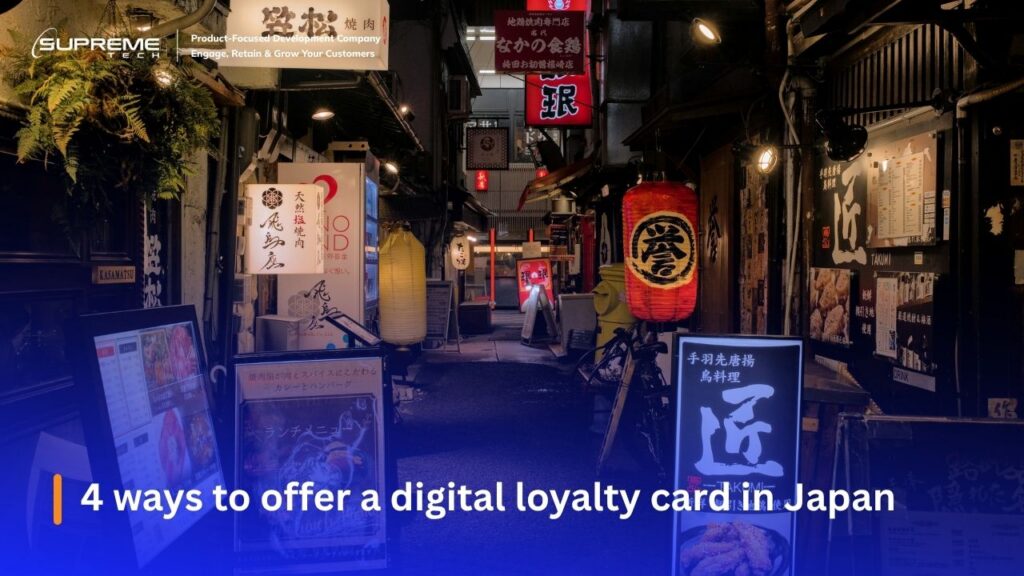
Each option below can work. The right choice depends on how much control you need, how often customers visit, and how closely the card must connect to your other systems.
1. LINE Official Account loyalty card
LINE is the starting point for many Japanese brands. LY Corporation reports about 97 million monthly LINE users in Japan as of March 2024. Its LINE Business Guide lists loyalty cards, such as stamp or point cards, among the free features of a LINE Official Account.
This is the fastest way to replace a paper stamp card. Customers add the shop as a friend and the card sits inside the chat. The trade-off is flexibility: design and rules follow LINE’s standard format, and the card is not built to connect deeply with your POS or customer database.
2. LINE MINI App loyalty card
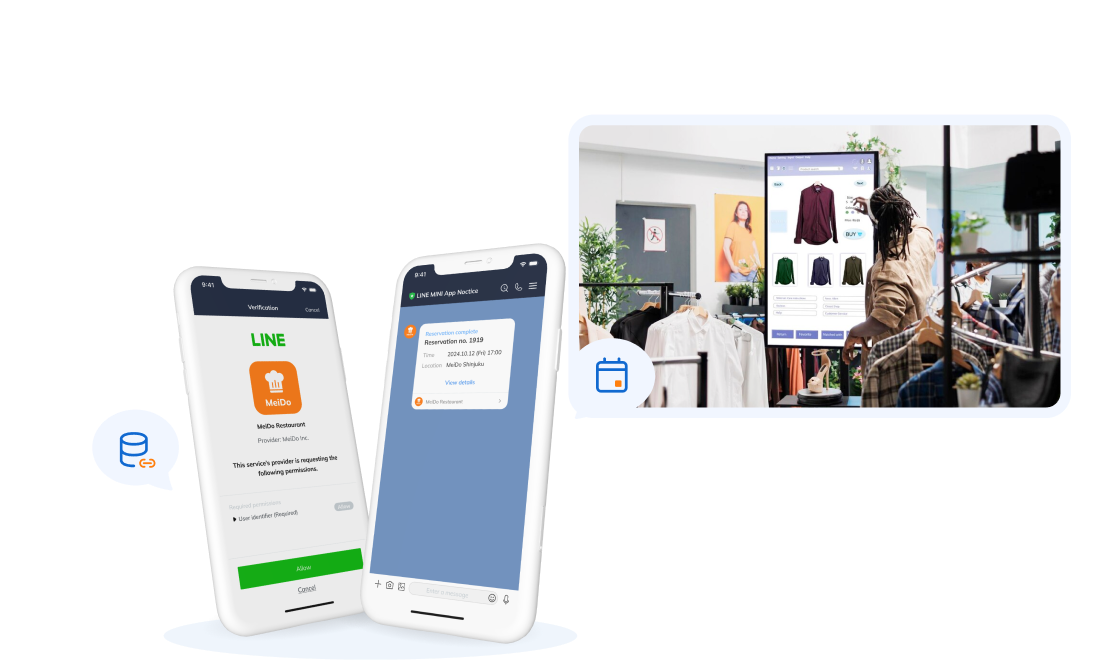
A LINE MINI App is a small web app that opens inside LINE, so customers do not need to download anything. It can use the customer’s LINE ID, show a custom point or membership card, and connect to your own back-end systems.
This option suits brands that want a branded experience and real data without asking customers to install an app. It takes development work, and the app must follow LINE’s review rules and platform limits.
Read more:
3. Apple Wallet or Google Wallet pass
A wallet pass puts the card next to the customer’s payment cards. Apple’s Wallet developer overview describes store cards for loyalty and points that can be updated to show the current balance and can appear based on location.
Wallet passes are simple for customers and need no extra app. They are best as a companion to another option, because they offer few ways to engage customers beyond showing the card and balance.
4. Your own loyalty card app
A brand app gives full control over design, features and data. It works well for large chains with frequent visitors, where the app also handles mobile ordering, payments or coupons.
The downside is the download. Customers must choose to install it and keep it, so an own app works best when you can offer clear everyday value, such as faster ordering.
| Option | Setup speed | Customer effort | Design control | Connection to POS and customer data | Best for |
| LINE Official Account card | Very fast | Add as a LINE friend | Low | Limited | Small shops replacing paper stamps |
| LINE MINI App card | Medium | Open inside LINE, no download | High | Strong, if built in | Chains wanting branded cards and data |
| Wallet pass | Medium | Save once to the phone | Low to medium | Needs your own back end | A light companion to another option |
| Own app | Slow | Download and keep the app | Full | Strongest | Large chains with frequent visits |
From paper stamps to connected customer data
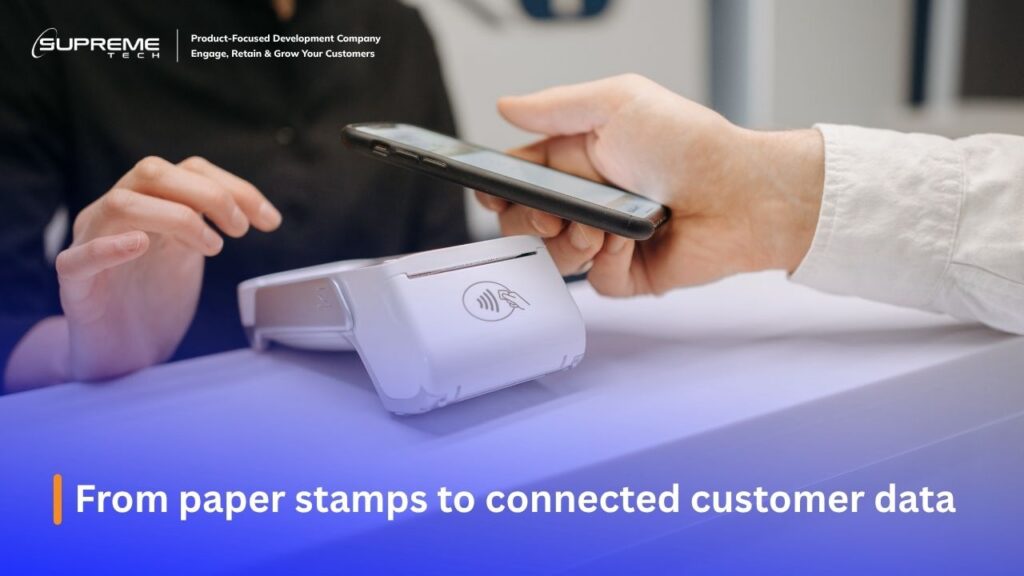
Going digital is the first step, not the last. It helps to think of three levels.
Level 1: Digital stamps. The card replaces paper. Customers stop forgetting it, and the store stops printing cards. The business can count visits, but still does not know much about who the customer is.
Level 2: Identified members. The card is linked to a member ID, so each scan connects a visit to a real person. Now the business can see how often a customer returns and what they buy at the POS.
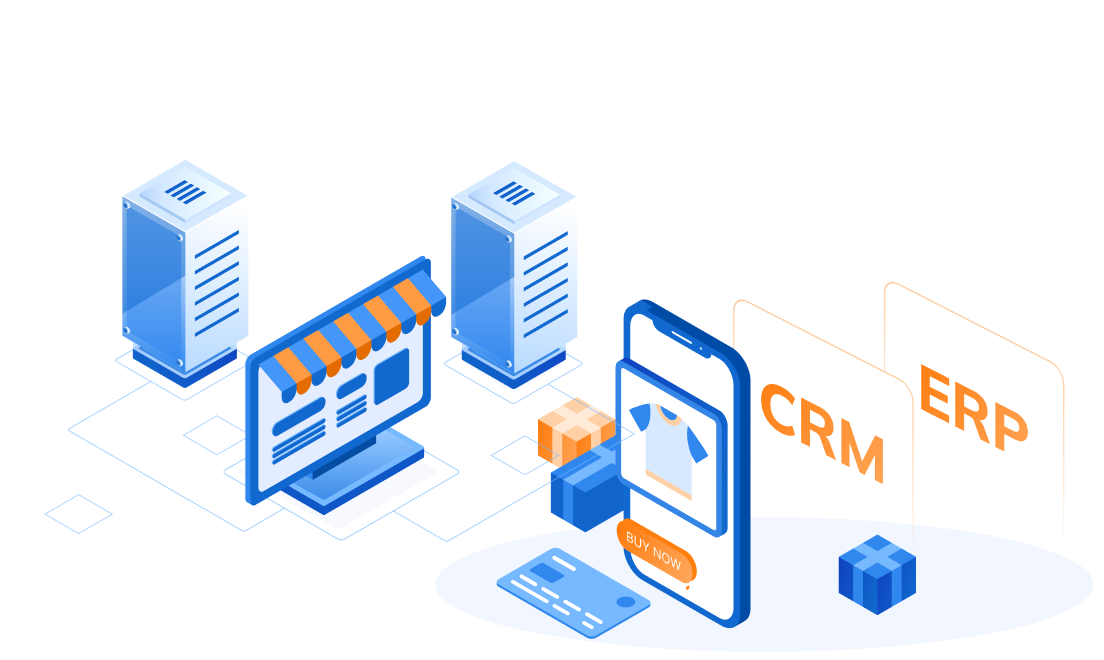
Level 3: Connected customer data. The same ID works across stores, the online shop, LINE and any app. Points and purchase history follow the customer everywhere, and the data can drive personal coupons, reminders and better campaign decisions.
Most of the value sits at Level 3, and most of the difficulty does too. It depends on deciding which system holds the true balance and making every channel read from it.
Read more:
Case study: a digital point card on LINE MINI App
SupremeTech built a digital point card on LINE MINI App for a Japanese client with a network of stores. Its customers had used physical cards to collect points and make payments.
The challenge. The physical cards were awkward to use and hard to expand to new services. The client also wanted more control over the design and user experience than standard options allowed, while still working within LINE’s rules. Existing card data also had to be migrated to the new online system.
The solution. The team built a mini app inside LINE using LINE’s API and SDK, with React and Node.js. Key features included issuing the digital card, showing a matching barcode at checkout, and generating one-time barcodes for transactions. SupremeTech covered design, development, testing, data migration, and ongoing maintenance and operation.
Why it matters. Customers kept using LINE, the app they already open every day, and the business gained a card it could extend over time. In a separate project, SupremeTech built a LINE MINI App with LIFF for a Japanese department store, where members can create a points card, track points and redeem them for gifts and perks. Together, the two projects show how a card can grow from a simple replacement for plastic into a membership channel.
How to plan the move from paper to digital
Before you launch, work through these questions with marketing, store operations and IT:
- Which option fits your customers? Start from how often they visit and whether they already use LINE with your brand.
- How will old cards move over? Decide how paper stamps and plastic card balances transfer, and for how long you will accept both.
- What will staff scan? Make sure the POS can read the new barcode or QR code without slowing the queue.
- Which system holds the balance? Choose one source of truth for points and stamps from day one.
- What data will you use, and how will you ask for consent? Collect only what you will use, and explain it clearly.
Read more:
Conclusion
The paper stamp card earned its place in Japanese shopping because it was simple. A digital loyalty card keeps that simplicity and removes the moment when a customer has left the card at home. Choose the option that fits your customers, whether that is LINE, a wallet pass or your own app, and then connect it to one customer ID. That last step is what turns stamps into customer data.
If you are planning a digital loyalty card in Japan, SupremeTech’s LINE MINI App development team and Omnichannel Retail Solutions can help you design the card and connect it to your stores and online channels.
Frequently Asked Questions
A digital loyalty card is a stamp card, point card or membership card that customers keep on their phone. The store scans a barcode or QR code to record each visit or purchase.
For most brands, yes. Customers cannot forget it at home, the store stops printing cards, and each visit can be linked to a customer record. Paper cards are only simpler for very small shops with no other systems.
It depends on your goals. A LINE Official Account card is fastest, a LINE MINI App card gives branded design and data without a download, a wallet pass is a light companion, and an own app gives the most control for large chains.
Not always. LINE Official Account cards, LINE MINI Apps and wallet passes all work without a separate app download.
Decide how old stamps and balances will transfer, accept both formats for a set period, make sure the POS can scan the new card, and keep one system as the source of truth for balances.