






Retail IT Services: What They Include and How to Choose a Partner
23/11/2026
5
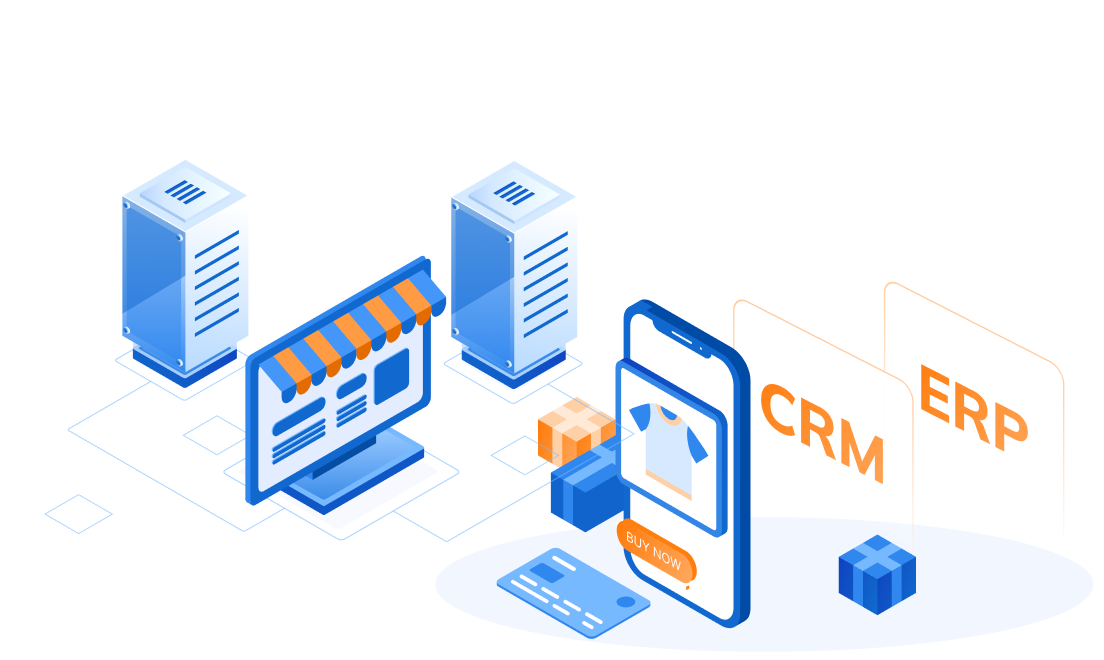
If you run a retail business, retail IT services are simply the help you get to make your store systems, online shop, loyalty program, customer data and cloud setup work as one. Some partners build new software. Others connect the tools you already pay for. The best ones do both, and they stay around to keep everything running on your busiest days.
Here is a picture many retailers will recognize. The POS came from one vendor, the online store from another, and the loyalty app from a third. Each one works fine on its own. But a customer earns points in the store and can’t see them in the app, stock numbers don’t match between channels, and every campaign needs someone to export and clean a spreadsheet first.
This guide is the starting point for our retail series. It walks you through what retail IT services include, which ones to tackle first, and how to choose a partner you can trust. Each section gives you the short version and links to a deeper article when you want the details.
What retail IT services actually cover
It helps to separate two things that often get mixed up. Retail software is the product you buy, such as a POS system or a Shopify plan. Retail IT services are the work that makes that software fit your business: planning, custom development, integration, data work, cloud setup, testing, and day-to-day support.
Think of it like opening a new store. You can buy the shelves, the till and the lighting. You still need someone to design the layout, wire it all together and fix things when the lights go out on a Saturday. That second part is what a services partner does.
Here is a quick map of the five building blocks and the signs that tell you a block needs attention.
| Building block | What the service does | Signs you need it |
| POS and store systems | Sets up, customizes and connects the tills, receipts and in-store devices | Staff re-enter data by hand; store sales show up late in reports |
| E-commerce | Builds, migrates and connects your online store and marketplaces | Online orders, stock or prices don’t match the store |
| Loyalty | Designs and connects points, tiers, coupons and campaigns | Members can’t see the same balance in every channel |
| Customer data | Brings customer records from every channel into one reliable view | The same customer appears three times in three systems |
| Cloud and DevOps | Hosts, scales, monitors and updates your systems | The site slows down at sale time; releases are slow and risky |
Most retailers don’t need all five on day one. The point of the map is to see where you are today, so you can spend your budget where it makes the biggest difference.
The Five Building Blocks of a Retail Tech Stack
Each block below gets a short summary. When you want the full picture, follow the Read more links to the deep-dive articles.
POS and in-store systems
Your POS is where the sale actually happens, so it should own the transaction, the receipt and the tax. Services here usually mean connecting the POS to loyalty, e-commerce and reporting without slowing down the checkout line. In Japan, details like two consumption tax rates and national point networks make this integration trickier than most guides suggest.
Read more:
- POS System With Loyalty Program: A Japan Integration Checklist for Retail and F&B
- POS Integration in Retail and Common Challenges in Japanese Market
E-commerce platforms and storefronts
E-commerce services cover building or migrating your online store, plus connecting it to your CRM, marketing tools and store systems. The hard part is rarely the storefront itself. It is making sure customers, orders and campaigns flow correctly between the shop and everything around it, especially during a platform move.
Read more:
- CRM Automation: An Integration Blueprint for CRM and Marketing Automation in Omnichannel Retail
- Where Does Your Customer Data Go During a Shopify Data Migration?
Loyalty and retention
Loyalty services include designing points and tier rules, building the engine that runs them, and planning campaigns that bring customers back. A loyalty program only feels rewarding when the balance is right in every channel and the offer arrives at the right moment. That depends as much on the technology underneath as on the marketing idea.
Read more:
- Customer Loyalty Campaigns: Strategy, Examples, and How to Improve Retention
- Tiered Loyalty Program: Examples, Benefits, and Design Best Practices Backed by Research
Customer data
Customer data services bring records from your stores, website, app and loyalty program into one profile you can trust. Without that, personalization and reporting are built on guesswork. This block also covers how customer data moves into marketing automation, so campaigns reach the right person in the right channel.
Read more:
- Unified Customer Profile: How Retailers Build a Reliable Customer View
- Ecommerce Marketing Automation: How to Connect CRM, CDP, POS, and Your Store
Cloud and DevOps
Cloud and DevOps services keep everything above running: hosting, scaling for sale days, monitoring, backups and automated releases. You rarely notice this block when it works well. You notice it straight away when the site goes down during a big campaign.
Read more:
Integration: the part most retailers underestimate
The five blocks only create value when they share data reliably. That is why integration deserves its own budget line, not a few days at the end of a project.
McKinsey describes a common pattern in The tech transformation imperative in retail. Many retailers built e-commerce as a separate effort and linked it only loosely to their older systems. The result was weak omnichannel journeys and no real-time view of stock. The same article notes that customers who engage with a retailer both in store and online are worth roughly 1.5 to 2 times more across loyalty tiers.
In practice, good integration comes down to three simple decisions:
- One owner per piece of data. The POS owns the receipt, the loyalty engine owns the points balance, and the customer data layer owns the profile. When two systems both keep a balance, they will drift apart.
- Real-time or batch, on purpose. A points redemption at the till must be checked live. A nightly sales report can wait. Deciding this per flow keeps costs and risks under control.
- A plan for when things break. Networks drop and vendors change their APIs. Someone needs to own monitoring, retries and fixes.
If you want to see how these pieces come together across stores, apps and online channels, our omnichannel retail solutions page shows how we approach it.
Which services do you need first?
The right first step depends on where your business is today, not on what the market is talking about. Deloitte’s 2026 retail industry outlook, based on a survey of 330 retail leaders, found that retailers are actively paying down technology debt so they can move faster. That is a useful mindset: fix what slows you down before adding something new.
Use this table as a rough guide.
| Where you are | Start with | What can usually wait |
| Stores only, or one online shop | A stable POS or e-commerce setup, with clean product and customer data from the start | Custom loyalty engine, advanced data platform |
| Stores plus online, growing fast | Connecting POS and e-commerce so stock, orders and customers match | Rebuilding systems that still work well |
| Running a loyalty program across channels | One points balance everywhere, and clear rules for refunds and expiry | New reward ideas until the basics are reliable |
| Several brands or countries | A shared customer data layer and cloud setup that scales | Different tools for each brand |
| Entering or expanding in Japan | Local fit: receipts, tax rates, national point networks, APPI data rules | Features built only for other markets |
A simple test helps here. Ask your store staff and your customer service team what wastes the most time each week. Their answer usually points straight at the block to fix first.
In-house team, separate vendors or one partner?
There is no single right answer here, and that is okay. Most retailers end up with a mix. McKinsey notes in the same article above that most retail IT departments already rely on external partners to maintain business applications, so the real question is how you set that relationship up.
Your own in-house team makes sense when technology is part of how you compete and you can hire and keep engineers. You get full control, but building a team that covers POS, e-commerce, data and cloud takes time and money.
Separate vendors for each system is how many retailers start, often without planning it. Each vendor knows its own product well. The catch is that nobody owns the gaps between products, so integration problems bounce from one vendor to another.
One partner across the stack works well when your main pain sits between systems. A single partner can own the integration, keep the data rules consistent, and support you after launch. It works best alongside a small internal team that owns the business priorities.
If you are not sure, start small. Give a partner one clearly defined integration problem, see how they work, and grow from there.
How to choose a retail IT services partner
A long list of services on a website tells you very little. These five checks tell you much more about how a partner will behave once the project starts.
They understand retail operations, not just code
A good retail partner asks about returns, receipts, peak season and what store staff actually do at the till. If the first meeting is only about frameworks and tools, be careful. Retail systems fail in the gaps between operations and software, so your partner needs to understand both.
They work with your existing systems
Replacing everything is rarely the cheapest or safest path. Look for a partner who first asks what already works and suggests connecting or improving it. A partner who recommends a full rebuild on the first call may be selling a project, not solving your problem.
They have a clear view on data ownership
Ask them a simple question: which system should own the customer’s points balance, and why? A strong partner will answer quickly and explain the trade-offs. A vague answer is an early warning that data problems will show up later.
They take security and local rules seriously
Retail systems handle payment and personal data, so security is not optional. Card data falls under the PCI Data Security Standard, set by the PCI Security Standards Council. In Japan, personal data is governed by the Act on the Protection of Personal Information (APPI). Ask how the partner handles access, testing, and data stored outside your country, and look for recognized certifications such as ISO.
They support you after launch
Launch day is the start, not the finish line. Ask who monitors the system, how fast they respond to a problem, and who answers the phone during your biggest sale of the year. Clear support terms in the contract will save you a lot of stress later.
Questions to ask in the first call
- Can you show us a real retail project you worked on, and what you would do differently today?
- How would you connect our current POS, store and loyalty systems without replacing them?
- Which system would own customer profiles and points balances in your design?
- How do you test for peak days, refunds and offline situations?
- What does support look like in the first three months after launch?
- Have you worked with our market’s rules, such as tax rates, receipts or data protection laws?
What this looks like in a real project
In a real SupremeTech project, a Japanese restaurant chain with locations in Japan, Taiwan, Malaysia and the United States needed help with its 5-million-user retail app. The app let customers pre-order and buy food online. The client’s goals were ambitious: cut the time customers spend waiting in stores by 90%, and reduce staff handling time for customer data at stores by 80%.
The work touched almost every building block in this guide, and it happened in stages rather than as one big rebuild:
- Keep the existing app running and improve it. SupremeTech took over maintenance of the native app, improved sign-in, fixed bugs, upgraded the database, and moved deployment from manual steps to an automated process to reduce errors.
- Add loyalty into the app. The team built the client’s point feature, including barcode generation and point transaction history.
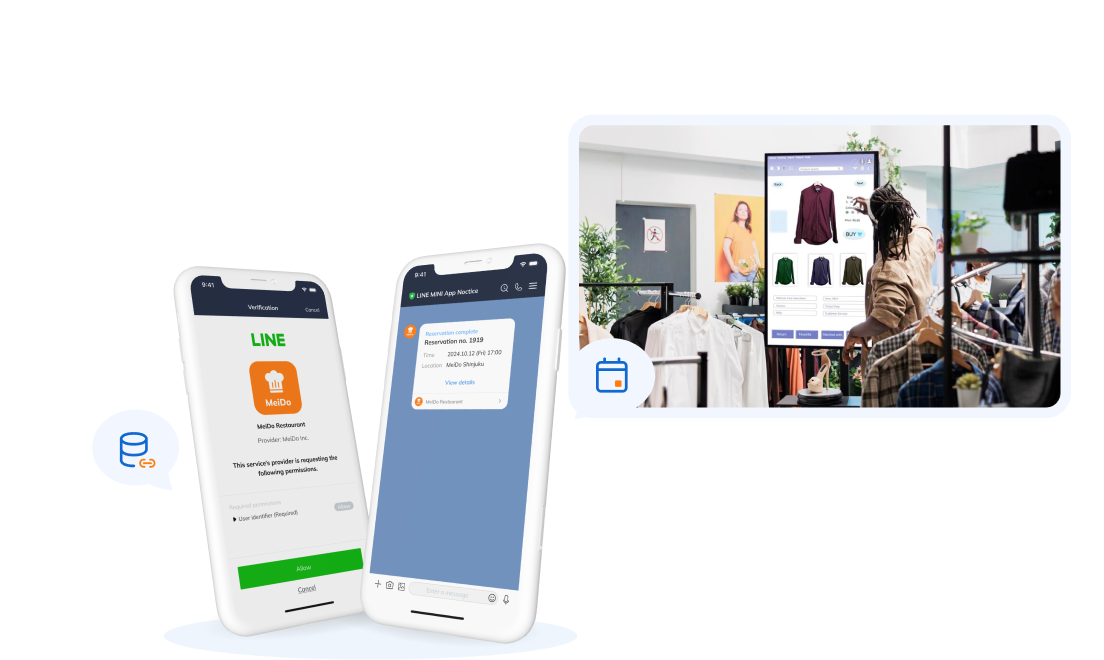
- Connect to Japan’s big point networks. A Point Gateway middleware linked the client’s digital touchpoints with three of the biggest point systems in Japan: T-Point, D-Point and R-Point, with clear API documentation so other teams such as e-commerce could use it.
- Extend to e-commerce. The team then built an e-commerce site with take-out and mail-order features.
Along the way, the monitoring system was moved to AWS under the client’s own ownership. The delivery team grew to three Agile teams of nine people, covering project management, business analysis, front-end, back-end and quality control, working alongside a Japan-based partner that handled planning and UI design.
The lesson for other retailers is simple. You don’t need to replace everything at once. Stabilize what you have, connect the pieces that matter most to customers, then grow into new channels.
How SupremeTech supports retailers
SupremeTech works with retailers as a technology partner that starts from the business problem, not from a product to sell. Most projects begin with a short look at your current setup: which systems own which data, where staff waste time, and where customers feel friction. From there, our omnichannel retail solutions team connects stores, apps and online channels, including mobile ordering, buy online pick up in store, and POS linkage.
When your online store needs work, our e-commerce development and Shopify development teams build, migrate and extend stores while keeping customer and order data intact. When off-the-shelf tools are not enough, such as a points engine that must work with Japanese receipts and point networks, our custom software development team builds it around your existing systems. Underneath it all, our cloud infrastructure and DevOps team keeps everything stable, monitored and ready for your busiest days.
Because our main expertise is the Japanese market, we are used to details that overseas guides often miss, from tax rates on receipts to national point networks and local data rules. And as an ISO-certified company working in Agile teams, we keep you involved at every step, so the system grows with your business instead of locking you in.
Conclusion
Retail IT services are less about buying more technology and more about making the systems you have work together for your customers and your team. Start by mapping your five building blocks, fix the block that hurts most today, and give every piece of data a clear owner.
When it is time to bring in help, choose a partner who understands how stores really run, respects what you have already built, and stays with you after launch. That is what turns a set of separate tools into a retail operation that feels simple for the customer.
Not sure where to start? Have a chat with SupremeTech about your current setup. We are happy to look at it with you and suggest a practical first step.
Frequently Asked Questions
Retail IT services are the work of planning, building, connecting and running the systems a retailer uses, such as POS, e-commerce, loyalty, customer data and cloud. They turn separate software products into one setup that works across stores and online channels.
Retail software is the product you buy or subscribe to, like a POS or an e-commerce platform. Retail IT services are the people and work that customize, integrate and support that software so it fits your business.
Usually not. Most improvements come from connecting and extending what you already have. Replacement makes sense only when a system cannot share the data you need, cannot scale, or is no longer supported.
It depends on how many systems are involved and how clean your data is. A good partner will suggest a phased plan, often starting with one integration or a pilot in a few stores, before rolling out more widely.
Look for clear terms on monitoring, response times, bug fixes, updates and who is on call during peak periods. Also agree on who owns the code, the cloud accounts and the documentation.
Yes, if the partner has real experience with the Japanese market. Ask them about consumption tax on receipts, national point networks and APPI data rules, and for an example of a Japanese retail project they have delivered.