






Vietnam Custom Web Application Development Company: A 2026 Evaluation Guide for Japanese Enterprises
06/08/2026
176
An IT manager at a Japanese company opens a search results page looking for a custom web application development company in Vietnam. Every result says roughly the same thing: leading company, trusted partner, world-class engineers. None of it says anything about what actually matters for a Japanese enterprise specifically, like how requirements get translated accurately, who owns quality control, or what happens when a specification changes mid-project.
That gap is the reason this guide exists. Choosing a custom web application development company isn’t really about finding the cheapest hourly rate. For a Japanese enterprise, it’s about finding a partner whose process, communication structure, and documentation habits actually fit how your organization works.
Why Vietnam Has Become the Default Choice for Japanese IT Leaders

Japanese businesses are turning to Vietnam’s offshore development model largely out of necessity: a shrinking domestic pool of IT engineers, rising labor costs at home, and growing pressure to modernize systems without expanding headcount. Coverage in VnExpress International points to this exact combination of pressures as the reason offshore development has moved from an experiment to a standard part of how Japanese companies plan IT budgets. Vietnam’s appeal isn’t just cost. According to a 2026 analysis on Japanese enterprise IT strategy, what draws Japanese companies specifically is operational compatibility: engineering teams that prioritize process discipline and long-term stability over fast, high-risk delivery.
What “Custom” Actually Means When You’re Evaluating a Web App Development Company
Almost every vendor claims to offer “custom” web application development. In practice, that word covers a wide range of very different capabilities. Some companies genuinely build software around your specific business logic. Others heavily customize an existing template or CMS and call it custom.
For a Japanese enterprise, the difference usually shows up in one place: how well a vendor handles requirements that don’t fit a standard mold. A company that only knows how to configure a template will struggle the moment your business process doesn’t match what the template assumes. A genuine custom development company starts with your actual workflow, not a pre-built structure you have to adapt to.
Japanese Communication Matters More Than English Fluency

Most vendor pages promise “clear communication” without explaining what that actually means in practice. For Japanese enterprises working with a Vietnam-based team, the real answer usually comes down to a specific role: the Bridge SE, a Japanese-speaking or Japan-experienced systems engineer who sits between your business requirements and the engineering team’s technical execution.
As the above industry analysis on Japanese enterprises and Vietnam offshore IT puts it, the core challenge in offshore development is the gap between business intent and technical execution, and a dedicated bridge role exists specifically to close that gap before it turns into delivery problems. A vendor without this structure might still speak good English, but a specification can still get lost in translation between what a Japanese client means and what an engineering team builds, especially around implied requirements that would be obvious to a Japanese business reader but easy for anyone else to miss.
The Culture Gap That Doesn’t Show Up on a Vendor Comparison Chart
Most vendor evaluations focus on price, certifications, and tech stack. Culture rarely makes the list, but it’s often the thing that quietly decides whether a project runs smoothly or not.
Vietnam scores 70 on Hofstede’s power distance index, compared to Japan’s 54, according to B-Company’s comparison of Vietnamese and Japanese business culture. In practice, that means Vietnamese workplaces tend to defer more to top-down decisions, with employees less likely to openly question a manager’s or client’s direction. Japanese business culture is also hierarchical, but it relies heavily on a different mechanism: nemawashi, the practice of raising concerns quietly and informally with stakeholders before a decision is finalized, so that by the time something reaches a formal meeting, objections have already surfaced and been addressed.
Put those two patterns next to each other and a real risk shows up. A Japanese client may read silence from the Vietnamese team as agreement, the same way silence functions inside their own nemawashi process. But that silence might actually be cultural deference, not genuine technical agreement, and the concern never gets raised at all.
This is exactly why the Bridge SE role and a documented change process, covered above, matter more than they first appear to. A good partner doesn’t just translate language. They build a structured way for engineers to flag concerns early, before a decision is locked in, instead of relying on the assumption that no objection means no problem. When evaluating a vendor, it’s worth asking directly: what happens when your engineering team disagrees with something in my spec? A vague answer is a bigger warning sign than any missing certification.
Evaluation Criteria for Japanese Enterprises Choosing a Vietnam Web App Partner
A few criteria tend to matter more than a polished portfolio page:
- Certifications that actually mean something. ISO 27001 for information security and ISO 9001 for quality management are common baseline signals, but ask how they’re actually applied on a day-to-day basis, not just whether the certificate exists.
- Documentation discipline. Japanese enterprises typically expect detailed specifications, structured reporting, and clear sign-off points. Ask to see a sample of how a vendor documents a project, not just how they pitch one.
- A real Bridge SE structure, not just “English-speaking staff.” Ask specifically who will translate your requirements and how disagreements or ambiguity get resolved.
- Portfolio depth in relevant industries, not just total years in business. A company with real experience in your specific domain will ask sharper questions during the sales process.
- Evidence of long-term relationships, not just one-off projects. A vendor that has worked with the same client across multiple projects over years says more than a long list of logos.
What a Long-Term Vietnam-Japan Partnership Actually Looks Like
Numbers and certifications only tell part of the story. It helps to see what an actual long-term relationship looks like in practice.
SupremeTech has worked with Classmethod Vietnam, a subsidiary of the Japanese cloud consulting company Classmethod, since SupremeTech’s early years, collaborating on more than 10 projects and over 800 man-months of work together. Arata Fujimura, Director of the CX Business Division at Classmethod Vietnam, has credited SupremeTech with helping develop software covering functionality like a management portal, user registration, and account optimization, the kind of ongoing, multi-project relationship that’s harder to fake than a single case study.
A more recent project shows the same discipline applied at speed. Working with a local government on a Japanese island, SupremeTech built two web platforms from scratch in two months, using an AI-assisted development approach from specification through deployment. The result managed 439 visitors in a single system, replacing manual booking processes with automated workflows, and the government client has described it as a working blueprint other local governments across Japan could follow.
These two projects sit at different ends of the spectrum, one a long, multi-year relationship, the other a fast, focused build, but both point to the same thing: consistency in how requirements get understood and delivered, whether the relationship runs for years or the timeline is two months.
The Engineering Model Behind These Projects
What connects these projects isn’t a single technology stack. SupremeTech’s teams have worked across PHP and Laravel, Angular and Next.js, and cloud platforms including AWS and GCP, depending on what a client’s system actually needs, not what’s easiest to sell.
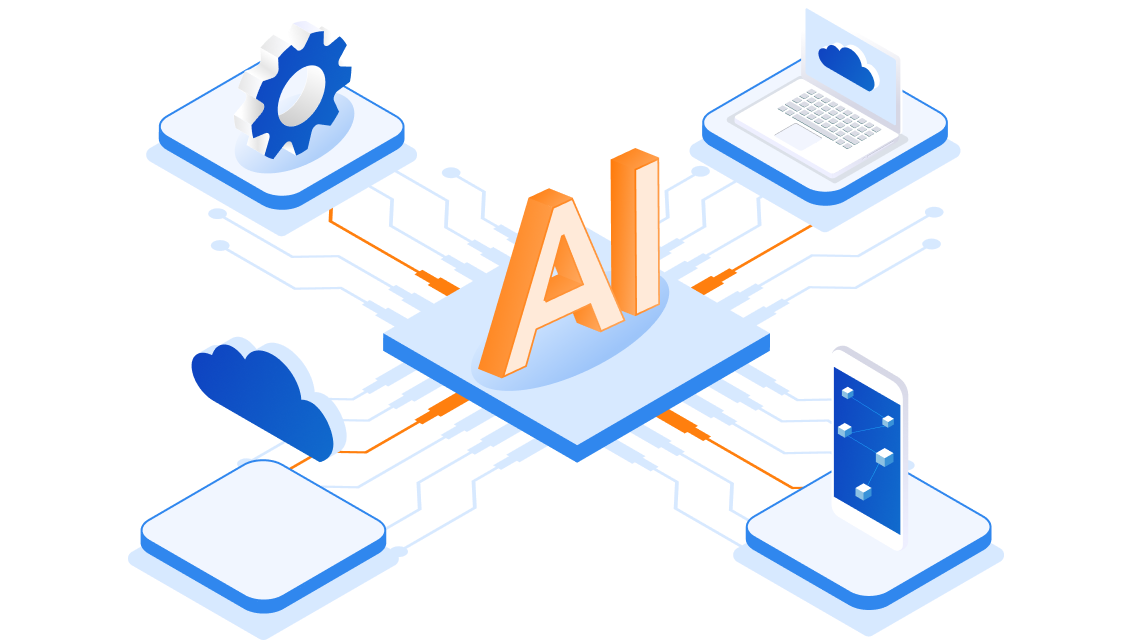
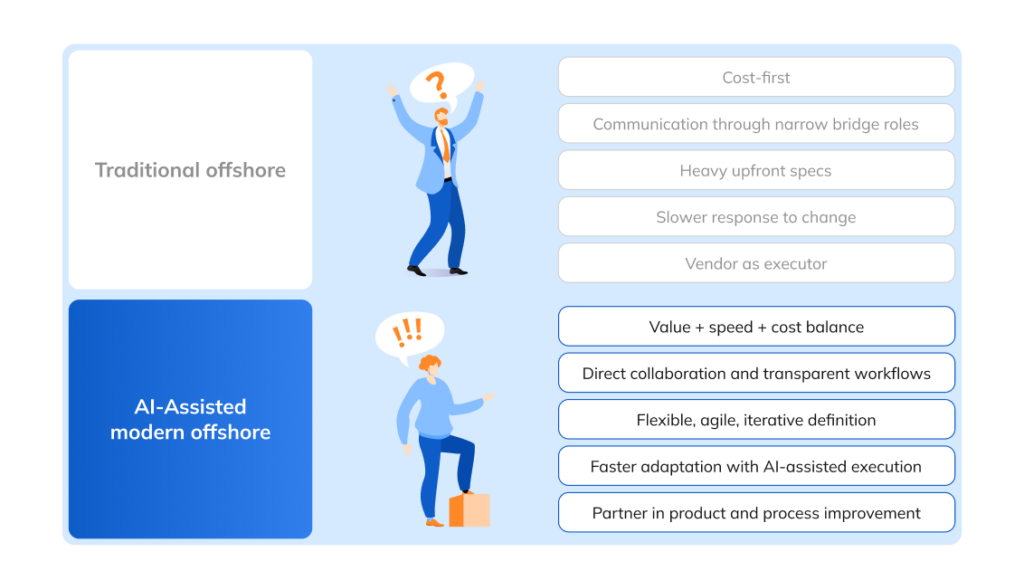
What’s changed more recently is the delivery model itself, and this is where it’s worth being specific instead of just claiming “we’re different”. The image below lays out the shift SupremeTech has made from a traditional offshore setup to what it calls an AI-assisted modern offshore model.
In a traditional offshore setup, the relationship tends to run cost-first, communication gets funneled through a narrow bridge role, specs are written heavily upfront, and the vendor mostly just executes what was written, slow to adjust once something changes. SupremeTech’s AI-driven development model is built to work differently on those points: a balance of value, speed, and cost instead of cost alone, direct collaboration with transparent workflows instead of communication bottlenecked through one role, flexible and iterative scope definition instead of a heavy upfront document, faster adaptation when a requirement shifts, and a vendor acting as a partner in product and process improvement rather than just an executor of a fixed spec.
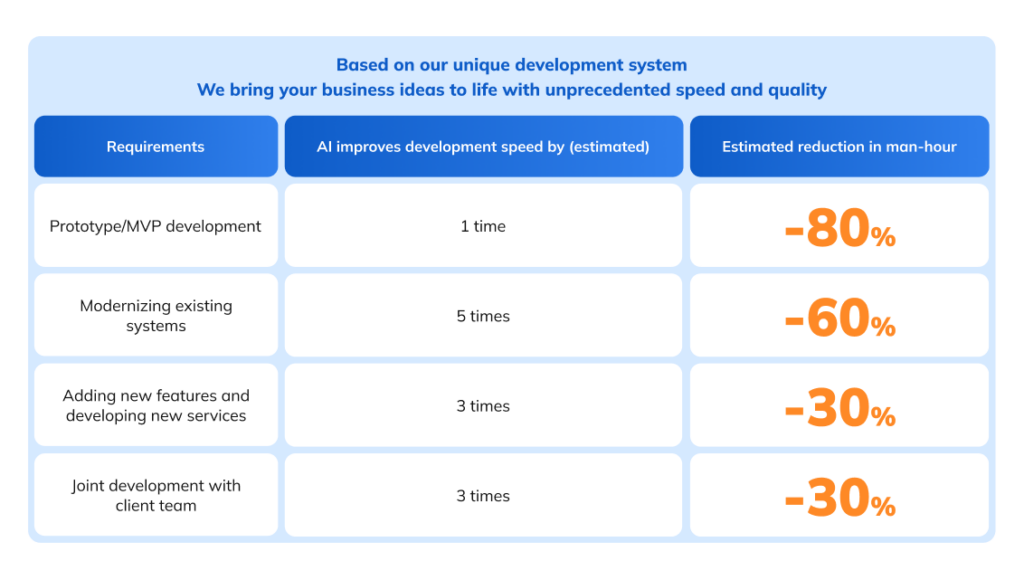
The local government project mentioned earlier, two web platforms built from scratch in two months, is a direct example of this model in practice. As an ISO-certified company with offices across Vietnam, Japan, the US, and Australia, SupremeTech built this model specifically around cross-border collaboration, not a single-market outsourcing setup with AI bolted on afterward.
Questions Worth Asking Before You Sign With Any Vietnam Web App Partner
Before signing a contract, it’s worth getting direct answers to a few specific questions:
- Who exactly will be my Bridge SE, and what’s their track record with Japanese clients specifically?
- Can you show me a sample specification document or project report from a past project?
- What happens when a requirement changes after development has already started?
- Do you have any clients who have worked with you across multiple projects over several years?
- What does your quality assurance process actually look like, beyond a general statement about “rigorous testing”?
None of these questions require deep technical knowledge to ask. They just require asking for specifics instead of accepting a general claim.
Conclusion
Every custom web application development company in Vietnam will quote you a rate and a timeline. Almost none of them will tell you, upfront, how they actually handle the parts of a project that don’t go according to plan: an ambiguous requirement, a shifting deadline, a stakeholder who changes their mind halfway through.
That’s the real evaluation. Not which company has the nicest portfolio page, but which one has a structure, a Bridge SE, a documentation habit, a track record of sticking with clients past the first project, built to handle the parts of software development that never show up in a sales pitch.
If your team is evaluating partners for a web application project, SupremeTech would be glad to walk through how this works in practice. You can browse more case studies or get in touch to talk through your specific requirements.
FAQs Section
A genuine custom development company builds software around your specific business logic and workflow. A template-based vendor customizes an existing structure, which tends to break down when your process doesn’t fit that structure.
A Bridge SE is a Japanese-speaking or Japan-experienced systems engineer who translates business requirements between a Japanese client and a Vietnam-based engineering team, reducing the risk of miscommunication around implied or culturally specific requirements.
A shrinking domestic IT talent pool, rising labor costs in Japan, and Vietnam’s process discipline and full time zone overlap with Japan are the main drivers behind this shift.
ISO 27001 for information security and ISO 9001 for quality management are common baseline signals, but it’s worth asking how a vendor applies them day to day, not just whether they hold the certificate.
Timelines vary by scope, but with an experienced team and clear specifications, focused projects have been delivered in as little as two months, as shown in the local government platform example above.