









How a Loyalty Points System Works in Modern Retail Platforms
04/02/2026
2.08k
Retail leaders today operate in a very different environment compared to even five years ago. Customers interact with brands across physical stores, eCommerce websites, mobile apps, and social platforms, often within the same purchase journey. In this context, retaining customers is no longer just about competitive pricing or product availability. It is about building long-term relationships that encourage repeat engagement. This is where a loyalty points system becomes a critical component of modern retail strategy.
Why Do Retail Businesses Need to Care about the Loyalty Points System?

From a decision-maker’s perspective, the challenge is clear. Customer acquisition costs are rising, marketing channels are becoming saturated, and brand switching is easier than ever. A well-designed loyalty points system helps address these challenges by rewarding customers for continued interaction, not only purchases but also behaviors such as app usage, referrals, and reviews.
However, modern retail platforms demand more than traditional punch cards or simple discount schemes. Today’s loyalty points system must operate seamlessly across channels, integrate with core retail systems, and provide actionable customer insights. It is no longer a standalone marketing tool. It is a data-driven system that directly impacts customer lifetime value, retention rates, and overall revenue performance.
For executives evaluating technology investments, the key question is not whether to implement a loyalty points system, but how it works within a modern retail platform, and whether it can scale with business growth. Understanding how these systems function at a foundational level is essential before selecting the right IT solution partner or platform architecture.
This article breaks down how a loyalty points system works in modern retail platforms, starting from core definitions and moving toward practical implementation insights relevant to retail decision makers.
What Is a Loyalty Points System?
The definition of a Loyalty Points System
A loyalty points system is a structured mechanism that allows retailers to reward customers with points based on predefined actions, most commonly purchases. These points accumulate over time and can be redeemed for rewards such as discounts, vouchers, exclusive products, or special experiences.
In modern retail platforms, a loyalty points system is typically embedded into the broader digital ecosystem. It connects with point-of-sale systems, eCommerce platforms, customer databases, and marketing tools. This integration enables retailers to track customer behavior consistently across all touchpoints and deliver a unified loyalty experience.
From a business standpoint, the primary purpose of a loyalty points system is to influence customer behavior in measurable ways. It encourages repeat purchases, increases average order value, and provides retailers with valuable data to personalize future interactions
Loyalty Points System vs Traditional Loyalty Programs
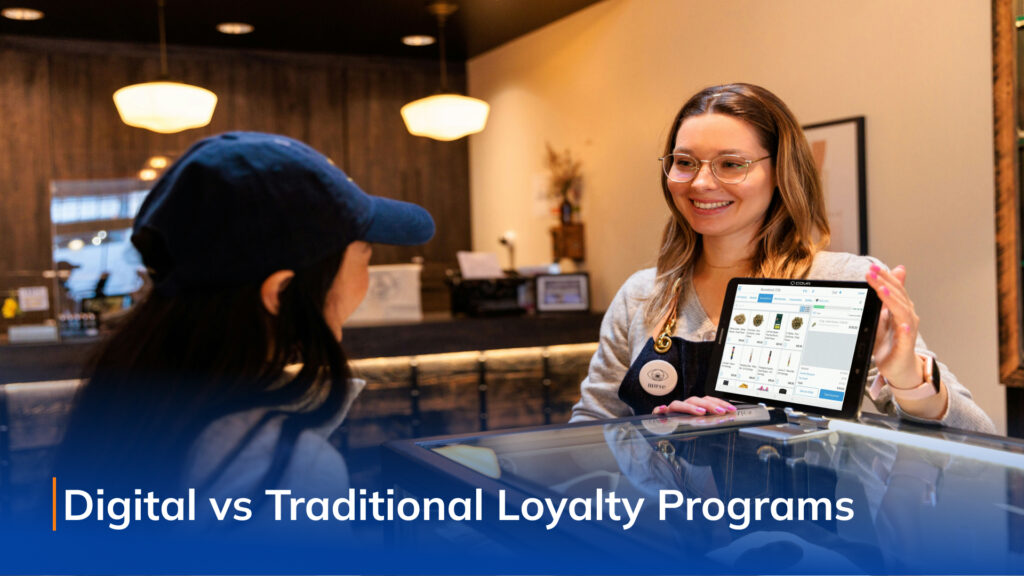
Many retail executives are familiar with traditional loyalty programs. These often rely on static rules, limited channels, and manual processes. In contrast, a modern loyalty points system is dynamic and technology-driven.
Key differences include:
- Real-time data processing: Points are earned and updated instantly across channels.
- Omnichannel coverage: Customers can earn and redeem points both online and in physical stores.
- Advanced analytics: Retailers gain insights into purchasing patterns, customer segments, and reward effectiveness.
- Scalability: The system supports business expansion, new channels, and increasing transaction volumes.
Common Types of Loyalty Points in Retail
Modern retail platforms typically support multiple types of loyalty points, allowing brands to design flexible engagement models:
- Spend-based points: Customers earn points based on transaction value.
- Behavior-based points: Points are awarded for actions such as account registration, app downloads, or product reviews.
- Tier-based systems: Customers unlock higher benefits as they reach spending or engagement thresholds.
Each approach serves different business goals, and many retailers combine them within a single loyalty points system to maximize impact.
Core Components of a Loyalty Points System in Modern Retail Platforms
When evaluating a loyalty points system, many retail leaders focus first on customer-facing features such as rewards or point accumulation. However, the real effectiveness of a loyalty points system depends on what sits underneath. In modern retail platforms, loyalty is not a single module. It is a connected system made up of several core components that must work together reliably and at scale.
Customer Data Collection Layer
At the foundation of any loyalty points system is customer data. Without accurate and consistent data collection, loyalty points quickly lose their value and credibility.
In a modern retail environment, customer interactions happen across multiple touchpoints, including physical stores, eCommerce websites, mobile apps, and sometimes third-party marketplaces. A robust loyalty points system must be able to capture data from all of these sources and associate it with a single customer identity.
- Key data typically collected includes:
- Transaction history from point-of-sale and online checkout systems
- Customer profile information, such as contact details and preferences
- Behavioral data such as browsing activity, app usage, and engagement frequency
From a business perspective, this layer determines whether loyalty data can be trusted. Inconsistent or fragmented customer records often result in duplicated points, missing rewards, or poor personalization. For executives, this directly impacts customer satisfaction and brand trust.
This is why modern retail platforms increasingly emphasize centralized customer data management as the backbone of the loyalty points system.
Maybe you’re interested in:
- How to Build a Cloud-Based Customer Data Pipeline for Omnichannel Retail
Points Earning Rules and Logic
The next critical component of this system is the logic that determines how points are earned. While this may appear simple on the surface, it has a significant impact on customer behavior and operational complexity.
In modern retail platforms, points earning rules are typically configurable rather than hard-coded. This allows marketing and business teams to adjust loyalty mechanics without relying heavily on engineering resources.
Common earning models include:
- Points awarded per monetary value spent
- Bonus points during campaigns or seasonal promotions
- Points earned for non-purchase actions such as referrals, reviews, or app downloads
Points Storage and Balance Management
Once points are earned, they must be stored, tracked, and managed accurately. This component is often overlooked but is essential for system reliability and scalability.
In a modern loyalty points system, points are treated as a form of digital currency. This means the system must:
- Maintain accurate point balances for each customer
- Track point expiration dates and usage history
- Prevent duplication, fraud, or unauthorized adjustments
From an operational standpoint, this requires a centralized and secure data store that can handle high transaction volumes, especially during peak retail periods such as promotions or holidays.
Rewards and Redemption Engine
The rewards and redemption engine is the most visible part of a loyalty points system from the customer’s perspective. It defines how points are converted into value.
Modern retail platforms support a wide range of reward types, including:
- Discount vouchers and coupons
- Free or discounted products
- Exclusive access to events or early product launches
- Personalized offers based on customer behavior
From a business perspective, redemption rules must balance attractiveness and cost control. A well-designed loyalty points system allows retailers to define clear redemption thresholds, usage conditions, and expiration policies.
Equally important is redemption simplicity. Customers should be able to redeem points easily across channels, whether in-store or online. Friction in redemption often results in unused points, which may look favorable in the short term but can harm long-term loyalty and trust.
Integration with Core Retail Systems
A LPS does not operate in isolation. Its value increases significantly when integrated with other core retail systems.
Key integrations typically include:
- Point-of-sale systems for in-store transactions
- eCommerce platforms for online purchases
- Customer relationship management systems
- Marketing automation and campaign tools
These integrations enable retailers to deliver consistent loyalty experiences across channels and leverage loyalty data for targeted campaigns and personalization.
From a strategic standpoint, integration capability is often a deciding factor when selecting a loyalty platform or IT solution partner. Poor integration leads to data silos, manual processes, and limited visibility, reducing the overall impact of the loyalty points system.
Analytics and Insight Layer
Finally, a modern loyalty points system must provide actionable insights, not just operational functionality.
Analytics capabilities typically include:
- Customer segmentation based on loyalty behavior
- Analysis of point earning and redemption patterns
- Measurement of campaign effectiveness and ROI
For CEOs and CMOs, this layer transforms loyalty from a cost center into a strategic asset. It enables data-driven decisions around pricing, promotions, and customer engagement strategies.
Read related blogs about Loyalty Points System:
- Inside Japan’s Point-Based Loyalty Culture: The Power of Point Networks and the Rise of Custom Programs
- The History of Loyalty Point Culture in Japan and What Businesses Can Learn From It
- [Case Study] A Scalable Loyalty Points System on AWS Cloud for a Global Restaurant Chain
Common Challenges When Implementing a Loyalty Points System

Complex System Integration
Challenge: Modern retail platforms rely on multiple systems from POS and CRM to eCommerce, inventory, and analytics. A poorly integrated loyalty point system can lead to data silos, inconsistent customer experiences, and execution gaps.
Impact: Inconsistent point issuance, manual reconciliation, and fractured customer profiles.
How SupremeTech Can Help: SupremeTech specializes in software architecture and integration across complex ecosystems, including omni-channel retail solutions and cloud infrastructure services, ensuring seamless connectivity between existing systems and loyalty platforms. Their Agile delivery model helps align development with business timelines and priorities, enabling a coordinated loyalty rollout.
Insufficient Personalization and Data Utilization
Challenge: Many retailers collect vast customer data but lack the tools or expertise to turn it into personalized experiences which is one of the strongest drivers of loyalty success.
Impact: Generic offers fail to resonate, and underdelivers on engagement potential.
How SupremeTech Can Help: Through expertise in data integration, analytics, and digital transformation, SupremeTech helps brands to unify customer data and leverage it for personalization powering targeted rewards, tailored campaigns, and adaptive loyalty rules that reflect real behavior.
Security and Fraud Risk
Challenge: Loyalty systems handle sensitive customer data and point balances that, if compromised, can erode trust and expose the business to regulatory risk.
Impact: Breach of customer trust, compliance violations, and reputational harm.
How SupremeTech Can Help: With capabilities in secure cloud infrastructure and DevOps automation, SupremeTech builds systems with strong access controls, encryption, and monitoring protocols that protect both customer data and loyalty point integrity. Emphasis on secure development lifecycle processes further reinforces resilience against fraud and cyber threats.
Misalignment with Business Objectives
Challenge: Loyalty initiatives sometimes start without clearly defined goals or KPIs, resulting in poor alignment with broader business outcomes like revenue growth, retention, or customer lifetime value.
Impact: Investments in loyalty deliver limited measurable results.
How SupremeTech Can Help: SupremaTech’s approach includes strategic planning and business consulting, working with leadership to define clear objectives for loyalty programs, align them with KPIs, and implement technical solutions that can be measured and optimized over time. Their cross-industry experience (eCommerce, retail, healthcare) adds strategic depth to solution design.
Conclusion: How a Loyalty Points System Works in Modern Retail Platforms
In a nutshell, a loyalty points system works for retailers because it transforms transactional interactions into ongoing customer relationships. A loyalty points system is not just a rewards tool. It is a data-driven engagement engine that turns everyday transactions into strategic business outcomes, which leads to increasing customer loyalty, boosting repeat revenue, and helping brands build competitive advantage in an increasingly digital retail environment.
Read more articles about us at our blogs.
Contact us to see how we can support your loyalty app strategy.
In modern retail platforms, a loyalty points system works by identifying customers across channels, awarding points for actions like purchases or engagement, updating point balances in real time, and allowing points to be redeemed online or in-store. The system uses centralized customer data to ensure consistency and personalization.
A loyalty points system helps retailers reduce customer churn, increase repeat purchases, and improve customer lifetime value. It also provides first-party customer data that retailers can use to personalize offers, optimize marketing spend, and better understand buying behavior.
A: A modern loyalty points system should support omnichannel earning and redemption, flexible earning and reward rules, real-time point updates, secure data management, and integration with POS, eCommerce, and marketing platforms.
Loyalty data is stored within centralized customer databases or integrated with CRM and CDP platforms, allowing retailers to track points, segment customers, and analyze engagement patterns.
Yes. Cloud-based retail platforms offer scalable loyalty modules that allow small retail businesses to launch and manage points programs without heavy infrastructure investment.